ENEnglish
 LTLietuviškai
 DEDeutsch
 FRFrançais
 RUРусский
 ESEspañol
 PLPolski
 ITItaliano
 UKУкраїнська
 CSČeština
 PTPortuguês
 JA日本語
 LVLatviešu valoda
 ETEesti
 HUMagyar
 IDBahasa Indonesia
 TRTürkçe
 HIहिन्दी
 ELΕλληνικά
 ARالعربية
 THไทย
 VITiếng Việt
 RORomână
 MSBahasa Melayu
 BNবাংলা
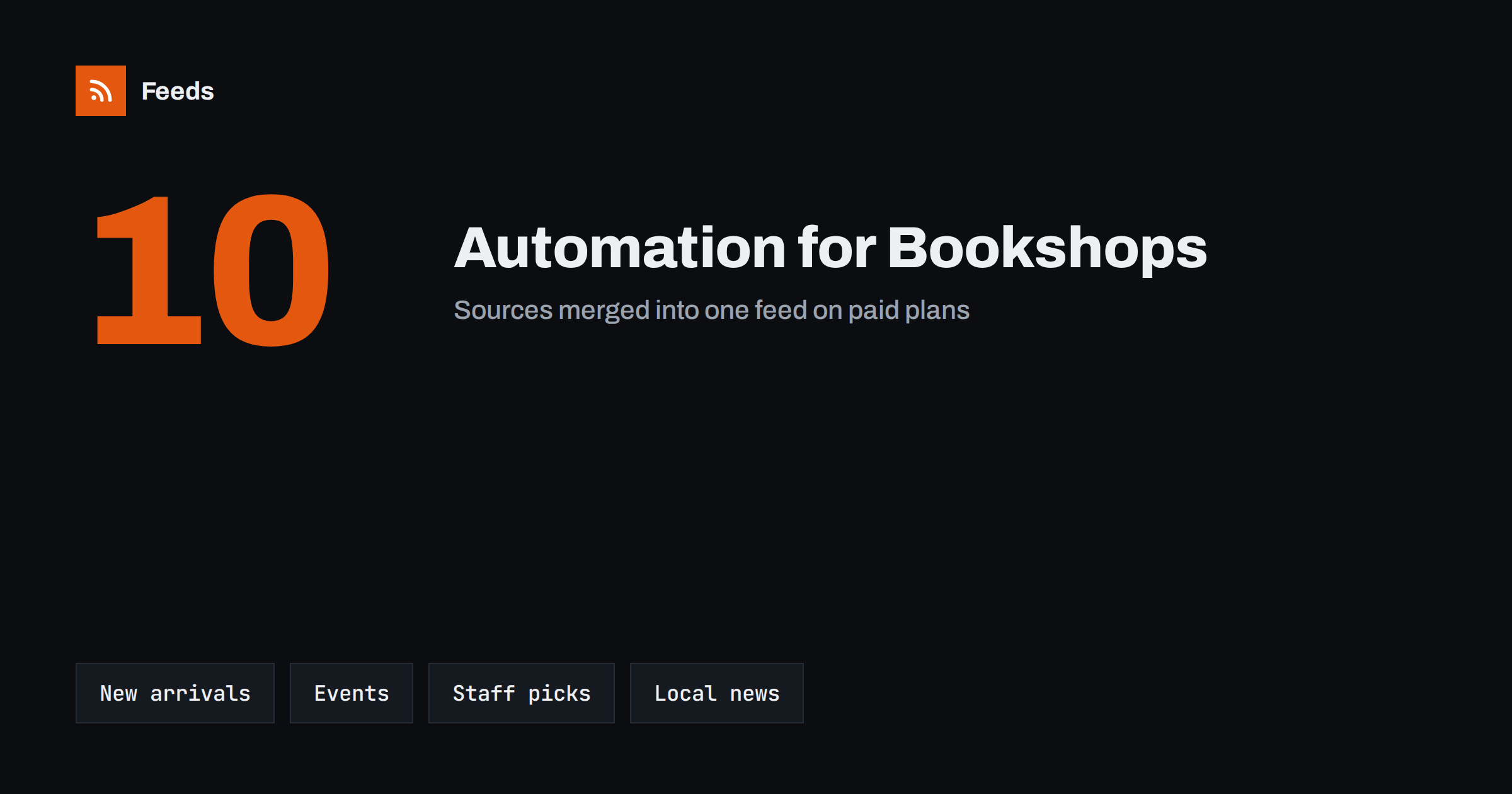
Short answer: An independent bookshop has plenty to say: new arrivals every week, author events, a book club, staff recommendations and seasonal lists for schools and gifts. What it lacks is the time to post about any of it. Content automation solves this by turning the sources the shop already maintains, such as the new-arrivals page, the events calendar and a few local news sites, into feeds, and then posting from those feeds to social media and a newsletter on a calm schedule. The personal part, the staff pick and the reason for it, stays human and goes through a quick approval step.
Why bookshops struggle to post regularly
Independent retailers of every kind share the same problem. The owner is also the buyer, the person at the till and the one who unpacks boxes at seven in the morning. Social media is on the list, but it comes after the customer in front of them. A shop posts three times in a week, then goes quiet for a month, and customers who check the account before a visit see something that looks closed.
Books make this worse and better at once. Worse, because there are so many titles that choosing what to feature takes real thought. Better, because books come with built-in news: publication dates, prizes, adaptations, author visits and seasonal demand. The goal of automation is not to replace the bookseller’s taste. It is to make sure the routine announcements happen without anyone having to remember them. The general approach is explained in what content automation is.
Sources a bookshop already has
The best automation draws on information that already exists. Most independent shops have at least four sources:
- A new-arrivals page or collection. If the shop sells online, new titles appear in the catalogue before anyone thinks to announce them. That list can become a feed.
- The events calendar. Signings, readings, children’s story hours, book clubs and writing workshops.
- The blog or newsletter archive. Staff picks, seasonal lists, “if you liked this” suggestions.
- Local and trade sources. The town council, the school calendar, the local paper, a regional bookseller association and the publishers’ own news pages.
If the shop’s own site has no feed for its new-arrivals page, one can be made from the page itself. The idea is explained in how to publish a new arrivals feed for your online store, and the technique behind it in how page-to-feed tools work.
New arrivals: the easiest win
A feed of new products can drive a weekly post without any writing. Each new title arrives in the feed with a title, an image of the cover and a link, and a template turns it into a short post: the title, the author, one line from the description and the link. For a shop with a steady flow of stock, a good rhythm is not one post per book, but a weekly roundup of the five most interesting arrivals, assembled automatically and approved in a minute.
Be careful with automatic posts for products that are not yet in the shop. Pre-orders and forthcoming titles can change date or be cancelled, and a post that promises a book on Friday when it has slipped to March creates work for the staff. Check the wording of every template with that in mind, and use the approval step for anything that mentions a date. The advice on templates is in writing post templates for automated social media feeds.
Events: announcements and reminders
Events are the content that brings people through the door, and they are perfect for automation because they are time-bound. Every event that appears on the calendar should produce an announcement when it is added and a reminder a day or two before it happens. If the author has a social media account, tag it by hand during approval, because automatic tagging often gets names wrong.
The calendar is also the source most likely to be missing a feed. Many small sites keep events on a plain page, which can be turned into a feed so that each new event becomes an item. The setup is described in how to turn event calendars into RSS feeds, and the automation of announcements and reminders in how to promote upcoming events automatically.
Staff picks and the human voice
The most effective bookshop content is the personal recommendation, and that is exactly what should not be automated. What can be automated is the schedule. Keep a queue of staff picks written when someone has a quiet moment, and have them published one at a time on fixed days. A bookseller who writes four short recommendations on a slow Tuesday has produced a month of content. The automation puts them out; the human wrote them.
Use an approval queue for anything that has an opinion in it. A review that goes out under the shop’s name is a statement about the shop. The difference between full automation and an approval step is explained in full auto vs approval queue.
Local news, schools and seasons
A bookshop sits inside a community, and local information makes a shop feel part of it. A filtered stream from the council, the school and the library can supply posts such as library opening changes, school holiday dates and local festivals, and the shop can respond with relevant reading lists. Merge the sources into one feed and filter by words that matter in your town, so that you see a few useful items a week rather than a stream of everything. The method is in local news monitoring with RSS.
The seasonal calendar adds predictable peaks: back to school, exam periods, summer reading, prize shortlists and the gift season at the end of the year. Plan these posts a month ahead, schedule them and let the feeds fill the gaps in between. Do not automate promotions or prices without a person checking them, because an outdated discount advertised by a bot is a customer conversation nobody wants to have at the till.
Where the posts go
Choose the channels where the shop’s readers actually are, which is usually fewer than the list of everything possible. A common set is Instagram for covers and shelf photos, Facebook for events and the local community and a short newsletter for regulars. The same feed items can drive all three with different templates. Posting frequency matters more than people expect: two or three well-chosen posts a week is better than daily posts that look like an advertisement. The balance is discussed in how often should automated feeds post to social media.
A simple weekly plan
- Monday: the week’s events posted from the calendar.
- Wednesday: a roundup of the new arrivals, approved in a minute.
- Friday: one staff pick from the queue, plus an event reminder for the weekend.
- Monthly: a hand-written post about something that happened in the shop, and a check that every feed still finds items.
Before switching anything on, run through the content automation checklist. Once a quarter, test each feed, because websites change layouts and feeds can quietly stop finding items.
How RSS Feed Creator helps
RSS Feed Creator turns the new-arrivals page, events page or news list of a website into a clean RSS feed, even when the site has no feed of its own. It reads titles, images, summaries and dates, uses an existing feed when there is one, and shows a preview of the items before the feed is created. You can merge several sources into one feed (up to 10 on paid plans), keep only the items that contain your keywords and have duplicates removed automatically, which is what a stream of local and trade news needs. Feeds refresh every 3 hours on the free plan and every 30 minutes on paid plans, and paid plans send an alert when a page changes and a feed stops finding items. The free plan allows up to 20 items per feed, and the details are on the pricing page.
Related reading
- Content Automation for Local Businesses: A Simple Plan
- Product Feeds for Bookshops: ISBN, Authors and Formats
- How to Share New Shop Products on Social Media Automatically
The bottom line
A bookshop does not need to post more by working harder. Turn the new-arrivals page, the events calendar and a few local sources into feeds, schedule the announcements and reminders, keep staff picks in a queue written by people and review everything that carries a date or an opinion. The shop stays visible all week, and the owner stays at the till.
FAQ
What should a bookshop automate first?
Event announcements and reminders, because they are time-bound and repeat every week, and a weekly roundup of new arrivals. Both come from sources the shop already maintains.
Should staff picks and reviews be automated?
Write them by hand and schedule them, but do not generate them. The personal recommendation is the reason customers follow an independent shop, so only the timing should be automatic.
Our website has no feed for new books. Can we still use one?
Yes. A feed can be created from the new-arrivals page or collection, as long as the titles are listed on a public page. Each new title then becomes a feed item that can trigger a post.
How do we avoid announcing books that are not yet in stock?
Take posts about forthcoming titles out of full automation and send them through an approval step. Dates for pre-orders can change, so a person should check the wording first.
How many posts a week are enough?
Two or three considered posts a week are enough for most independent shops. Consistency matters more than volume, and a regular rhythm is easier to keep when the routine items are scheduled.