ENEnglish
 LTLietuviškai
 DEDeutsch
 FRFrançais
 RUРусский
 ESEspañol
 PLPolski
 ITItaliano
 UKУкраїнська
 CSČeština
 PTPortuguês
 JA日本語
JA日本語 LVLatviešu valoda
 ETEesti
 HUMagyar
 IDBahasa Indonesia
 TRTürkçe
 HIहिन्दी
 ELΕλληνικά
 ARالعربية
 THไทย
THไทย VITiếng Việt
 RORomână
 MSBahasa Melayu
 BNবাংলা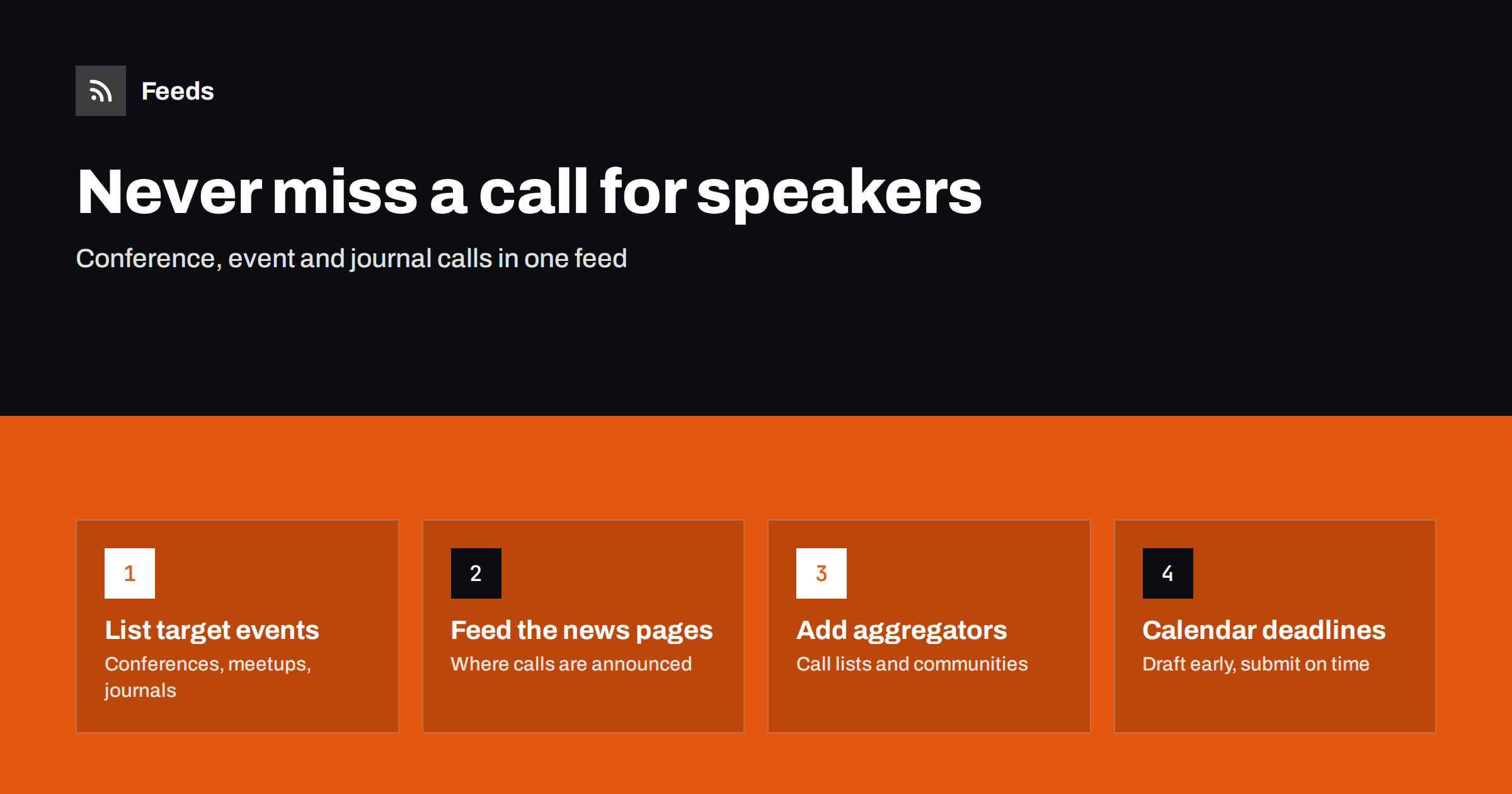
Short answer: List the conferences, trade shows, meetups and publications where you would like to speak or publish, and follow the pages where they announce calls: news pages, “call for speakers” or “call for papers” pages, and event listings. Add sites and communities that collect open calls in your field. Merge everything into one feed, filter for words such as call for speakers, call for papers, submissions and proposals, and put every relevant deadline into your calendar the day it appears.
Speaking at conferences and publishing in respected outlets are among the best ways to build authority for yourself and your company. The barrier is often not ability but timing. Calls for speakers open months before an event and close quickly, and they are usually announced on the event’s website, in a newsletter or in a short post that is easy to miss. Many people notice a call only after it has closed, usually when they see the published program. A feed-based setup puts every call in front of you as soon as it opens.
The same approach works for companies that want their experts to speak, for agencies that place clients on stages, and for researchers following journals’ special issues. The sources differ, but the method is identical: follow where calls are announced, filter for calls, and act while there is time.
Where calls are announced
| Source | Typical page | Notes |
|---|---|---|
| Conference websites | News, “call for speakers”, “call for papers”, “speak at” pages | The call page may appear only when the call opens |
| Trade show organizers | Exhibitor and speaker news, press releases | Often several shows per organizer |
| Industry associations | Events pages, member news | Annual conferences and regional events |
| Meetup and community groups | Group pages, event listings | Smaller, more frequent opportunities |
| Academic and professional journals | Calls for papers, special issues | Deadlines for special issues are firm |
| Call aggregators | Lists of open calls for a field | Broad coverage, varying completeness |
Step 1: Build a list of target events and outlets
Start with the events and publications that matter for your audience. Where do your customers, peers or hiring targets gather? Which publications do they read? A useful list for most professionals contains ten to thirty events and a handful of publications, a mix of large conferences where competition for slots is intense and smaller regional or community events where first-time speakers are welcome.
Look at last year’s programs of the events on your list. They show which topics were accepted, how long before the event the call opened and whether sessions were selected through an open call at all. Some events invite all speakers directly; for those, a feed of their news is still useful, but networking matters more.
Keep the list in a simple spreadsheet with the event name, typical month, typical call period, the page you follow and any contacts you have there. It becomes your yearly speaking plan and makes it obvious when a call you expected has not yet appeared, which is itself a prompt to check the event’s website or ask the organizers.
Step 2: Follow the pages where calls appear
For each event, identify the page most likely to announce the call. That is usually the news or blog page, because a dedicated call page often exists only while the call is open. Some events publish a feed for their news; most do not, so create feeds from their news pages with a page-to-feed tool and check the previews.
If an event has a permanent “speak at” page that simply changes its text when the call opens, a feed will not notice the change. In that case, follow the news page as well, or use a page change monitor for that one page.
Step 3: Add aggregators and communities
In many fields, websites and communities collect open calls from many events in one list. Some offer feeds or can be turned into feeds from their list pages. They are useful for discovering events you did not know, although coverage is rarely complete and depends on organizers submitting their calls. Add them to your feed, then add promising new events to your own list so you follow them directly next year.
Step 4: Merge and filter
Merge everything into one “calls” feed. Event news pages publish much more than calls, such as ticket offers, sponsor announcements and speaker interviews, so filter broad sources for words that signal a call:
- call for speakers, call for papers, call for proposals, CFP
- submissions, submit a talk, speaker applications
- abstracts, deadline, special issue
- equivalents in other languages for international events
Keep aggregator feeds filtered by your topic, since they cover many fields.
Test the filter against last year’s calls if you can find them. Event news posts sometimes use phrases such as “we want to hear from you”, “share your story” or “apply to present” instead of the standard terms. Add the phrases your target events actually use, so their calls are not filtered out.
Step 5: Calendar the deadlines and draft early
A call you notice is only useful if you submit a good proposal in time. When a relevant call appears:
- Add the submission deadline to your calendar, with a reminder a week earlier.
- Note the event date, location, format and audience, and whether travel costs are covered, which affects whether the opportunity is worth pursuing.
- Draft the proposal early, using what you know about the event’s past program.
- Keep a reusable set of materials: short and long bios, a photo, a list of previous talks, and a few tested talk abstracts you can adapt.
Track submissions and outcomes in a simple list. Over a year, it shows which events accept your proposals and which topics resonate. Ask organizers for feedback on rejected proposals when they offer it; the answers often explain more than any guide to writing abstracts.
A worked example
A marketing director at a software company wants to speak more often at industry events. She lists eighteen conferences and meetups in her field across three countries, four industry associations with annual events and two trade publications that invite guest articles. Only a few publish feeds for their news; she generates the rest from news and events pages, adds two sites that collect open calls in marketing and technology, and merges everything into one feed filtered for call-related words in English and German.
During the year, the feed surfaces relevant calls within a day or two of opening, including several from events she had never heard of before they appeared through an aggregator. She submits to the ones that fit best, adapting a small bank of tested talk abstracts for each, and has time to write proposals carefully instead of in a rush. The following year she drops three events that never ran open calls and adds six new ones discovered through the feed.
Common mistakes
- Following only the big conferences. Smaller events are easier to get into and build a track record for larger ones.
- Waiting for the call page. Many calls are announced in news posts first. Follow the news page.
- Writing proposals at the last minute. Rushed abstracts rarely stand out. Start when the call opens.
- Ignoring event themes. Proposals that match the announced theme have better chances.
- Not refreshing the list. Events change, merge or stop. Update your list each year.
- Silent feeds. Event websites are often rebuilt for each edition. Check that each feed still shows recent news a few months before the usual call period.
How Feeds helps
Feeds turns event news pages, association event lists and call aggregators into RSS feeds when they have none, using existing feeds when they do, with a preview before anything is created. You can merge all sources into one calls feed and keep only items with your words, such as “call for speakers”, with duplicates removed automatically. Feeds refresh on their own, and paid plans alert you if a feed stops finding items, which is common when event sites are rebuilt for a new year. See the plans.
Related reading
- How to Turn Event Calendars into RSS Feeds You Can Follow
- How to Follow Academic Journals and Research with RSS Alerts
- How to Set Up Keyword Alerts Using RSS Feed Filters
The bottom line
Speaking and publishing opportunities are announced openly but briefly. List the events and outlets that matter, follow their news pages and call pages as feeds, add aggregators for discovery, filter for call-related words, and put every deadline in your calendar the day it appears. With reusable materials ready, you can respond to calls calmly instead of discovering them after they close.
KKK
How can I find calls for speakers in my industry?
Follow the news pages of the conferences and associations in your field, add sites that collect open calls, and filter the merged feed for words like call for speakers and submissions.
When do calls for speakers usually open?
Often several months before the event, and they may be open only for a few weeks. Check last year’s timing for each event to know when to expect the next call.
What if an event only updates its “speak at” page?
A feed may not detect a text change on an existing page. Follow the event’s news page as well, or use a page change monitor for that page.
Are call aggregators enough on their own?
They are useful for discovery but rarely complete. Follow your most important events directly.
How do I improve my chances of being accepted?
Submit early, match the event’s theme and audience, study past programs, and keep well-tested bios and abstracts ready to adapt.