ENEnglish
 LTLietuviškai
 DEDeutsch
 FRFrançais
 RUРусский
 ESEspañol
 PLPolski
 ITItaliano
 UKУкраїнська
 CSČeština
 PTPortuguês
 JA日本語
 LVLatviešu valoda
 ETEesti
 HUMagyar
 IDBahasa Indonesia
 TRTürkçe
 HIहिन्दी
 ELΕλληνικά
 ARالعربية
 THไทย
 VITiếng Việt
 RORomână
 MSBahasa Melayu
 BNবাংলা
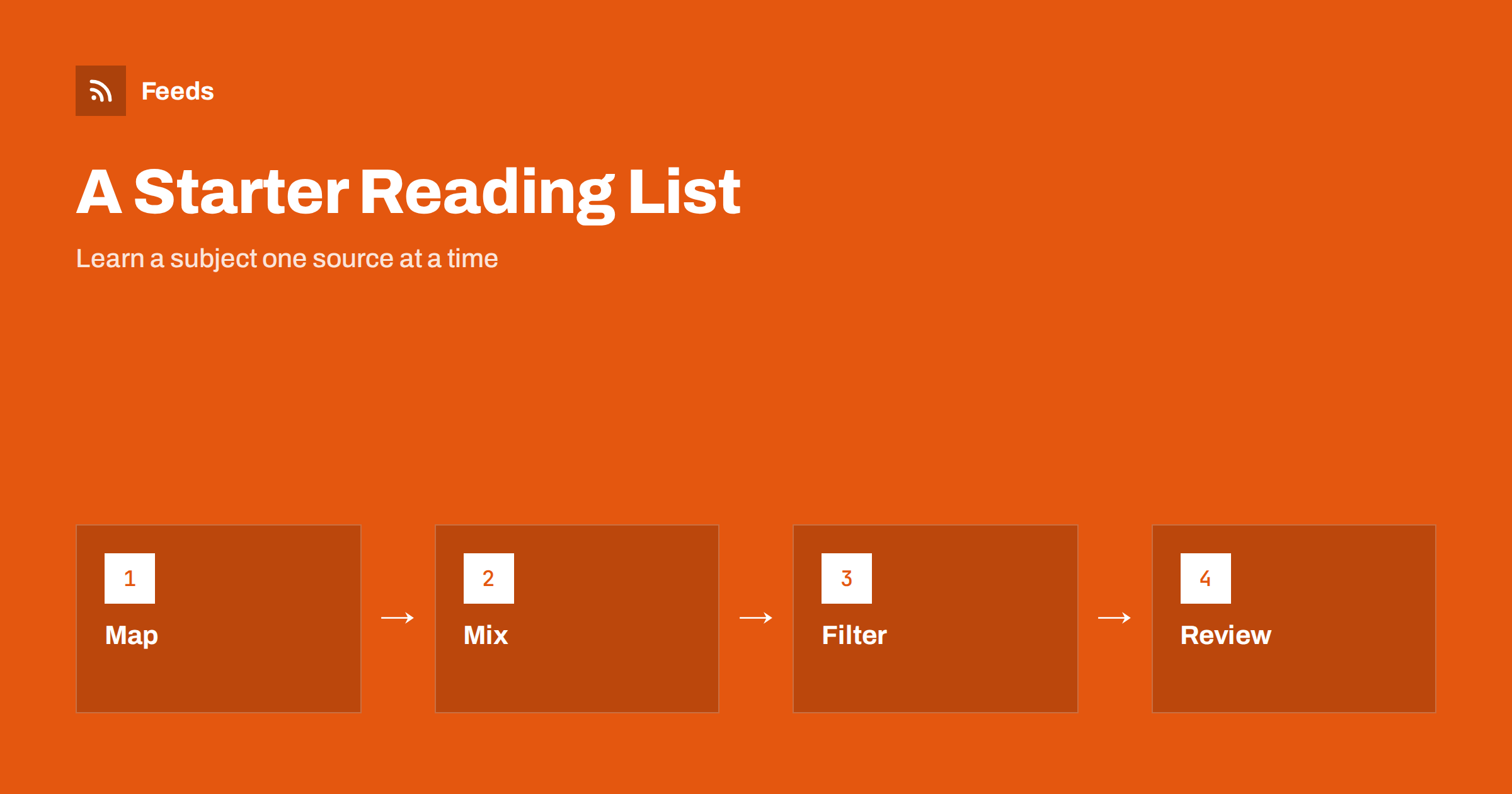
Short answer: To learn a new subject with RSS, pick five to ten sources of different kinds, subscribe to their feeds, add a few keyword filters and read a small amount every week. Start with sources that explain the basics, add one or two that report news in the field and add a few experts who write regularly. Review the list after a month, remove what you never read and keep a short notebook of what you learn so that reading becomes knowledge and not just a stream.
Why a reading list beats random searching
When you start a new job, a new hobby or a new course, you meet a flood of unfamiliar words. Searches give you a mix of beginner pages, sales pages and advanced papers, and social feeds show whatever is popular today. It is hard to tell which sources are reliable, and harder to see how the topic fits together.
A reading list changes the order of things. You choose a handful of sources on purpose, and new items from them arrive in one place. Over weeks you see the same names, ideas and arguments again and again, which is how a subject starts to make sense. If you are new to feeds, what is an RSS feed explains the basics and how to choose an RSS reader helps you pick a tool.
Step 1: Map the subject
Spend an hour before you subscribe to anything. Write down what you want to learn and why: a skill for work, a topic for a course or a field you are curious about. Then find the main areas of the subject. Ask someone who knows it, look at the table of contents of a textbook or a course, or read an encyclopedia article and note the headings.
The map tells you what to look for. It also protects you from a common mistake: subscribing to the loudest sources on the most exciting subtopic and ignoring the foundations. A reading list is easier to keep when it follows a plan.
Step 2: Find sources of different kinds
Aim for variety. Include a source that explains basics in plain language, such as an educational site, a university department or a well-known guide. Add one or two sources that report news in the field, such as a trade publication or an agency. Add a few expert blogs or newsletters written by people who work in the area, and, if relevant, an official body that publishes data or rules.
Check each source before you subscribe. Who writes it, how often, does it show evidence and does it correct mistakes? Sample five items before you decide. To find feeds, look for an RSS link or icon, and if you cannot see one, how to find the RSS feed of any website shows seven methods, and creating a feed for a website without RSS helps when none exists.
Step 3: Organize the list so it stays readable
Create folders or tags: “Basics”, “News”, “Experts”, “Data”. Keep each folder small. Put the beginner material at the top so that you read it first, and let the news folder be the one you skim. If your reader supports it, mark the items you want to keep for a deeper read and archive the rest.
Limits protect you. A list of ten good sources that you read is better than fifty that you ignore. How to organize your RSS reader so it never overwhelms you and RSS triage: a fast daily routine for reading less offer methods that keep the list under control.
Step 4: Filter out the noise
Some sources cover many subjects, and you only want the part that matches your topic. Keyword filters let you keep items that contain certain words and skip the rest. Start with the core terms of your subject and a few related ones, and review the results after two weeks. If too much slips through, make the filter stricter. If you miss relevant items, add the words that the source really uses.
You can also combine several sources into one list and filter it as a whole, as described in merging multiple RSS feeds into one clean feed and RSS keyword alerts. Be careful with very broad words that appear in every item.
Step 5: Read with a purpose
Set a regular time, for example twenty minutes three times a week. Read the basics first, then skim news. For each item that matters, write one or two lines in a notebook: what it says, what you learned and what you still do not understand. Those questions guide your next search or your next question to an expert.
Do not try to read everything. In a new field, the same ideas return in many items, and you will meet important concepts repeatedly. If an item uses a term you do not know, look it up and add it to a personal glossary. After a month you will notice that you understand headlines that were opaque before, and that is a real sign of progress.
Mix reading with doing. If you are learning a skill, try a small project or an exercise based on what you read, and use the feed to find answers when you get stuck. If you are learning for a course, use the list to find real-world examples of the concepts in your notes. Reading connected to action sticks much better than reading alone.
Step 6: Review and prune every month
At the end of each month, look at the list. Which sources did you open? Which taught you something? Which only repeated what others said? Remove sources you never read and replace them with a better one. Add a source if you found a gap. Keep the list small, and keep notes on why each source is there.
After three months you can add a more advanced layer: research summaries, conference news, official data or discussions among practitioners. Following academic journals and research with RSS alerts and media monitoring with RSS describe how to follow those sources.
Common mistakes to avoid
The first mistake is following too many sources at the start. The second is relying on a single point of view, which hides the debates that define a field. The third is treating headlines as knowledge: a headline gives a claim, and understanding comes from reading the article and checking the evidence. The fourth is never going back to primary sources, such as official documents, original studies and data.
A habit of checking the original, described in fact-checking with RSS, protects you from errors that spread. When two sources disagree, read both carefully and note what the difference depends on, such as definitions, dates or methods. That is how you learn a subject’s real questions.
Different goals need different lists. If you want to change careers, include job-market news, training providers and professional bodies. If you are learning a hobby, include a few communities and shops that show what is possible, and mark which ones sell something. If you are studying for an exam, use the list to find explanations of difficult topics and current examples, and keep official syllabus pages in the list so that you do not drift away from what is tested.
Share what you learn. Writing a short summary for a colleague or a friend, or posting a note on your own page, forces you to put ideas in order, and it shows where your understanding has gaps. The feed gives you the raw material, but the learning happens when you explain things in your own words.
How RSS Feed Creator helps
RSS Feed Creator turns the news, blog or publication page of a source into a clean RSS feed, even when the site has no feed of its own. It reads titles, images, summaries and dates, uses an existing feed when there is one, and shows a preview of the items before the feed is created. You can merge several sources into one feed (up to 10 with the PostRSS add-on), keep only the items that contain your keywords and have duplicates removed automatically, which suits a reading list on one subject. Feeds refresh every 3 hours on the free plan and every 30 minutes on paid plans, and the PostRSS add-on sends an alert when a page changes and a feed stops finding items. The free plan allows up to 20 items per feed, and the details are on the pricing page.
Related reading
- How to Organize Your RSS Reader So It Never Overwhelms You
- RSS Triage: A Fast Daily Routine for Reading Less
- How to Follow Academic Journals and Research with RSS Alerts
The bottom line
A starter reading list turns the flood of information into a plan: map the subject, choose sources of different kinds, keep the list small, filter noise, read with a purpose and prune every month. RSS gives you the tools to do this without an algorithm choosing for you. Knowledge comes from steady, connected reading, not from the size of the list.
KKK
How many sources should I start with?
Five to ten is enough. Choose different kinds, such as basics, news and expert blogs, and add more only when you read the ones you have.
How do I know a source is reliable?
Check who writes it, whether it shows evidence and whether it corrects mistakes. Read five items before you subscribe.
What if a source has no feed?
A page-to-feed tool can read the list of articles on the page and build a feed from it. Check the preview to confirm that it shows real items.
How much time should I spend reading each week?
Twenty minutes three times a week is a good start. Regular short sessions work better than a long one now and then.
How do I avoid overload?
Limit the number of sources, use folders and keyword filters, archive what you will not read and review the list every month.