ENEnglish
 LTLietuviškai
 DEDeutsch
 FRFrançais
 RUРусский
 ESEspañol
 PLPolski
 ITItaliano
 UKУкраїнська
 CSČeština
 PTPortuguês
 JA日本語
 LVLatviešu valoda
 ETEesti
 HUMagyar
 IDBahasa Indonesia
 TRTürkçe
 HIहिन्दी
 ELΕλληνικά
 ARالعربية
 THไทย
 VITiếng Việt
 RORomână
 MSBahasa Melayu
 BNবাংলা
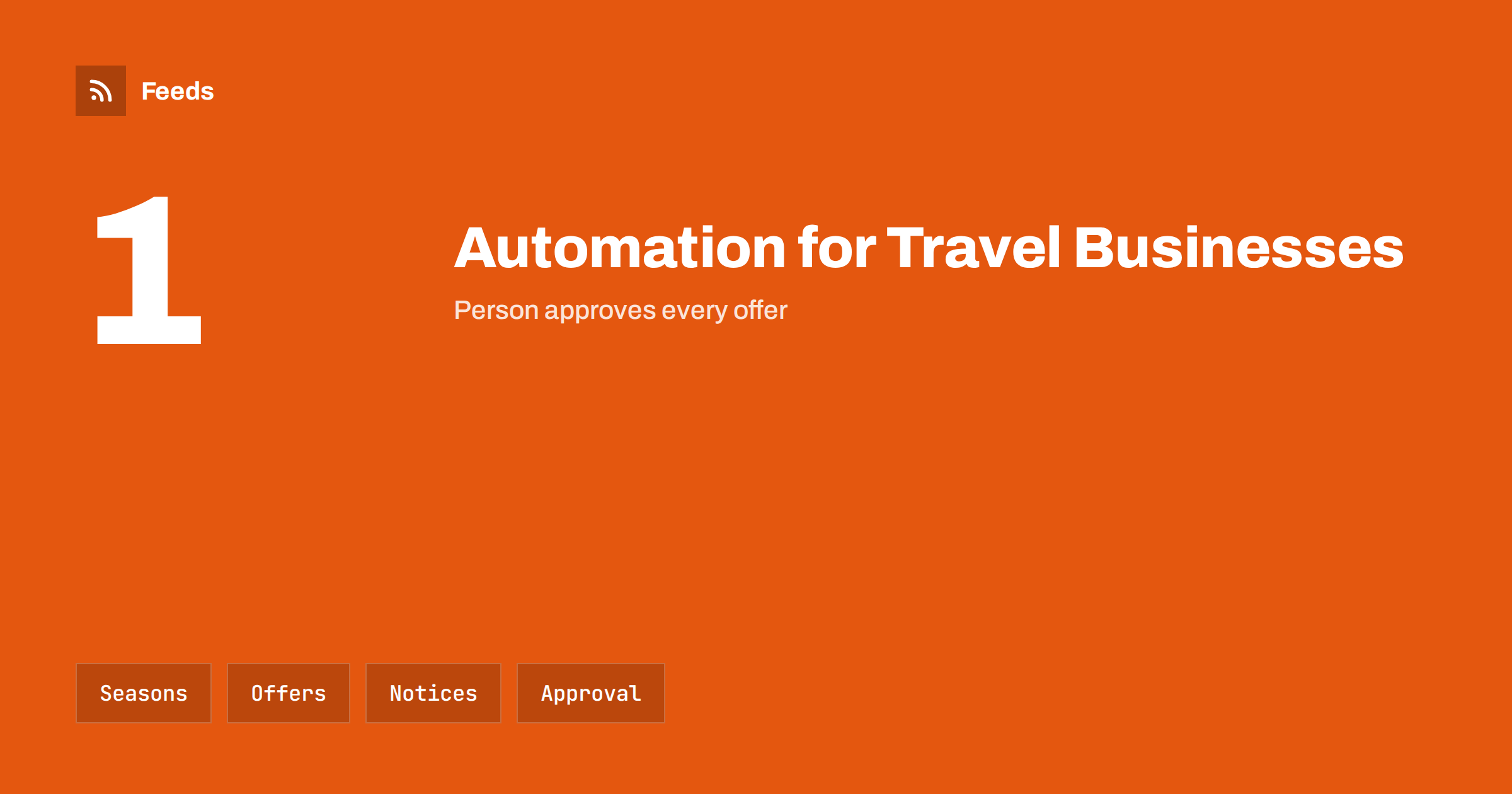
Short answer: Car rental firms and travel agencies sell trust and timing: customers choose them when they plan a trip, and they judge them by how well the details match reality. Content automation can take over the repetitive parts, such as seasonal destination ideas, reminders about documents and booking deadlines, event notices and the collection of travel news that affects customers. What it must never automate is the promise: every price, date, condition and availability statement is approved by a person before it is published, and outdated offers are removed quickly.
What travellers want to read before they book
People planning a trip look for practical information. Where is it good to go in a particular month? What does the pick-up process look like? Which documents and licences do I need? What happens if my flight is late? What is included in the price, and what is not? A business that answers these questions clearly earns confidence long before the booking form is opened.
For a rental firm, the questions are about age limits, deposits, insurance cover, fuel policy, mileage, cross-border travel, child seats and what to do after an accident. For an agency, they are about visas and entry rules, transfers, baggage, cancellation terms and travel insurance. Most of these topics repeat every season, so they are ideal for planning and partial automation. A general plan for small firms appears in content automation for local businesses, and the tourism side is covered in content automation for hotels, restaurants and tourism.
Build the year around travel seasons
Travel demand is seasonal and predictable. Winter holidays and ski trips, spring city breaks, summer coastal travel and road trips, autumn weekends and the first planning for next year each deserve a series of posts. For each period, prepare a handful of evergreen items: a route idea, a packing checklist, a local driving tip, a short guide to a destination. Add moments linked to your own business, such as the opening of bookings for a new season or a change in your fleet.
Planning on a calendar makes automation possible: once the items exist, scheduling them is mechanical. The method is explained in building a content calendar from feeds and automation. Keep a reserve of timeless posts that you can use when a planned item has to be dropped, so that the schedule never forces you to publish something out of date.
Offers need dates, conditions and a human check
Promotions are the riskiest content in the sector. A post that promises “a week in the sun from a low price” or “car hire from a low daily rate” will be judged against the booking page, and any gap becomes a complaint or a regulatory issue. Many countries have rules on price advertising and on the information that must accompany travel offers, and those rules differ for package travel, flights and vehicle hire. Check the rules in your market and ask a qualified adviser when in doubt.
As a practical rule, every offer should state the dates it applies to, the conditions, what is included and what is not, and the end date of the offer. Do not automate prices from a spreadsheet straight into posts without a check. Use a scheduled post for the offer, make sure it is removed or replaced on the end date and review it against the booking page the day it goes live. Keep a record of who approved what. The approval model in full auto vs approval queue fits this sector well.
Travel notices that matter to customers
Customers expect their travel business to know what is happening: strikes, airport disruption, changes in entry rules, border queues, road closures, severe weather. You can follow official sources and share what is relevant, with a link to the original. Sources include government travel advisories, airline and airport notices, transport operators, road authorities and weather services, covered in following travel advisories and airline notices with RSS, road works and traffic disruption alerts with RSS and weather and natural hazard alerts with RSS for businesses.
Use this information carefully. Do not give legal or medical advice, and do not publish unconfirmed rumours. If customers with existing bookings are affected, contact them directly through the details they provided; a social post is not a substitute. Put the date and time on every notice, and update it when the situation changes.
Reviews, photos and user content
Travel is emotional and customers like to share pictures. Reuse them only with clear permission from the author, name the author if they wish, and never publish photographs that show other people without their agreement. Do not copy reviews from other sites into your posts, and never write or buy reviews. Reply to genuine reviews calmly and specifically, including the critical ones, and take any detailed complaint to a private channel.
A feed that shows when people mention your business helps you respond quickly. See a reputation early-warning feed for your brand. For vehicle rental, avoid posting pictures of customers’ licence plates, documents or accident scenes, and never use images of vehicles that you do not own or do not offer.
Follow industry and supplier news
Rental firms and agencies depend on partners: airlines, hotels, transfer providers, insurers, vehicle manufacturers and booking systems. Their announcements about schedule changes, new rules or product recalls can affect your customers. Collect those sources into one reader instead of checking each page. You can merge them and filter by words such as “cancellation”, “recall”, “strike”, “new rule” or the names of the partners you use, as in merging multiple RSS feeds into one clean feed.
For safety notices on vehicles, see tracking product recalls and safety notices with RSS. For local events that affect demand, such as festivals, fairs and conferences, alerts for when event tickets go on sale and turning event calendars into RSS feeds are useful. Use this reading to inform your plans and your customers, not to repost other organisations’ content in bulk.
Tone, language and accessibility
Travel customers come from many countries and read quickly. Use short sentences, explicit dates and amounts and the currency, and avoid slang. If you serve visitors, offer the most important pages in their languages, written or checked by a fluent person; see automating multilingual content distribution with feeds. Make sure the conditions of a rental or booking are written in plain language, not hidden in a long document.
Avoid superlatives that you cannot prove, such as “the cheapest” or “the best service”. Do not describe a vehicle category as guaranteed if it can be substituted, and do not promise a specific model unless it is reserved. Honest wording reduces disputes at the counter.
A simple weekly routine
Most small businesses can run this with a couple of hours a week. Monday: check the notices feed and the calendar for the coming week. Wednesday: schedule one practical post and check that every active offer is still valid. Friday: answer reviews and messages, remove expired offers and prepare next week’s items. Each month, look at which posts led to enquiries and which questions customers keep asking.
Name an owner for the schedule and an approver for offers. The most common failure is not technical: the busy season starts and nobody removes the last promotion. Use the checks in the content automation checklist before anything goes live.
How RSS Feed Creator helps
RSS Feed Creator turns the news page, notice page or advisory page of an airline, airport, road authority or government body into a clean RSS feed, even when the site has no feed of its own. It reads titles, images, summaries and dates, uses an existing feed when there is one, and shows a preview of the items before the feed is created. You can merge several sources into one feed (up to 10 on paid plans), keep only the items that contain your keywords and have duplicates removed automatically, which suits a themed watch on travel disruption and rules. Feeds refresh every 3 hours on the free plan and every 30 minutes on paid plans, and paid plans send an alert when a page changes and a feed stops finding items. The free plan allows up to 20 items per feed, and the details are on the pricing page.
Related reading
- Content Automation for Event Organizers and Venues
- Content Automation for Logistics, Freight and Moving Companies
- When to Pause Automated Posting: A Crisis and Holiday Plan
The bottom line
For car rental firms and travel agencies, content automation works when it handles the repeating parts, such as seasonal ideas, reminders and following the notices that affect travellers, while people approve every price, date and condition. Remove expired offers on time, never replace direct contact with a social post and give one person the schedule. The result is steady, honest communication that customers can rely on.
FAQ
What can a travel business safely automate?
Seasonal destination tips, document and deadline reminders, event notices and collecting travel news. Prices, dates and conditions should always be approved by a person before they go out.
How do I keep offers accurate?
State dates, conditions, inclusions and the end date in each offer, schedule the post and its removal together and check it against the booking page when it goes live.
Can I share strike or border news with customers?
Yes, from official sources, with a link, date and time, and without advice or rumours. Contact customers with affected bookings directly instead of relying on a social post.
Can I reuse customer photos and reviews?
Only with clear permission from the author and anyone shown in the picture. Never copy reviews from other sites, and never write or buy reviews.
Which sources should I follow?
Government travel advisories, airline and airport notices, road authorities, weather services and your partners’ announcements. Merge them into one reader and filter by the names you use.