ENEnglish
 LTLietuviškai
 DEDeutsch
 FRFrançais
 RUРусский
 ESEspañol
 PLPolski
 ITItaliano
 UKУкраїнська
 CSČeština
 PTPortuguês
 JA日本語
JA日本語 LVLatviešu valoda
 ETEesti
 HUMagyar
 IDBahasa Indonesia
 TRTürkçe
 HIहिन्दी
 ELΕλληνικά
 ARالعربية
 THไทย
THไทย VITiếng Việt
 RORomână
 MSBahasa Melayu
 BNবাংলা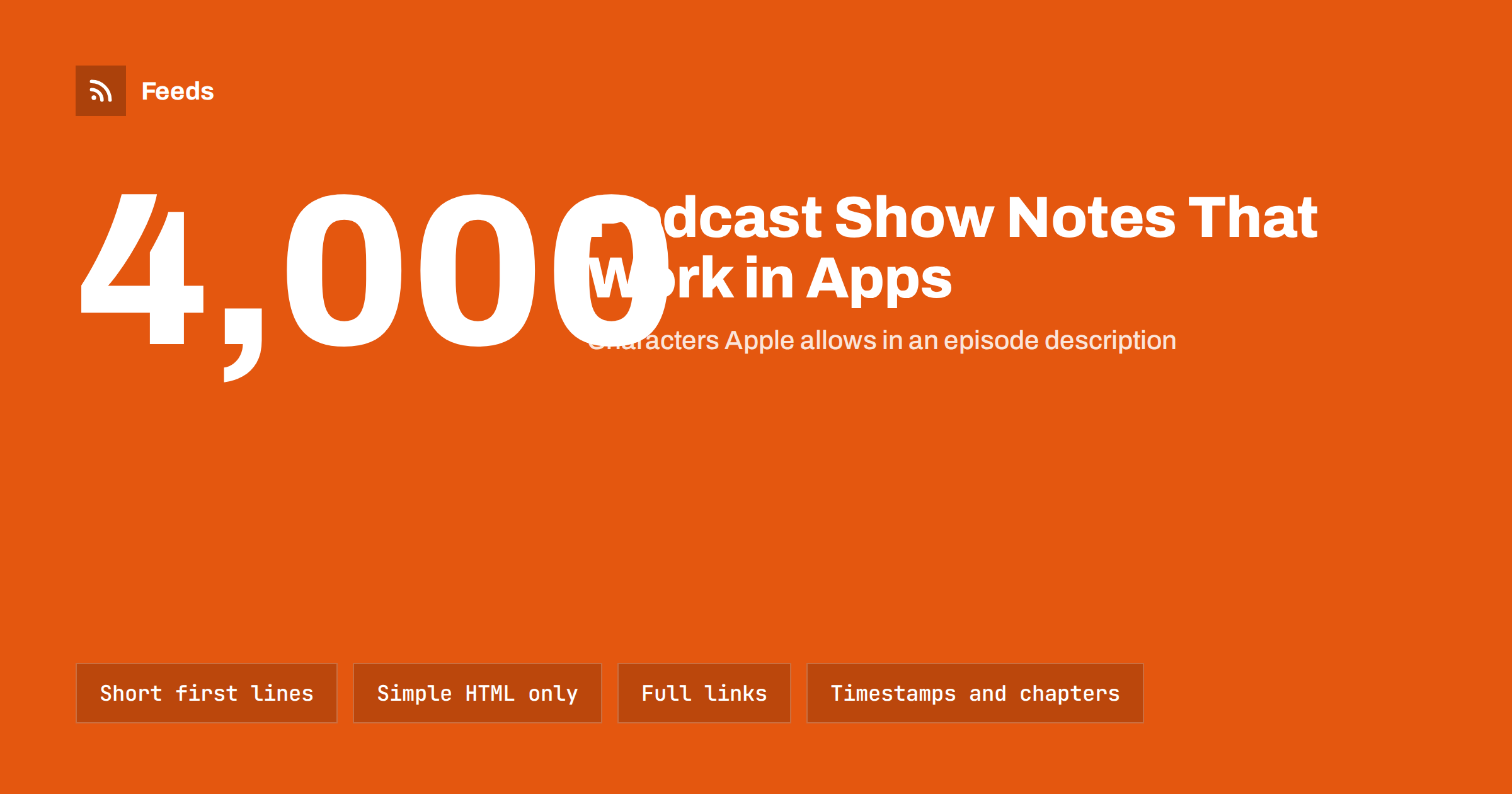
Short answer: podcast apps show your show notes from the episode’s description (and sometimes content:encoded) in the RSS feed, and each app strips or simplifies formatting in its own way. Keep notes readable as plain text, use only basic HTML such as paragraphs, lists and links, put the most important sentence first, write full URLs, and stay within length limits, such as Apple’s 4,000 characters for episode descriptions. Then check a new episode in two or three apps before you settle on a template.
How show notes get from your host to the listener
You type show notes into your podcast host or CMS. The host writes them into the RSS feed as part of each episode item. Podcast apps and directories read the feed and display the notes on the episode screen. At each step, formatting can be lost: your editor may produce rich HTML, the host may convert it, and the app may display only some tags or none.
That chain explains most complaints, from “my links are not clickable” to “the notes show strange symbols”. If you understand which fields the apps read and what they accept, you can write notes that look good almost everywhere. Remember also that notes are cached. Apps and directories refresh feeds on their own schedule, so an edit to old show notes may take hours or days to appear everywhere, and some apps keep the version they downloaded first. Getting notes right before you publish is much easier than correcting them later. The broader structure of a podcast feed is explained in how podcast RSS feeds deliver episodes.
The fields that carry show notes
description: the standard RSS field for an item’s text. Apple Podcasts reads episode notes from here, and most apps treat it as the main source.content:encoded: an extension field that can hold a full HTML version. Some apps prefer it when it is present, others ignore it.itunes:summary: an older Apple-specific field. Current guidance favoursdescription, but some hosts still write both.itunes:subtitle: a short line some apps show in lists; not all apps use it.
Most hosts fill these fields for you from a single show notes box. If your host lets you edit them separately, keep the texts consistent so listeners do not see different notes in different apps. The tags themselves are covered in podcast RSS tags explained.
Which HTML is safe
Apple’s podcast requirements allow a limited set of HTML in descriptions when it is wrapped in a CDATA section: paragraphs, ordered and unordered lists, list items and links. Many other apps accept a similar small set, and some show only plain text. A safe rule is:
- Use: paragraphs, bulleted or numbered lists, and links.
- Use sparingly: line breaks and bold text; some apps ignore them.
- Avoid: images, tables, embedded players, scripts, custom fonts, colours and inline styles.
- Never paste directly from a word processor. Hidden styling and special characters often end up in the feed as clutter or break validation.
Invalid characters and broken HTML are also a frequent reason for feed validation warnings. If your host shows errors after you edit notes, the guide to fixing rejected podcast feeds lists the usual suspects.
Write for the first two lines
Many apps show only the beginning of the notes before a “more” link, and episode lists may show even less. The first one or two sentences should therefore tell a listener why this episode is worth their time:
- Lead with the topic and the guest, not with “In this episode of…”.
- Mention the one concrete takeaway or question the episode answers.
- Keep sponsor messages further down, unless your agreement requires them at the top.
Compare two openings for the same episode. The weak version: “Welcome back to another episode of the show! This week I sat down with a great guest and we talked about lots of things.” The strong version: “Why most pricing pages confuse buyers, and three fixes you can make this week, with a conversion consultant who reviews dozens of them every month.” The second tells a listener scrolling through an app exactly what they will get, and it still works when an app cuts it off after one line.
A useful test is to read only the first 150 characters. If a stranger would not understand what the episode is about, rewrite the opening.
Links, timestamps and chapters
Links. Write full URLs including https:// and wrap them in link tags. Some apps turn plain URLs into links automatically, others do not. Avoid “link in bio” phrasing; the notes are the place for links. Keep the number of links reasonable and label them clearly: “Guest’s website”, “Book mentioned at 12:40”, “Full transcript”.
Timestamps. A simple list of topics with times, such as “04:15 Why pricing pages fail”, helps listeners jump to the part they need. Several apps make timestamps in show notes tappable, though not all. Use a consistent mm:ss or hh:mm:ss format at the start of each line.
Chapters and transcripts. The Podcasting 2.0 namespace adds tags for chapters and transcripts that some apps display in dedicated views. If your host supports them, they are a better home for chapters and full text than the notes field. Your notes can still include a short topic list for apps that do not support chapters.
A show notes template that works almost everywhere
- Hook (1–2 sentences): topic, guest and the main takeaway.
- Short summary (2–4 sentences): what is discussed and who it is for.
- Topics with timestamps: 4–8 lines.
- Links mentioned: a short list with clear labels.
- About the guest: one or two sentences and one link.
- Sponsor and disclosure: as required.
- Call to action: one, such as subscribing to the newsletter or leaving a review. Several competing requests in every episode tend to be ignored.
This structure stays well under Apple’s 4,000-character limit for most episodes and degrades gracefully in apps that show plain text: every part is still readable without formatting.
Common mistakes
| Mistake | What listeners see | Fix |
|---|---|---|
| Pasting from a word processor | Odd symbols, broken spacing | Paste as plain text, then format in the host |
| Links without https:// | Plain text that cannot be tapped | Write full URLs as links |
| Very long notes | Truncated text, possible rejection | Move long content to an episode page |
| Images in notes | Missing images or broken layout | Use the episode artwork field instead |
| Same generic opening every time | Previews that all look alike | Lead with the episode’s topic |
Keep a full version on your website
Show notes in apps are necessarily short. An episode page on your own website can carry the full version: longer summary, a transcript, images, embedded player and extra resources. Link to it from the notes as “Full show notes and transcript”. The episode page is also the version search engines can index and that you can share on social media. When your website publishes episode pages, its feed can drive automatic promotion of new episodes without extra work.
A website version also protects your work. If you ever move to another podcast host, your show notes, transcripts and links remain on a domain you control, and old links in social posts keep working. Many podcasters make the episode page the canonical home of the notes and treat the text in the feed as a condensed copy of it.
Whether your site’s feed should show the whole page or only a summary is a separate decision, covered in full text or summary for your RSS feed.
Where Feeds can help
Feeds is not a podcast host and does not change your podcast feed. It is useful around it: it can turn an episode list or show notes page without RSS into a clean feed, merge your podcast feed with your blog or newsletter feed into one stream, and keep only items with or without certain words, for example episodes about one topic. The resulting feed refreshes automatically and works in any RSS reader or promotion tool. Create a feed from a page to see which items are found.
Related reading
- Podcast Seasons, Episode Numbers and Trailers in RSS
- Video Podcasts and RSS: How Video Episodes Reach Podcast Apps
- Self-Hosted Podcast Feed vs a Podcast Host: Which to Choose?
The bottom line
Show notes travel through the RSS feed, and every app displays them a little differently. Use the description field, stick to paragraphs, lists and links, open with the episode’s point, write full URLs, add timestamps, and stay within length limits. Keep the long version on your website and test each new template in a few apps.
FAQ
Where do podcast apps get show notes from?
From the episode’s description field in the RSS feed, and in some apps from content:encoded when it is present. Your podcast host fills these fields from the show notes you write.
Can I use HTML in podcast show notes?
Yes, a limited set. Paragraphs, lists and links are widely supported, especially when wrapped in CDATA as Apple requires. Avoid images, tables, styles and scripts.
How long can podcast show notes be?
Apple Podcasts allows up to 4,000 characters in an episode description. Other apps may show less before truncating, so put the essential information first.
Why are the links in my show notes not clickable?
The app may not convert plain URLs to links. Write full URLs starting with https:// and format them as links in your host’s editor.
Should timestamps go in the show notes or in chapters?
Both can work. Chapters tags give a better experience in apps that support them, while a short timestamp list in the notes helps listeners in every other app.