ENEnglish
 LTLietuviškai
 DEDeutsch
 FRFrançais
 RUРусский
 ESEspañol
 PLPolski
 ITItaliano
 UKУкраїнська
 CSČeština
 PTPortuguês
 JA日本語
 LVLatviešu valoda
 ETEesti
 HUMagyar
 IDBahasa Indonesia
 TRTürkçe
 HIहिन्दी
 ELΕλληνικά
 ARالعربية
 THไทย
 VITiếng Việt
 RORomână
 MSBahasa Melayu
 BNবাংলা
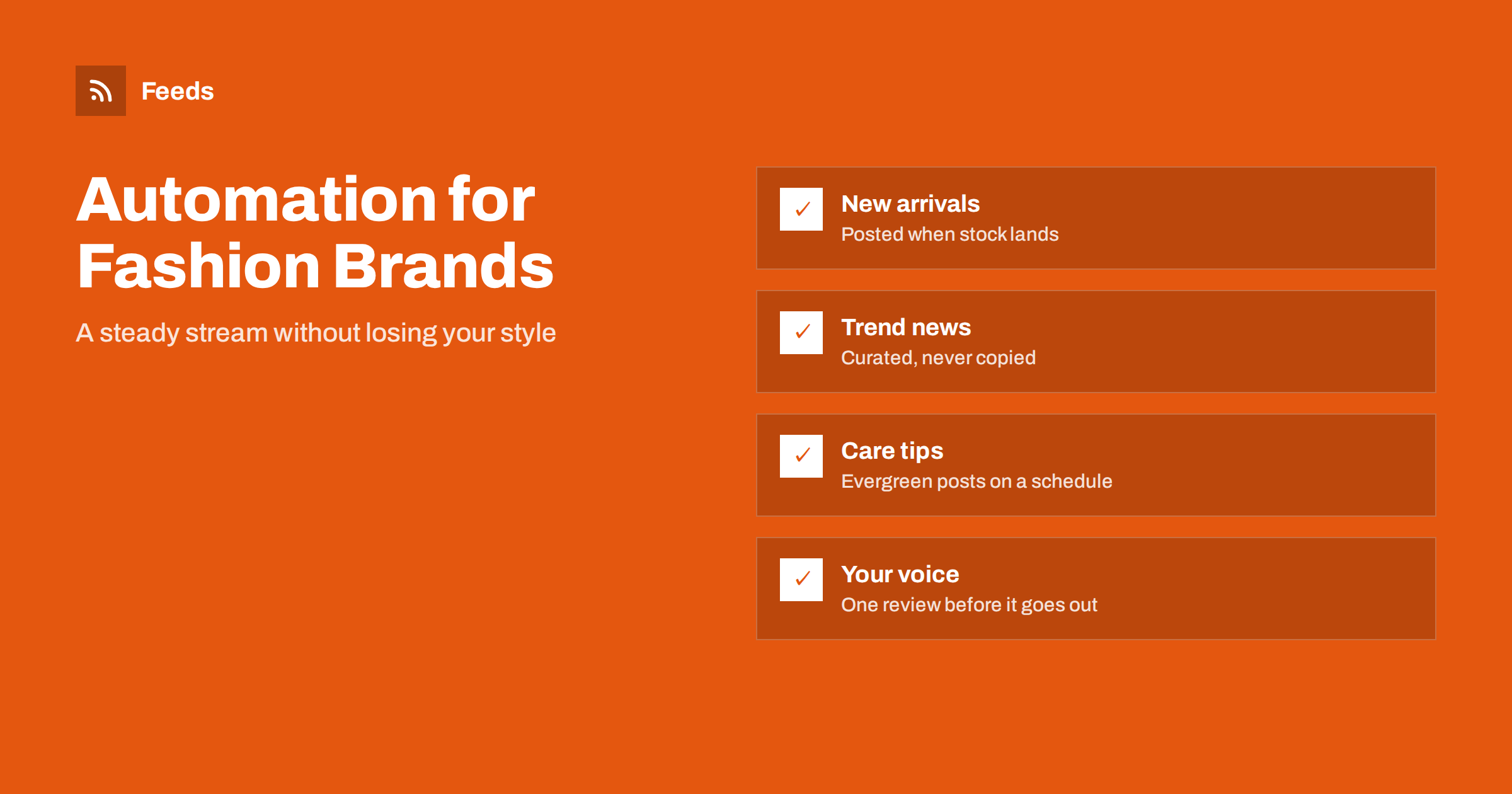
Short answer: A boutique or small fashion brand can automate the routine part of its content: new arrivals from the shop, a calendar of seasonal posts, curated news about trends and materials, and reminders for sales and restocks. The part that makes the brand recognisable, the photos, the tone and the choice of what to feature, stays with a person who reviews the queue once or twice a week.
The content problem in fashion
Fashion is a visual and fast-moving business. Customers expect new pictures every week, a clear sense of the season and a feeling that someone with taste is running the shop. A small team has to do this between buying, packing parcels and answering messages, so content tends to arrive in bursts: a flurry before a launch and silence afterwards.
Silence costs more than most owners think. Followers drift away, search engines see an inactive site and customers who check the last post date may assume the shop has closed. Automation does not create style, but it smooths the rhythm, so the shop looks active even in a quiet week. The overall approach for small firms is described in content automation for local businesses and applies here with a visual twist.
New arrivals without manual posting
The most obvious thing to automate is the new product. When a product is added to the shop, it can appear as an item in a feed, and a tool can turn that item into a post with the picture, name and link. This removes the most repetitive task and ensures every product gets announced. Two guides cover the details: a new-arrivals feed for your store and sharing new products on social media automatically.
A few rules keep these posts good:
- Wait for good pictures. Publish a product to the feed only when the images are final. A poor first photo is hard to take back.
- Do not post every size and colour. Announce the style once, and let the shop page show the variants. The structure of variants is explained in apparel product feeds.
- Control the volume. Ten new items at once should not mean ten posts in an hour. Space them out, as described in how often automated feeds should post.
Trend and industry news, curated and not copied
Customers like a brand that has a point of view. Sharing a selection of articles about materials, craft, sustainability or a coming season shows that you follow the industry. Fashion news is spread across magazines, trade sites, designer blogs and the pages of fabric mills, many of which offer feeds, and some of which do not.
Follow a small number of sources and filter them with keywords for the topics that fit your range. A boutique that sells linen clothing has no use for articles about sportswear. When a source has no feed, you can create one from its list page. Whatever you share, add a sentence of your own, link to the original and never copy its pictures or full text. The legal side is discussed in using RSS feeds from other websites: what is legal, and the discipline of picking and framing items is in how to automate content curation without losing quality.
Evergreen posts on a schedule
Some content is useful all year and can be written once and scheduled to return: how to care for knitwear, how to choose a size, how to wash denim, how to store leather or how to tie a scarf in three ways. These posts answer questions customers ask repeatedly, and they also build search visibility for terms like care and fit.
Plan them as a rotating library. Write twelve short pieces, schedule one every few weeks and change the picture or the opening line each time you reuse a post. The method of planning is shown in how to build a content calendar from feeds and automation.
Sales, restocks and seasons
Fashion has a predictable calendar of seasons, holidays, end-of-season sales and special days. You can prepare and schedule these posts weeks ahead, and then adjust them if the dates or prices change. Restocks are another good case: when a popular item returns, a post or an alert to subscribers is welcomed by the people who asked.
- Always state the real dates of a sale, and check them again before the post goes live.
- Do not announce a discount unless it is the real price in the shop, because a price mismatch damages trust and can break advertising rules.
- Keep one short template for sales so that the posts look consistent.
Template ideas for these posts are in writing post templates for automated social media feeds.
Think also about the order in which content flows. A product arrives, it is photographed, it is added to the shop, and only then does the feed announce it. If the order changes, for example if the feed announces a product before the photos are ready, the post goes out with a placeholder or a poor image. Write down the steps once, and let everyone in the team follow them. It sounds formal, but it takes a few minutes and saves embarrassing posts.
A similar discipline applies to language. If your shop sells in several countries, decide which language each page or profile uses, and avoid posting the same text everywhere. A short, well-written post in the language of the audience beats a long translation that sounds stiff.
Claims about materials and sustainability
Fashion customers care about where and how clothes are made, and brands are often tempted to write broad claims such as eco-friendly or sustainable. Treat these with care. Many countries have rules about environmental claims, and unclear wording can be misleading. State specific facts you can prove, such as the fibre composition on the label, and avoid general claims unless you have the evidence ready. Do not let automation add claims that you have not checked, and never let a tool write about the material of a product from its title alone.
The same caution applies to words such as handmade, vegan, organic and made in a specific place. If the shop feeds these details into a post, make sure the source data is correct first.
Influencers, gifting and user pictures
Customers who post pictures of themselves in your clothes are a great source of content, but they own those pictures. Ask permission before you share one, and credit the person. If you send free products to creators, make sure that the relationship is disclosed in the way advertising rules in your country require. Automation can collect mentions and tagged posts into a review queue, but it should never republish them without a person checking and approving. For more on guard rails, see brand safety for automated posting.
A weekly routine that keeps the style yours
The workload can be small if you keep a routine:
- Once a week, open the queue and approve, edit or delete the drafts.
- Choose two or three products to feature in more depth with your own photos and words.
- Check that the next week’s sale dates and prices are right.
- Once a month, look at which posts brought visits and sales, and adjust your sources and templates.
The aim is to automate the mechanical part so that your time goes into the creative one. If a post does not feel like your brand, edit it or drop it. A queue that is half empty is better than a feed full of items that sound like someone else.
How RSS Feed Creator helps
RSS Feed Creator turns the article list or news page of a website into a standard RSS feed with titles, images, summaries and dates, and it uses an existing feed when the page already has one. You see a preview of the items before the feed is created, so you know which items a tool will receive. You can merge several sources into one feed (up to 10 on paid plans), keep only the items that contain your keywords and have duplicates removed automatically, which suits curated trend news. Feeds refresh every 3 hours on the free plan and every 30 minutes on paid plans, and the free plan allows up to 20 items per feed. The details are on the pricing page.
Related reading
- Full Auto vs Approval Queue: Choosing a Content Workflow
- How to Automate Social Media Posts from an RSS Feed
- Content Automation Checklist: 30 Checks Before You Go Live
The bottom line
A fashion boutique can automate the routine: new arrivals, evergreen care posts, seasonal reminders and curated news. Keep the pictures, the tone and the final choice with a person, check every claim about materials or prices and review the queue weekly. Done this way, the shop looks active all year and still sounds like itself.
FAQ
What can a small fashion brand automate?
New product announcements, scheduled care and sizing posts, sale and restock reminders and a curated stream of industry news. The photos, the tone and the final approval should remain with a person.
Should every new product be posted automatically?
Not necessarily. Announce each style once, wait until the images are final and space posts out so that a large delivery does not flood your pages in an hour.
Can I share articles from fashion magazines?
You can share a link with a short comment of your own, crediting the source. Do not copy their pictures or full text, and check the terms of the site you take items from.
How do I avoid misleading claims about materials?
Use specific facts from the product label, such as fibre composition, and avoid general words like sustainable unless you can support them. Review any automated post that mentions materials or origin.
How much time does the routine take?
For most small shops, about 30 to 45 minutes a week is enough to review the queue, check upcoming sale dates and choose products to feature in more detail.