ENEnglish
 LTLietuviškai
 DEDeutsch
 FRFrançais
 RUРусский
 ESEspañol
 PLPolski
 ITItaliano
 UKУкраїнська
 CSČeština
 PTPortuguês
 JA日本語
 LVLatviešu valoda
 ETEesti
 HUMagyar
 IDBahasa Indonesia
 TRTürkçe
 HIहिन्दी
 ELΕλληνικά
 ARالعربية
 THไทย
 VITiếng Việt
 RORomână
 MSBahasa Melayu
 BNবাংলা
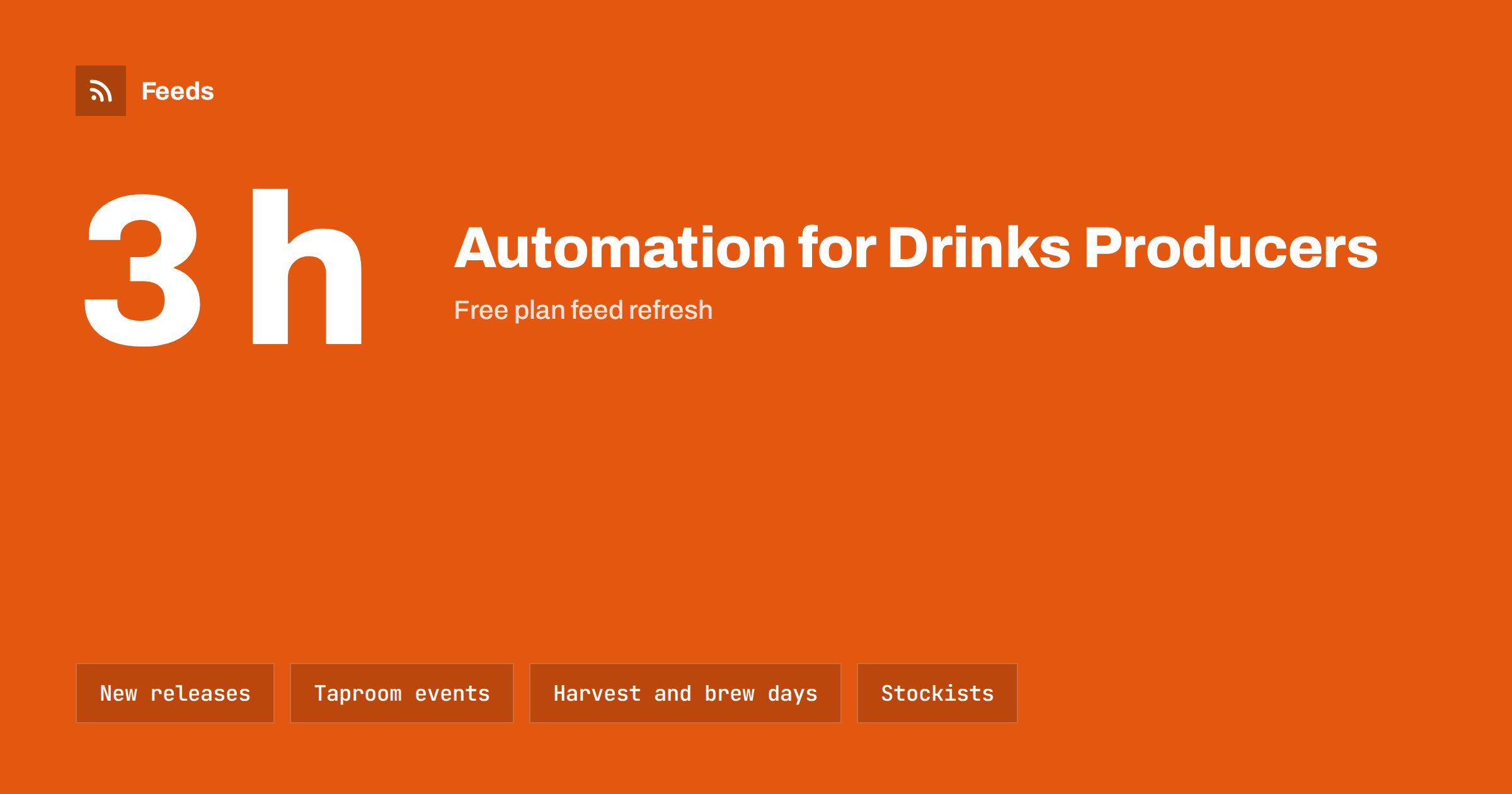
Short answer: A brewery, winery or distillery has a natural publishing rhythm: new releases, taproom and cellar-door events, seasonal work such as harvest or a new cask, awards and new stockists. Most of it already appears somewhere, in the online shop, the events page or the news page, and content automation takes those sources, turns them into feeds and posts new items to social media and the newsletter on a schedule. A short approval step keeps alcohol marketing rules, age gating and embargoed awards under control, while the routine announcements go out even in the middle of harvest or a brew week.
Why drinks producers have more to say than they post
A small producer is a factory, a farm, a shop and a venue at the same time. There is a new beer every few weeks, a vintage release once a year, a tour every Saturday, a tasting on Thursdays, a new restaurant pouring the product, a medal from a competition and the whole slow story of the season. Yet the accounts of many producers show a burst around a release and then silence, because the brewer is brewing, the winemaker is in the vineyard and the person who “does the socials” is also running the bar.
Automation does not write the story of the vintage. It makes sure that the shop, the events page and the news page do the routine posting for you, so that the human time goes into the posts that need a person: the photo from the cellar, the reply to a customer, the launch of the flagship. The basic idea is described in what content automation is.
The sources you already keep up to date
- The online shop. Every new product listing is a release announcement. The new arrivals page, sorted by date, is the single best source.
- The events page. Tastings, tours, release parties, food pairings, live music in the taproom, harvest helper days.
- The news or blog page. Brew day stories, vineyard updates, awards, a new still, a new cask programme.
- The stockists or “where to buy” page. New bars, shops and restaurants that carry the product, updated when a sales rep closes a deal.
- Competition and press results. Award announcements on the competition’s site, reviews in the trade press.
Each of these can be a feed. The shop usually has one or can be given one; how to publish a new arrivals feed from a store is described in how to publish a new arrivals RSS feed. The events page often has none and must be made into one, which is covered in how to turn event calendars into RSS feeds.
Releases: the shop as the source of truth
Treat the shop as the single place where a release is announced. When the new product goes live there, the feed picks it up and the post goes out with the product image, the name, a line from the description and the link. A template keeps releases consistent: style or grape, strength, format and size, price, where to buy. If a release is taproom-only or allocation-only, the shop listing can still exist with that note, so the announcement is the same and only the link differs.
Release posts are the ones most likely to need a date lock. A new beer may go live in the shop on Friday morning but be announced at a launch party on Thursday night, or the other way round. Put the shop feed through an approval step for the day of a launch, or schedule the shop listing to go live at the moment you want the post to appear.
Events: tastings, tours and the taproom
Events repeat, and that is what automation is for. Every new event on the page produces an announcement post when it is added and a reminder a day or two before. Tours and tastings that run every week need a different treatment: one post per week listing the week’s slots, not a post per slot, or the account becomes a timetable. Food pairings, live music and release parties get the full announcement-plus-reminder treatment. The practical setup is in how to promote upcoming events automatically, and the same feed can drive a “this week at the taproom” e-mail.
Harvest, brew days and the seasonal story. The seasonal cycle is the content customers love and the one producers never have time to post during. Harvest, pressing, the first fermentation, a brew day for a seasonal, a new cask going into the warehouse: these are news page stories, and a news page with a feed posts them as they are written. The trick is to lower the bar for the news page. A photo and three sentences from the cellar is a post; it does not need to be an article. If writing on the website is too slow in the field, a shared folder of photos that one person turns into a weekly post is the fallback.
Stockists and awards, with care
A new stockist is good news for the stockist as well as for you, and a post that names them and tags them gets shared. The stockists page can be a feed, but every item should pass through approval: the restaurant may want to announce it themselves, the listing may be a trial, or the name may be spelt wrong. Awards are similar. Competition results are often embargoed until a ceremony, so a feed of the competition’s results page is fine for monitoring but the post about your medal should be written by hand on the day. Where an approval step belongs and where full automation is safe is laid out in full auto vs approval queue.
Alcohol rules, age gating and brand safety
Alcohol marketing is regulated, and the rules differ by country and by platform: age gating on accounts and ads, restrictions on what claims can be made, in some places restrictions on promotions and prices, and platform policies on where alcohol content may appear. Automation changes none of that, but it removes the moment where a person would have noticed a problem. So set the rules once in the system: age-gate the accounts where the platform allows it, keep health or performance claims out of templates, avoid words that suggest excessive drinking, and keep a keyword filter on the sources so that, for example, a news story about a drink-driving campaign in a merged local feed is never reposted by your brewery. The filters that keep automated posting out of trouble are described in brand safety for automated posting. Check the current rules of each platform and your national advertising code before switching anything on; they change.
Where the posts go
For most producers the public channels are Instagram, Facebook and increasingly the local community groups, with X for trade and press contacts and LinkedIn for the business side such as new distribution deals. Instagram is image-led, so the feeds must carry good product and event images; what is possible there with automation is explained in can you automate Instagram posts from an RSS feed, and the Facebook setup is in how to auto-publish an RSS feed to a Facebook page. The newsletter is assembled from the same feeds: releases, this month’s events and the seasonal story, chosen in ten minutes rather than written from scratch.
A rhythm a producer can keep
- When a product goes live: the release post, approved on launch days, automatic otherwise.
- Weekly: the week’s taproom slots and events; one seasonal story from the news page.
- When it happens: new stockists and awards, approved by a person.
- Monthly: the newsletter assembled from the month’s items.
Before switching it on, go through the content automation checklist, and check each season that the shop feed still includes images, the events page still produces items and the filters still catch what they should. A shop redesign or a new events plugin can silently stop a feed, and the quarterly look is where you notice.
How RSS Feed Creator helps
RSS Feed Creator turns the news page, events page or shop listing of a website into a clean RSS feed, even when the site has no feed of its own. It reads titles, images, summaries and dates, uses an existing feed when there is one, and shows a preview of the items before the feed is created. You can merge several sources into one feed (up to 10 on paid plans), keep only the items that contain your keywords and have duplicates removed automatically. Feeds refresh every 3 hours on the free plan and every 30 minutes on paid plans, and paid plans send an alert when a page changes and a feed stops finding items. The free plan allows up to 20 items per feed, and the details are on the pricing page.
Related reading
- Product Feeds for Wine, Beer and Spirits Stores: A Guide
- Content Automation for Local Businesses: A Simple Plan
- How to Automate Social Media Posts from an RSS Feed
The bottom line
A drinks producer already publishes most of its news in the shop, the events page and the news page. Turn those into feeds, let releases and events post themselves with a date lock on launch days, send stockists and awards through a person, and build the alcohol marketing rules into the templates and filters once. The brewer stays in the brewhouse, and the accounts stay alive through harvest.
FAQ
What should a brewery or winery automate first?
New releases from the shop and events from the events page. Both are routine, time-bound and already written. Add the news page for seasonal stories once the first two run smoothly.
Can automated posts break alcohol advertising rules?
They can, because nobody reads them before they go out. Age-gate accounts where possible, keep claims and risky words out of templates, filter merged sources by keyword and check the current platform and national rules before switching automation on.
Should new stockists be announced automatically?
Not without approval. The stockists page can be a feed, but a person should confirm the name, the timing and whether the venue wants the announcement before the post is sent.
How do we handle a release that launches at a party?
Either schedule the shop listing to go live when you want the post to appear, or route the shop feed through an approval queue on launch days so the announcement waits for the event.
How much time does it take each week?
After setup, usually under an hour: approving stockist and award items, glancing at the week’s event posts and choosing the seasonal story. The monthly newsletter takes another ten minutes from the same feeds.