ENEnglish
 LTLietuviškai
 DEDeutsch
 FRFrançais
 RUРусский
 ESEspañol
 PLPolski
 ITItaliano
 UKУкраїнська
 CSČeština
 PTPortuguês
 JA日本語
 LVLatviešu valoda
 ETEesti
 HUMagyar
 IDBahasa Indonesia
 TRTürkçe
 HIहिन्दी
 ELΕλληνικά
 ARالعربية
 THไทย
 VITiếng Việt
 RORomână
 MSBahasa Melayu
 BNবাংলা
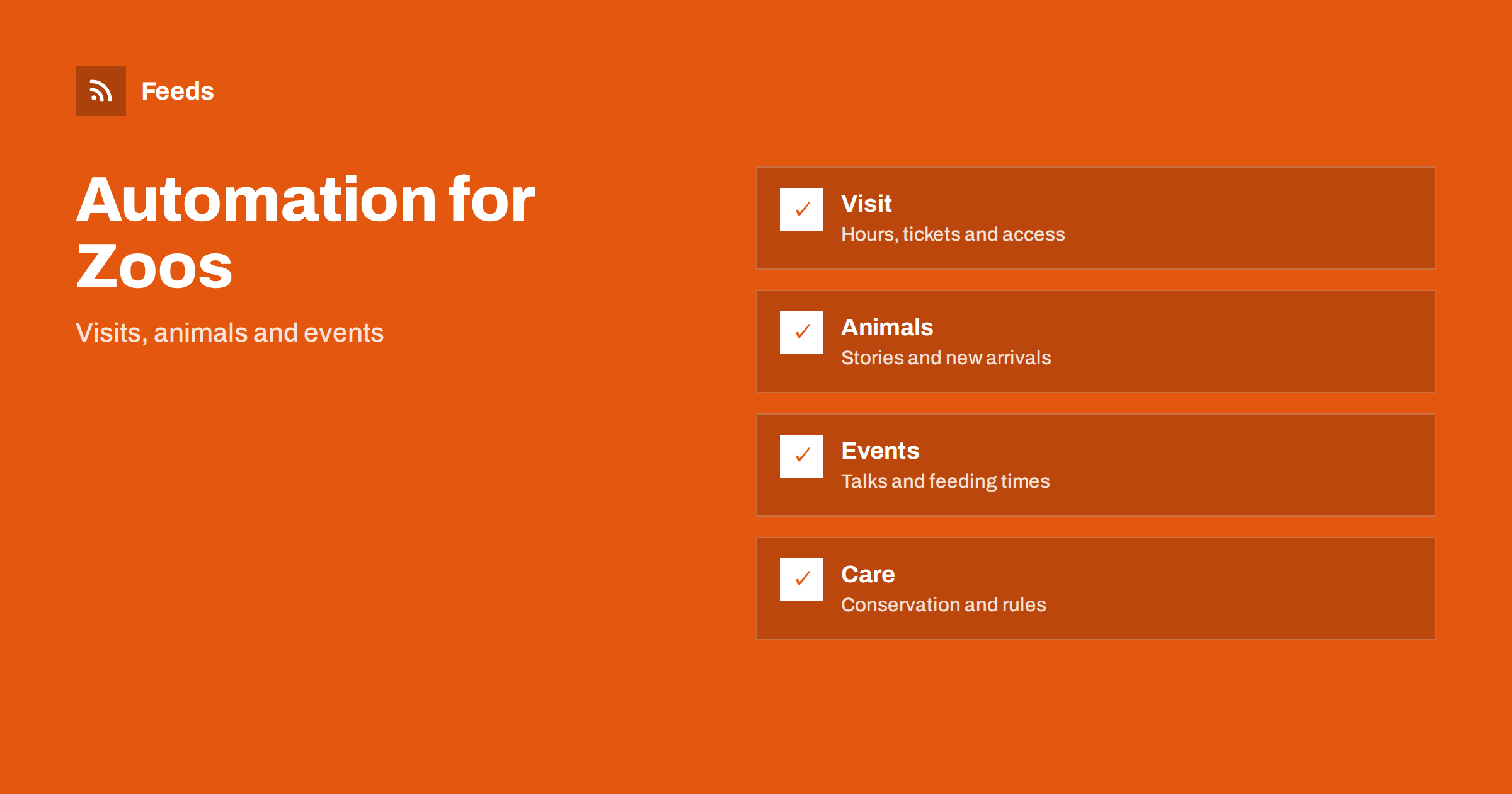
Short answer: Zoos, aquariums and nature reserves publish the same few things again and again: opening hours, ticket information, feeding and talk times, seasonal events, animal stories and conservation messages. Most of this can be prepared and scheduled, and local news and event pages can be collected with RSS. Keep updates about animal health, closures and incidents in the hands of staff, because visitors and animals depend on accurate information.
What a wildlife attraction needs to publish
Visitors ask simple questions: are you open today, what does it cost, how long should we stay, what can we see at what time and where do we park? Families plan a trip days ahead, schools plan a visit months ahead, and local people want to know what is new. The audience is wide, from young children to specialists, and the content must be clear for all of them.
The team is usually small, and the animals come first. Keepers, educators and guides have little time for writing posts, so a plan that uses scheduled content for the routine and leaves room for real moments from the day works best. If the idea is new, what is content automation explains the basics in plain words.
Think about the languages of your visitors. Many attractions welcome tourists, and a short post or page in the main visitor languages, with hours, prices and directions, is a real help. Keep these translations simple and have them checked by a speaker of the language, because a wrong price or opening time in a translated post still counts as a mistake. Update all language versions at the same time.
Opening hours, tickets and practical information
The most important content is practical: hours, prices, access, parking, accessibility and what to bring. Keep one page on your website as the single source, link to it from every profile, and keep the information in posts short. When hours change for a season or a holiday, announce it a few weeks in advance and again a few days before.
Automation helps with reminders: the winter hours post in autumn, the holiday schedule before each holiday and the school trip booking reminder in spring. Check the dates every year, because a copied post with last year’s hours is worse than no post. A calendar approach is described in build a content calendar from feeds and automation.
Feeding times, talks and daily programme
A daily programme turns a visit into a plan. Publish the times of talks, feeding sessions, guided walks and shows in a short weekly post and on the website, and mention that times can change with weather and animal needs. A simple line such as check the board at the entrance on the day protects you from complaints when a session moves.
Do not automate the daily programme blindly. If a session is cancelled because an animal is unwell or the weather is bad, a person must change the post and the website at once. Keep an easy way to pause the queue, as described in pause automated posting: a crisis plan.
Think about the visitor who arrives late in the day. A short post in the afternoon that lists what is still to come, such as the last feeding and closing time, brings people at the right moment and shows that the programme is alive.
Photography deserves a plan. Ask keepers to send two or three good pictures each week, with a line of caption and the name of the photographer, and keep them in a folder that the person preparing the posts can use. Pictures of visitors, especially children, need permission, so prefer animals, landscapes and staff who agree to appear. A steady stream of real pictures makes automation feel personal.
Animal stories, new arrivals and conservation
Animal stories are the heart of the content. A new arrival, a birth, a rescue, a keeper’s day or a milestone in a breeding programme draws interest, and a library of photos and short texts can be prepared in advance. Spread stories through the week and share them again later, with a different picture and text, as explained in how to reshare evergreen content automatically without spamming.
Be careful with wording. Use the facts that the animal care team confirms, avoid human names and voices that mislead about the animal’s nature and do not exaggerate a risk or a rescue. For sensitive news, such as the death of an animal or a disease, write the message with the care team and publish it yourself. Conservation messages should be accurate and refer to your own work or to official sources, and not to claims that you cannot support.
Events, schools and partners
Seasonal events, night walks, holiday programmes, school workshops and volunteer days bring regular income and a reason to return. Prepare a post for each event a month ahead, a week ahead and the day before, with the date, the age range, the price and the booking link. Mention if places are limited, and update the post when the event is full.
Partners such as schools, local councils, tourist offices, conservation groups and universities publish news and event calendars that you can follow. Many of these pages have no RSS link, and how to promote an event calendar automatically shows how to reuse calendar items for your own posts. Content automation for museums and galleries describes a similar visitor setting.
Seasonal rhythm matters. A zoo that is busy in summer needs posts about queues and shade, and in winter it needs posts about indoor exhibits and short visits. A reserve that is rich in birds in spring and quiet in midsummer should promote the right walks at the right time. Write a yearly plan with one theme for each month, and fill it with posts that are scheduled ahead.
Visitor questions, reviews and safety
People ask questions before and after a visit, and many of them are the same: can we bring a pushchair, is there food, are dogs allowed, is it suitable for a wet day? Answer them on a page and share the answers as a series of short posts. Reply to comments yourself, with a short human answer, and do not automate replies about safety or health.
Reviews are visible and matter for a place that depends on visitors. Thank people who write kindly, answer problems calmly and fix what can be fixed. Rules about photos of children, drones, feeding animals and behaviour at enclosures should be written in plain words and repeated before busy days, because they protect both visitors and animals.
Think about accessibility. Describe the routes, the toilets, the quiet times and the support for visitors with limited mobility or sensory needs, and share this information clearly and regularly. It is useful for the people who need it, and it shows that your attraction welcomes everyone.
Content you should not automate
Some posts must be written at the moment of need: closures, weather warnings, escaped or injured animals, outbreaks of disease, safety incidents and sad news. A scheduled cheerful post at the wrong moment looks careless and may cause harm. Keep an approval step in front of the queue, as described in full auto vs approval queue, and check the queue every morning.
Keep a short backup plan. Prepare draft messages for bad weather, a temporary closure and a late opening, so that staff only change the details and publish. For a wider view of the risks, brand safety for automated posting offers a checklist.
How RSS Feed Creator helps
RSS Feed Creator turns the news, notice and calendar pages of local councils, tourist offices, schools, conservation groups and partner venues into clean RSS feeds, even when the site has no feed of its own. It reads titles, images, summaries and dates, uses an existing feed when there is one, and shows a preview of the items before the feed is created. You can merge several sources into one feed (up to 10 sources), keep only the items that contain your keywords and have duplicates removed automatically, which suits a feed of local events and news worth sharing with visitors. Feeds refresh every 3 hours on the free plan and every 30 minutes on paid plans. The free plan allows up to 20 items per feed, and the details are on the pricing page.
Related reading
- Content Automation for Museums, Galleries and Cultural Venues
- How to Promote Upcoming Events Automatically from a Calendar
- Content Automation for Hotels, Restaurants and Tourism
The bottom line
Zoos, aquariums and nature reserves can automate the steady parts of communication: opening hours, programme reminders, animal stories, events and partner news. Keep updates about animal health, closures and incidents in the hands of staff, check dates and prices before posts go out and keep an approval step in front of the queue. Good automation leaves more time for the animals and the visitors.
FAQ
Which posts are safe to schedule in advance?
Opening hours reminders, event announcements, animal stories and conservation messages, as long as dates and facts are checked before release.
What should never be automated?
Closures, weather warnings, animal health news, incidents and sad news. Staff should write and publish these at once.
How often should an attraction post?
A few posts a week cover most needs: one practical post, one animal story and one event or programme post. Add more in busy seasons.
How do I find local events to share?
Follow the news and calendar pages of the council, tourist office and partner groups. A feed brings new dates to you instead of you checking each site.
Can I reuse animal stories?
Yes, with a new picture and text, and spaced out over time. Keep the facts confirmed by the animal care team.