ENEnglish
 LTLietuviškai
 DEDeutsch
 FRFrançais
 RUРусский
 ESEspañol
 PLPolski
 ITItaliano
 UKУкраїнська
 CSČeština
 PTPortuguês
 JA日本語
JA日本語 LVLatviešu valoda
 ETEesti
 HUMagyar
 IDBahasa Indonesia
 TRTürkçe
 HIहिन्दी
 ELΕλληνικά
 ARالعربية
 THไทย
THไทย VITiếng Việt
 RORomână
 MSBahasa Melayu
 BNবাংলা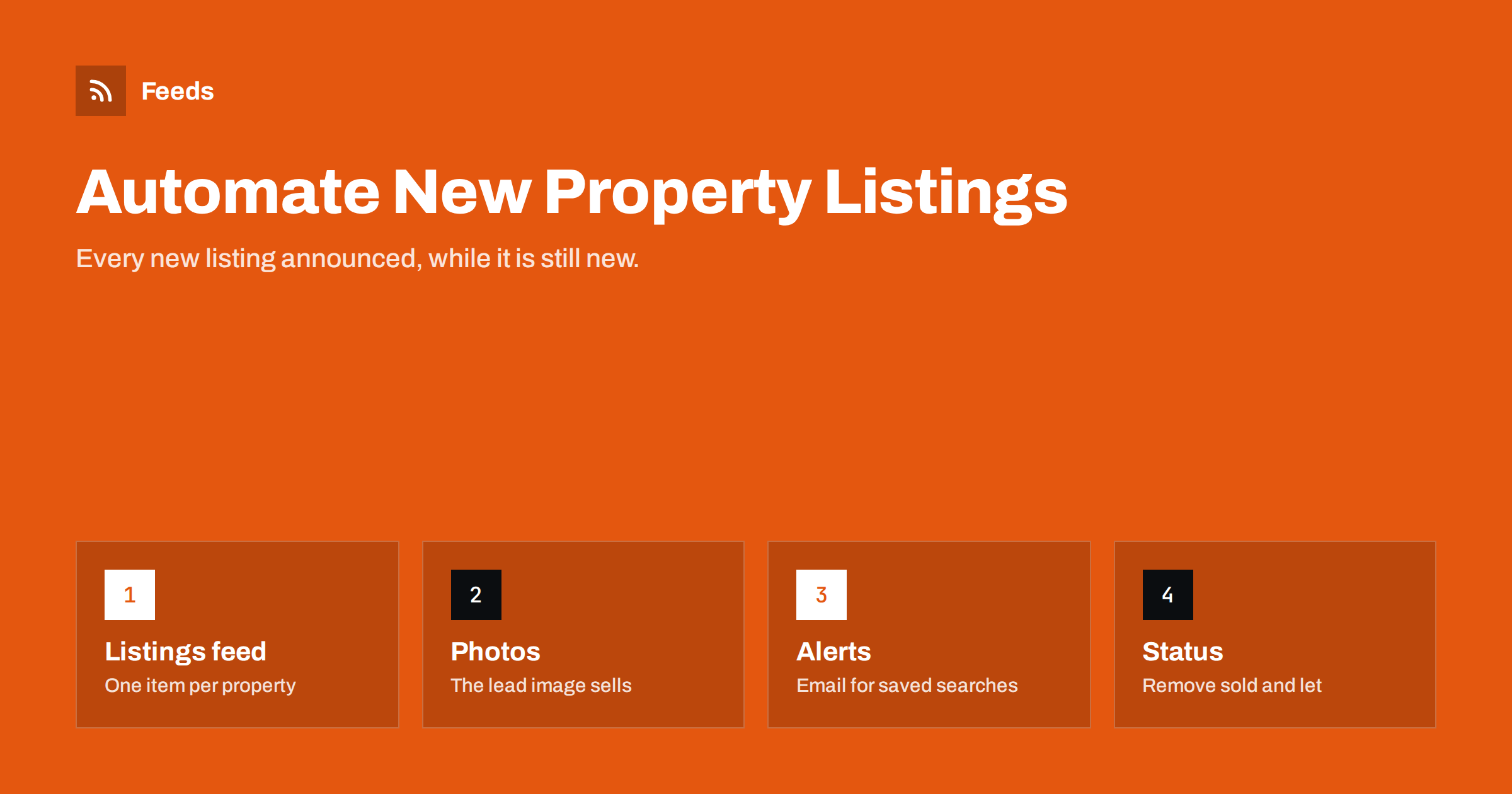
Short answer: A real estate agency can announce new listings automatically by using a feed of new properties from its website, either from the property software, the CMS or a feed created from the listings page, and connecting it to social pages, messaging channels and email alerts. Use templates that lead with the key facts (type, area, price or price range, size), make sure each listing has a strong lead photo, pace posts when many listings go live at once and keep sold or let properties from being promoted.
Why listings suit automation
Property listings are structured, frequent and time-sensitive. Each has a title, location, price, size, photos and a link, exactly the kind of data feeds carry well. New listings attract the most interest in their first days, so announcing them quickly on every channel matters. And agencies often add listings in batches after valuations and photo shoots, which makes manual posting a chore that easily falls behind.
Automation ensures that every new property is announced on the agency’s social pages and to interested buyers or tenants shortly after it appears on the website. Agents can focus on viewings and clients instead of copying listing details into several platforms.
Portals remain important for property search, and automation does not replace them. It complements them by reaching people who follow the agency directly: past clients, neighbours, local followers and subscribers who want to hear about new listings before they browse the big portals.
It also creates consistency. Every listing gets the same baseline exposure, rather than only those an agent happened to remember to post.
Getting a feed of new listings
- Property management software often exports listings to portals in XML formats and may provide RSS or other feeds for the agency website. Check what your software offers.
- Website CMS: if listings are a post type or category on the website, a feed may be available directly.
- Listings page without a feed: a feed can be created from the page that lists new properties, as long as each property has its own title, link and image.
Check a few items in the feed before connecting it anywhere. Property descriptions are often long; the feed’s summary should be a short, readable excerpt rather than the full description with all technical details. Also make sure each item links to the individual property page, not to a search result that may change.
Sort the feed by newest first, and consider separate feeds for sales and rentals, or for different regions or property types, so each can go to the right audience.
Templates that make people click
Property seekers scan quickly for a few facts. Put them first:
- Type and location: “New: 2-bedroom apartment, Old Town”.
- Size and key feature: “68 m², balcony, renovated kitchen”.
- Price or price range if your market and policy allow publishing it.
- Link to the listing page with all photos and a contact option.
To make templates work, listing titles and short descriptions on the website must contain these facts in a consistent order. Agencies that standardise listing titles benefit on every channel, from portals to social media.
Keep the template honest. Automated posts should never exaggerate; they copy what is on the listing page, which should already comply with the advertising rules that apply to property in your country.
Photos: the lead image does the selling
In property, the first photo often decides whether someone clicks. Make sure:
- The listing page’s Open Graph image is the best exterior or main-room photo, not the logo or a floor plan.
- Images are large enough for social previews and sharp on phones.
- For image-first networks such as Instagram, square or portrait versions work better; consider drafts so an agent can pick the right photo.
- Photo rights are clear. Professional photos may be licensed only for certain uses; check that social media is covered.
- Photos do not show personal items, documents or people that the owner or tenant would not want published. Automation spreads whatever is on the listing page, so check privacy before a listing goes live.
Channels for listings
| Channel | Use | Tip |
|---|---|---|
| Facebook page | Broad local reach for every listing | Link previews show the lead photo |
| Visual properties, premium listings | Drafts or carousels chosen by an agent | |
| Messaging channels | Subscribers who want every new listing fast | Separate channels for sales and rentals |
| Email alerts | Buyers and tenants who registered interest | Instant alerts or daily digests |
| Internal chat | Agents know what went live | Useful for matching with waiting clients |
Email alerts for interested buyers and tenants
Many agencies keep lists of people looking for specific properties. An email platform’s RSS campaign can send new listings from a feed as instant alerts or a daily digest. For finer matching, use separate feeds by region, property type or price band, and let subscribers choose which alerts they receive. Mention in each alert how to change preferences, since search criteria often shift as buyers learn the market. Keep consent records and an easy unsubscribe; property searches end, and people should be able to stop alerts when they have found a home.
Pacing and listing status
After a busy week of photo shoots, an agency might publish fifteen listings in one afternoon. Posting them all at once floods followers. Use a daily cap and queue, or a daily “new this week” roundup with a carousel of the best photos and a link to the listings page.
Status matters too. Automated posts stay on social pages after a property is sold or let. Make sure listing pages clearly show the new status rather than disappearing, so visitors from old posts see what happened and are offered similar properties. Exclude reduced, sold or let updates from the “new listing” feed unless you deliberately want to announce price changes.
Example: an agency with three offices
Consider an agency with offices in three towns, one website and a shared listings page. Each office has its own Facebook page, and the agency runs one Instagram account and a Telegram channel for rentals.
- Feeds by town and type. The listings page is split into feeds for each town, and a separate feed contains only rentals. Each town’s feed goes to that office’s Facebook page; the rentals feed goes to the Telegram channel.
- Consistent titles. The agency agreed a title format: type, rooms, area, town. Templates therefore show the key facts without editing, on every channel.
- Instagram by hand-picked drafts. New listings create drafts in the posting tool. Once a week, the marketing coordinator chooses the three most photogenic properties and publishes them as a carousel.
- Email alerts by segment. Registered buyers choose towns and property types at sign-up and receive a daily digest from the matching feeds.
- Internal notice. Every new listing appears in the agents’ chat channel, so an agent with a waiting client can call them the same day.
The agents’ only added task is entering listings carefully on the website, which they did anyway. Everything else follows automatically, and the coordinator’s weekly Instagram selection adds the human touch where visuals matter most.
How Feeds helps agencies
Feeds turns any page that lists items, including a listings page on an agency website, into an RSS feed with titles, images, summaries and dates, and you can check the found listings and their photos in a preview before the feed is created. Keyword rules can split one listings page into separate feeds, for example by town or by “for rent” and “for sale”, and several offices’ pages can be merged into one feed with duplicates removed. Feeds refresh on their own, and paid plans alert you if the listings page changes and the feed stops finding items. See the pricing page for plans.
Related reading
- How to Share New Shop Products on Social Media Automatically
- Why Automated Social Posts Lose Images and How to Fix It
- How to Auto-Publish an RSS Feed to a Facebook Page
- How Often Should Automated Feeds Post to Social Media?
The bottom line
New property listings are ideal for automation: structured, frequent and most valuable when fresh. Get a feed of new listings, standardise titles so templates show type, area, size and price at a glance, make the best photo the preview image, send listings to social pages, messaging channels and email alerts, pace busy days and keep listing status clear. Agents then spend their time with clients instead of copying listings.
DUK
Can property listings be posted to Facebook automatically?
Yes. Connect a feed of new listings from your website to a social posting tool. Facebook builds the preview from the listing page, so make sure the best photo is set as its Open Graph image.
What should an automated listing post include?
Property type, location, size, one key feature, the price if you publish it and a link to the listing page. Standardised listing titles make this easy.
How can buyers get alerts for new listings?
An email platform’s RSS campaign can send new listings from a feed as instant alerts or a daily digest. Separate feeds by region or type allow more targeted alerts.
What happens to posts when a property is sold?
The social posts remain. Update the listing page to show it as sold or let and suggest similar properties, rather than deleting it.
Should every listing go to Instagram?
Not necessarily. Instagram rewards strong visuals, so many agencies post only their most photogenic listings there, often chosen and cropped by an agent.
Can one listings page be split into several feeds?
Yes. Keyword rules on words such as town names or “for rent” can create separate feeds from one listings page, so each office or audience receives only relevant properties.