ENEnglish
 LTLietuviškai
 DEDeutsch
 FRFrançais
 RUРусский
 ESEspañol
 PLPolski
 ITItaliano
 UKУкраїнська
 CSČeština
 PTPortuguês
 JA日本語
JA日本語 LVLatviešu valoda
 ETEesti
 HUMagyar
 IDBahasa Indonesia
 TRTürkçe
 HIहिन्दी
 ELΕλληνικά
 ARالعربية
 THไทย
THไทย VITiếng Việt
 RORomână
 MSBahasa Melayu
 BNবাংলা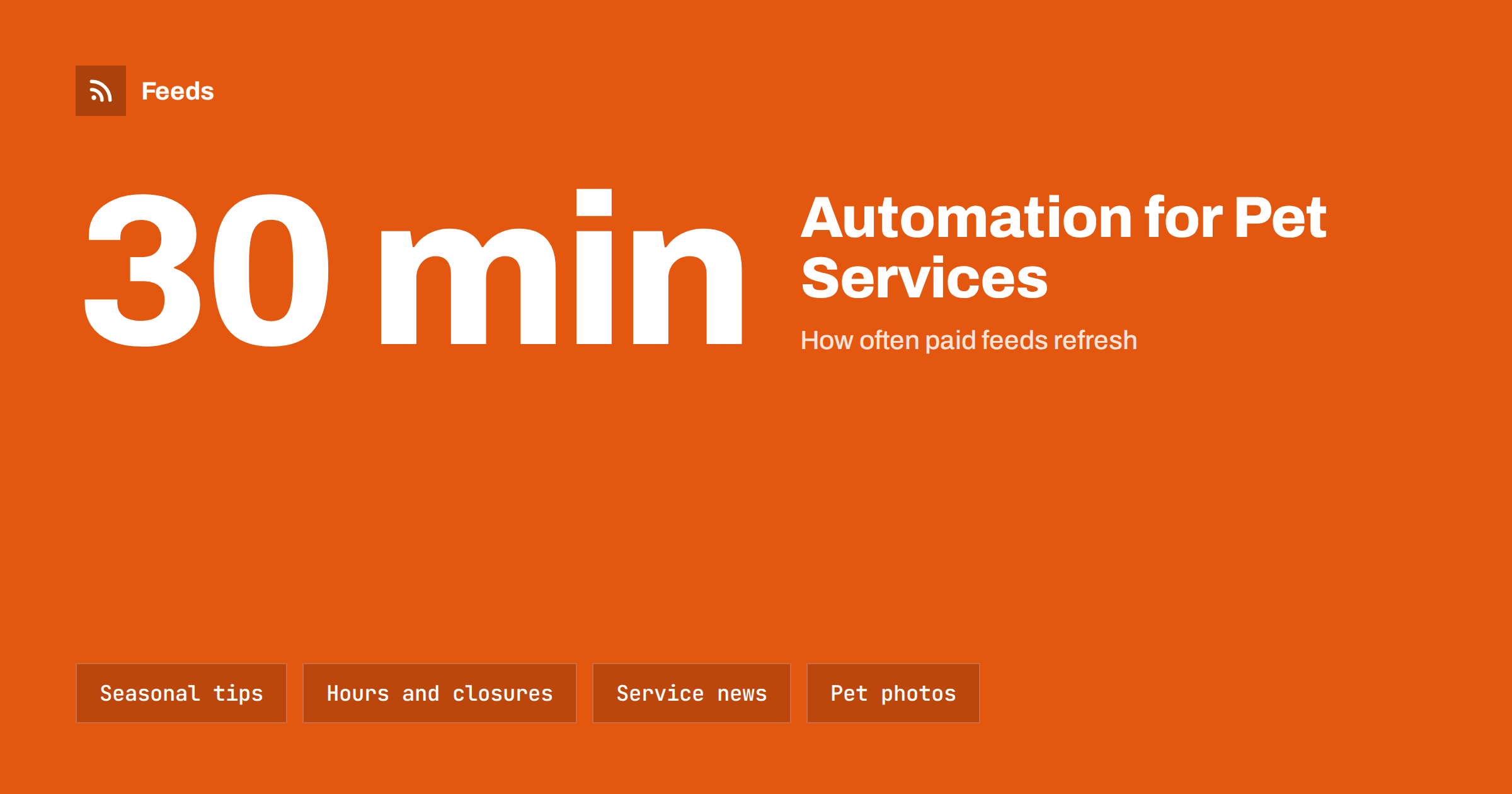
Short answer: Veterinary clinics, groomers, trainers, boarding kennels and pet sitters can automate most of their routine communication: seasonal reminders, opening hours, holiday closures, new services and general care tips. Publish each item once on your own site, let a feed distribute it to social profiles and listings, and keep a person approving what goes out. Do not give individual diagnoses in public, and ask owners before showing their animals.
Why pet businesses benefit from regular content
Pet owners are loyal and emotional customers, and they go online whenever something worries them: a new puppy, a limp, a heatwave, fireworks night. The business that appears at that moment with useful, calm information earns trust long before the owner needs an appointment. Pet services are also local. Most customers live within a short distance, so a steady presence in local search and on social networks pays off more than a wide reach.
The obstacle is time. In a clinic the same people treat animals and answer the phone, and a groomer or trainer works with their hands all day. Posts are written late in the evening, or not at all. Automation helps by taking over the repeated steps, as described in content automation for local businesses, while the owner keeps the decisions that need care.
Content that is easy to automate
Start with items that follow a rhythm or that you write once and reuse:
- Seasonal reminders. Ticks and fleas in spring, heat and water in summer, fireworks stress at New Year, cold and antifreeze in winter, and the yearly vaccination reminder. Prepare them once and schedule them for the same weeks every year.
- Opening hours and closures. Holiday hours, the emergency number out of hours and the nearest emergency clinic. These are the posts owners value most.
- Service news. A new treatment room, a puppy class, a grooming package, a boarding date that opens for booking.
- Team introductions. A new vet, nurse, trainer or groomer, with a short, friendly note.
- Events. Open days, microchipping days, adoption events. See how to promote upcoming events automatically from a calendar.
Reusable items such as a guide to your first kitten visit are good candidates for gentle resharing. The approach in resharing evergreen content automatically keeps them from feeling repetitive.
Different pet businesses have different calendars. A clinic follows the seasons of parasites and vaccinations. A groomer is busiest before holidays and in spring when coats are shed. A boarding kennel needs dates early, since summer and winter places fill up months ahead. A trainer builds around the start of new classes. Write down the three or four moments each year when your customers need to hear from you, and prepare those posts well in advance. Automation then works like a reliable assistant who reminds owners at the right time, year after year.
Use your own site as the source
Publish every item first on your website, in a news or blog section. Owners then find the full information in one place, and the site shows search engines that the business is active. A feed from that section can then feed social posts and your business listing without retyping. If your site does not have a feed, a tool can create one from the page that lists the articles, as in how to create an RSS feed for a website without one. For your listing on maps and search, see whether you can auto-post to Google Business Profile from RSS.
Write short, clear items. A seasonal tip works best with a headline that names the problem, two or three practical sentences and a pointer to call the clinic if the owner is worried. Include your phone number and booking link on the page, not only in the post.
Accuracy, advice and responsibility
Pet health is a field where wrong information can hurt an animal. Keep public content general. Explain, for example, why fresh water matters in summer or what signs of heat stress to look for, but do not suggest a diagnosis or a treatment for a particular animal in a post or a comment. Invite the owner to call or book. A short line such as “If you are worried about your pet, contact us” is both kind and prudent.
Check the rules for veterinary advertising in your country and the guidance of your professional body, since they may restrict claims, prices or comparisons. Have a vet review every health-related item before it is scheduled. For products such as food and supplements, repeat only what the manufacturer states and avoid promises. This article is general guidance, not legal advice.
Photos, owners and consent
Animal photos are the strongest content in this field, and also the one that needs permission. Ask owners for written consent before you show their pet and, if the owner is visible or named, for consent to that as well. Avoid showing medical details or conditions that identify a client. Never publish before and after images of surgeries or injuries without a clear agreement.
Stock images are fine for general tips, but choose them with care: no distressing scenes, no breeds or situations that mislead. Make sure the image is passed on correctly by your automation, because posts without a picture perform poorly. If images disappear, the checks in why automated social posts lose images and how to fix it help.
Reviews and thank-you messages also belong in the plan. Happy owners often write kind words about a visit, and sharing a few of them, with the author’s permission, builds trust with new clients. Never answer a negative review with details about the animal’s treatment, since that would reveal private information. Reply politely, offer to talk offline and keep the automation out of this part entirely.
Keep a person in the loop, and a pause button
Set the automation to create drafts that one named person reviews, for example the practice manager. They check facts, tone and consent, then schedule the post. The balance between control and speed is explained in full auto versus approval queue. Agree on a pause rule. If there is an outbreak, a closure, a sad event or a change of hours at short notice, stop scheduled posts at once so that cheerful promotions do not appear at the wrong moment. A plan for this is in when to pause automated posting: a crisis and holiday plan.
For sensitive moments, such as the loss of a well-known patient or a serious illness in the community, write by hand and let the automation wait.
Include a calm way to reach you in an emergency. Say clearly on the site and in the profile which number to call and where to go out of hours. Add a line in each automated template reminding owners that social messages are not monitored around the clock. This protects animals, and it protects your team from the pressure of answering every comment immediately.
Posting rhythm and results
One or two posts a week is enough for most practices, with extra notices when hours change. Concentrate on being useful at the right moment, and avoid filling the calendar with items that nobody needs. The guidance in how often automated feeds should post to social media helps you choose a pace.
Measure results by what the business cares about: calls, bookings, new clients and returning visits for vaccinations and check-ups. Look at which topics bring enquiries and repeat them. How to measure whether content automation is worth it shows a simple method. For businesses that also sell food, accessories or toys online, a product feed is the next step, and product feeds for pet supply stores covers it.
How RSS Feed Creator helps
RSS Feed Creator turns a page such as a news page or a list of services into an RSS feed, with titles, images, summaries and dates, and shows a preview before anything is created. You can keep or exclude items by keywords, merge sources (up to 10 on paid plans), and duplicates are removed automatically. Feeds refresh every 3 hours on the free plan and every 30 minutes on paid plans. The feed link works in any RSS reader or automation tool, so new items can wait in an approval queue. The free plan allows up to 20 items per feed, and the details are on the pricing page.
Related reading
- Content automation checklist: 30 checks before you go live
- Writing post templates for automated social media feeds
- Content automation for gyms, fitness studios and coaches
The bottom line
Pet businesses can automate the routine part of their communication and keep the personal part. Publish seasonal tips, hours and service news on your own site, distribute them through a feed, review every item, keep health advice general and ask permission for every animal photo. Keep a pause rule ready, and judge the results by bookings.
FAQ
Can a vet clinic give health advice in automated posts?
General information is fine when a vet has reviewed it. Individual diagnoses or treatment advice should never be public. Invite owners to contact the clinic.
Do I need permission to post a client’s pet photo?
Yes. Ask the owner before showing the animal, and again if the owner can be recognised or named. Keep the consent on record.
How can I post opening-hour changes quickly?
Publish the notice on your site and let the feed carry it to your profiles. For urgent changes, pause the queue and post by hand so the notice appears first.
What is the best posting frequency for a small practice?
One or two posts a week, plus notices when hours change. Helpful and timely beats frequent.
Can groomers and trainers use the same approach?
Yes. Publish service news, packages, class dates and tips on your own site, and distribute them through a feed with an approval step.