ENEnglish
 LTLietuviškai
 DEDeutsch
 FRFrançais
 RUРусский
 ESEspañol
 PLPolski
 ITItaliano
 UKУкраїнська
 CSČeština
 PTPortuguês
 JA日本語
 LVLatviešu valoda
 ETEesti
 HUMagyar
 IDBahasa Indonesia
 TRTürkçe
 HIहिन्दी
 ELΕλληνικά
 ARالعربية
 THไทย
 VITiếng Việt
 RORomână
 MSBahasa Melayu
 BNবাংলা
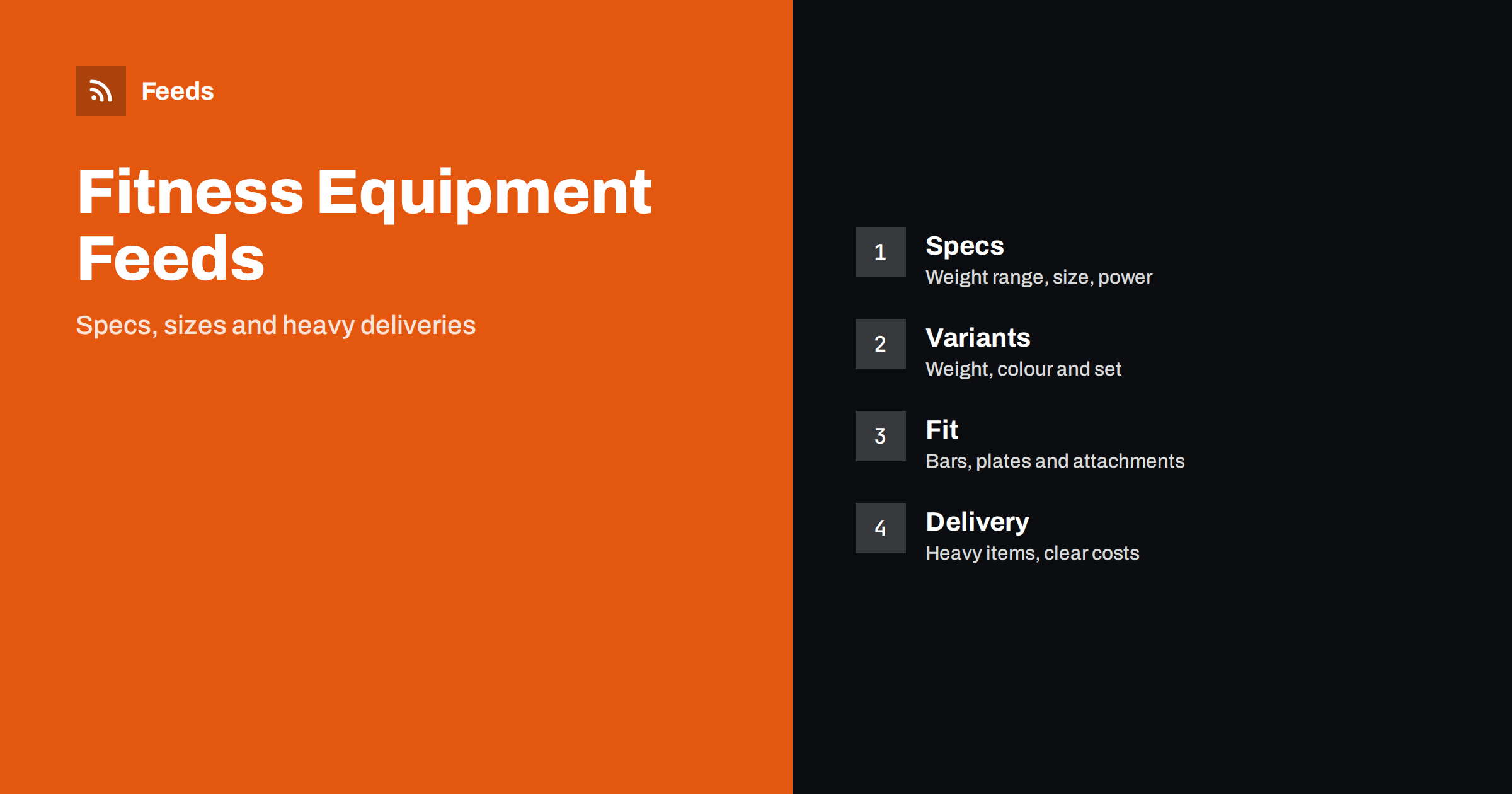
Short answer: Fitness equipment is bought by people who compare numbers: the maximum user weight of a treadmill, the load capacity of a rack, the diameter of a barbell, the resistance range of a set of bands. A good product feed puts those facts into titles and attributes in a consistent order, separates variants and sets properly, shows compatibility for bars, plates and attachments, and states heavy-item delivery honestly. The feed does not make the equipment better, but it decides whether the right buyer finds it and whether the page they land on confirms what they expected.
Why this category needs careful feeds
Home gym buyers search with details. They type “adjustable dumbbells 24 kg”, “foldable treadmill small apartment” or “power rack with pull-up bar”. They also worry about space, noise, weight and whether parts fit together. A wrong choice is costly: equipment is heavy, returns are awkward and shipping is expensive. If the feed hides the key specification in a long description, shoppers who search for it may never see your product, and those who do may buy the wrong size.
The category is also seasonal. Interest rises in January, drops in spring and rises again in autumn, and there are bursts around sales events. A feed that ignores stock during those peaks advertises products you cannot ship. The general structure of a feed is explained in what a product feed is, and the required fields in Google product feed attributes.
Titles that lead with the buyer’s search
A useful title follows a fixed pattern, so every product in a group reads the same way. For a treadmill it might be brand, model, type, maximum speed and maximum user weight. For dumbbells it might be brand, type, weight range and increment. For a barbell, brand, length, diameter and load capacity. The pattern should match what customers search for, not the order in your supplier’s spreadsheet.
Do not fill titles with promotional text such as “best price” or “free delivery”, and do not add words that are not true of the product. Keep the exact model name, because experienced buyers often search for it. If your platform produces titles you cannot change, a feed rule that rebuilds titles from attributes keeps them consistent; see product feed title optimization.
Specifications that belong in attributes
List the figures shoppers compare and make sure they exist as structured data in your store, not only as text in a description. For cardio machines that means dimensions folded and unfolded, maximum user weight, motor power, speed range and incline. For strength equipment it means load capacity, material, thickness, dimensions, weight and adjustment range. For accessories such as mats, bands and straps it means size, thickness, resistance level and material.
Use the same units across the catalogue and state them clearly. Mixing kilograms with pounds, or centimetres with inches, confuses both people and systems. If you sell in several countries, the right unit may depend on the market, and multi-country product feeds explains language and currency. Copy the manufacturer’s ratings and test conditions; never write a stronger claim, such as a higher user weight, than the manufacturer gives.
Variants, sets and add-ons
Many items come in several versions: a bench in different colours, a kettlebell in different weights, a rack with or without a lat pulldown. Each version should be its own item with its own identifier, linked as a group with a shared group identifier so that the platform understands they are variants of one product. The mechanism is described in how item_group_id works.
Check that each variant has the right price, image, availability and link. A common mistake is to use one photo for every weight or to send every click to the default option. If a shopper clicks an advert for a 20 kg set and lands on a page showing 10 kg, they leave. Where a product can be configured, send shoppers to a page that opens the chosen version or at least makes the chosen option clear.
Compatibility: bars, plates and attachments
Fitness equipment is modular. Plates must fit the bar sleeve, attachments must fit the rack hole spacing, cables need the right connectors and replacement parts are made for specific models. Put the compatible standard, diameter or model in the title or a clearly labelled attribute and on the product page, and avoid vague words such as “universal” unless you can say exactly what fits.
Give accessories and spare parts their own identifiers instead of hiding them in a parent product, so that a shopper can find “replacement belt for model X” directly. The same approach is covered in auto parts product feeds and product feeds for sports and outdoor stores.
Bundles and complete home gym packages
Bundles are common: a bench with a rack and a barbell, a set of plates with a bar, a starter kit with mats and bands. Treat each bundle as its own product with its own identifier, a title that says what is inside and a price that matches the checkout. Do not reuse the identifier of a single item for a package, and do not show a bundle at the price of one component. The rules of thumb are in bundles and multipacks in product feeds.
Describe what the buyer actually gets. “Home gym package” is not enough if the bar, collars or bench are not included; list the main parts. Many returns come from misunderstanding what was in the box, not from a defect, and a precise title and description prevent most of them.
Heavy items, delivery and returns
Large equipment is delivered differently from small parcels: pallets, two-person delivery, assembly services and delivery windows. Shipping costs may be high, and a surprise at checkout is a common reason for lost orders and for disapprovals when the price shown differs from the final cost. Keep delivery settings accurate for each size class and make sure the cost and time promised in your advert match the page. The difference between account settings and attributes is explained in shipping in product feeds.
State return conditions clearly on the site, including who pays for returning a heavy item and whether assembled equipment can be returned. A shopper who finds these conditions before buying is less likely to be disappointed afterwards. Make sure that the page the feed links to shows the same price, stock and variant, as described in product landing pages: what feed links must lead to.
Honest claims, safety and restricted items
Fitness products attract exaggerated promises: “burn fat fast”, “lose weight without effort”, “guaranteed results”. Platforms restrict claims about health and body results, and shoppers distrust them. Describe what the equipment is and does, such as resistance levels, programmes and dimensions, and leave promises about results out of titles, descriptions and images. Avoid before-and-after pictures and any text overlay on the main image; see product feed image requirements for Google and Meta.
Some items have special rules: supplements sold alongside equipment, devices that make health claims, products with batteries or items restricted in some countries. Platform policies change and differ by region, so read the current advertising policies and exclude anything you may not promote, using the methods in which products to exclude from your feed. Always include the safety information and weight limits that the manufacturer provides.
How RSS Feed Creator helps
RSS Feed Creator builds Google Merchant Center and Meta catalog XML straight from your store. WooCommerce and Shopify are read automatically, and any other store can use a CSV link. You can skip out-of-stock products, rewrite titles with rules so that the product type, weight range or load capacity appear in the same order every time, and adjust prices. The currency is detected automatically. Before you submit anything, check the preview and the Merchant Center diagnostics to confirm that variants, bundles and heavy items arrive as you expect. The free plan includes product feeds with up to 50 products, and the Store plan covers one store with 3 product feeds and up to 2,000 products. The details are on the pricing page.
Related reading
- Product Feed Checklist: 25 Checks Before You Submit
- Product Feeds for Bicycle and Cycling Shops: A Guide
- Product Feed Health Metrics: What to Monitor Every Week
The bottom line
A fitness equipment feed works when the numbers buyers compare are structured, titles follow one pattern, variants and packages are separate and clear, compatibility is stated and heavy deliveries are described honestly. Build these basics once, check them around the January and autumn peaks and keep exaggerated claims out, and the feed becomes a quiet, reliable sales channel.
FAQ
What should a treadmill title contain?
Brand, exact model, type, maximum speed and maximum user weight, in the same order for every machine. Avoid promotional text and promises about results.
How do I list dumbbells that come in several weights?
Create one item per weight or set with its own identifier, price, stock and link, and connect them with a shared group identifier. Make sure each link opens the right weight.
How should I show compatibility for bars and plates?
Put the standard, diameter or model in the title or a labelled attribute and on the page. Avoid the word universal unless you can describe exactly what fits.
Can I advertise weight loss claims for equipment?
Better not. Platforms restrict health and body result claims. Describe the equipment, its programmes and dimensions, and read the current advertising policies for your country.
How do I handle heavy item delivery in a feed?
Set delivery costs and times by size class, make sure they match your site and checkout, and state return conditions clearly so that the price shoppers see is the price they pay.