ENEnglish
 LTLietuviškai
 DEDeutsch
 FRFrançais
 RUРусский
 ESEspañol
 PLPolski
 ITItaliano
 UKУкраїнська
 CSČeština
 PTPortuguês
 JA日本語
JA日本語 LVLatviešu valoda
 ETEesti
 HUMagyar
 IDBahasa Indonesia
 TRTürkçe
 HIहिन्दी
 ELΕλληνικά
 ARالعربية
 THไทย
THไทย VITiếng Việt
 RORomână
 MSBahasa Melayu
 BNবাংলা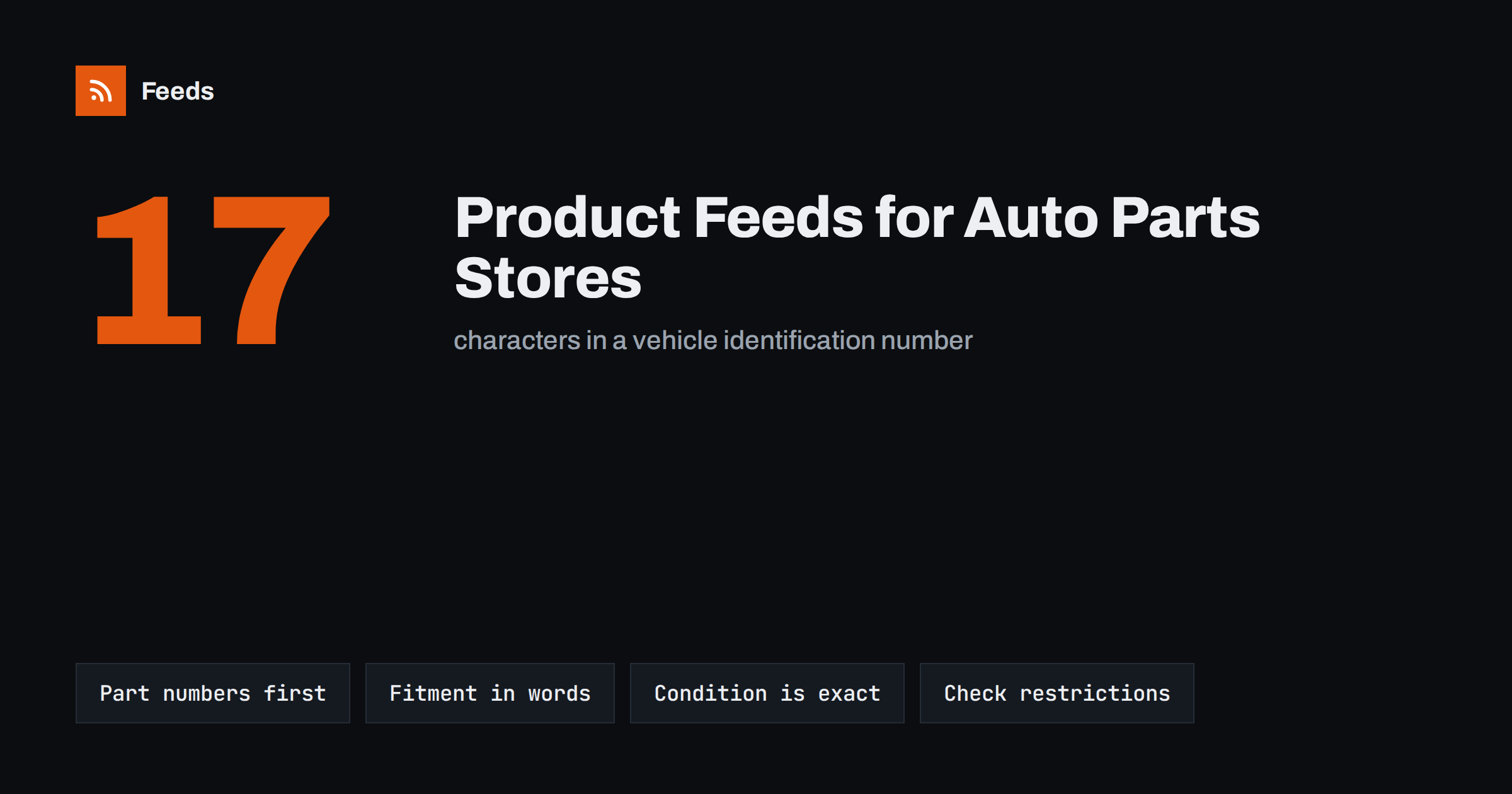
Short answer: Auto parts shoppers search by part number and by vehicle, so a good feed puts both in front of them. Include the brand, the manufacturer part number and the GTIN where it exists, add the original equipment reference where you may legally show it, and state fitment, such as make, model and years, in titles and descriptions. Set condition accurately for used and remanufactured parts, explain deposits like core charges clearly and keep parts that tamper with emissions or safety systems out of the feed.
Why auto parts feeds are hard
Auto parts are among the most complex products to list. A single brake pad set may fit dozens of vehicles across several model years, while two parts that look identical fit completely different cars. Shoppers know this, so they search very precisely: by part number, by the original manufacturer’s reference or by vehicle and part type together.
A feed that lists a part only as “brake pads front” with a brand and price competes with thousands of similar listings and attracts the wrong buyers. A feed that names the part number, the brand and the vehicles it fits reaches the people who need exactly that part and reduces the costly returns that come from wrong fitment.
Catalogs in this category are also large. Even a small parts store can have tens of thousands of products, often imported from supplier data. Feed quality therefore depends heavily on the quality of that supplier data and on rules that fix common problems across the whole catalog.
Margins and shipping costs vary widely, too. A set of spark plugs and an exhaust system are both “auto parts”, but they have very different prices, weights and return rates. Grouping products by type and margin helps you decide which parts deserve advertising and which are better found through search on your own site.
Part numbers and identifiers
Part numbers are the language of this category. Mechanics, enthusiasts and many ordinary drivers search with the number printed on the old part or found in a catalog. Make those numbers visible.
- Use the part manufacturer’s brand in the brand field and its part number as the MPN.
- Add the GTIN where the manufacturer provides a barcode; many branded parts have one.
- Include original equipment reference numbers in the description where you are allowed to, as shoppers often search by them.
- Keep the formatting of part numbers consistent, with or without spaces and dashes as the manufacturer writes them.
Be careful with vehicle brands. The brand of an aftermarket part is the company that made it, not the car manufacturer. Saying a part fits a certain car is normally fine; presenting an aftermarket part as if it were an original part from the car maker is misleading. Our guide to GTIN, MPN and brand in product feeds explains identifiers in detail.
Fitment in titles and descriptions
Fitment information tells shoppers which vehicles a part fits. Most stores keep it in a compatibility table or vehicle lookup on the product page. In a shopping feed, the most reliable way to communicate fitment is in plain words in the title and description.
| Part type | Useful title pattern |
|---|---|
| Brake pads or discs | Brand, part type, axle position, main vehicle fitment, part number |
| Filters | Brand, filter type, part number, main vehicle fitment |
| Lighting | Brand, bulb or lamp type, fitting code, vehicle or universal |
| Wiper blades | Brand, length, connector type, front or rear |
| Body parts | Part name, side, vehicle make, model and years |
When a part fits many vehicles, the title cannot list them all. Put the most common fitment in the title and the full list, or the most important part of it, in the description. Phrases like “fits” followed by make, model and year range are clear for shoppers. Some channels offer additional ways to express vehicle compatibility, so check their current specifications if fitment data is central to your business.
Product highlights and details attributes can also help, for example to state axle position, dimensions or fitting type as separate points. See product_highlight and product_detail for how they work.
Condition: new, used and remanufactured
Many parts stores sell used parts from dismantled vehicles and remanufactured parts such as starters, alternators and gearboxes, alongside new parts. The condition attribute must reflect what the buyer receives.
- New: unused parts in original packaging.
- Refurbished: professionally restored or remanufactured parts, typically tested and with a warranty.
- Used: parts removed from a vehicle and sold as they are, after inspection where applicable.
Describe the state of used parts honestly: mileage of the donor vehicle where known, visible wear, what is included and any warranty. A used part listed as new, or a remanufactured part without explanation, leads to returns and disputes. Our guide on used and refurbished products in feeds covers condition values in detail.
Core charges, kits and pricing
Some parts, especially remanufactured ones, are sold with a core charge: a deposit refunded when the customer returns the old part. This creates a pricing question for the feed. The price shown in the listing should match what the shopper actually pays at checkout, which normally means including any deposit charged at that point, and the description should explain the refund clearly.
Kits and sets need similar clarity. A brake kit with discs and pads, a timing belt kit or a set of four spark plugs should state exactly what is included, both in the title and in the description. Store-made sets of identical items are multipacks; kits of different parts are bundles. See bundles and multipacks in product feeds.
- Show prices that match checkout, including deposits if they are charged up front.
- Explain refundable deposits in the description.
- State the number of pieces in sets, such as “set of 4”.
- Mark kits as bundles with a clear list of contents.
Restricted and regulated parts
Some automotive products are restricted by law or by channel policies. Parts or software designed to disable or bypass emissions controls are illegal in many markets and widely prohibited in advertising. Other products, such as certain lighting not approved for road use, airbag components and some safety equipment, may be restricted or need extra care.
- Never list products intended to defeat emissions systems or other legally required equipment.
- Mark off-road-only products clearly where you are allowed to sell them at all.
- Check each channel’s current policies for safety-related parts before including them.
- Exclude restricted items from the feed rather than letting them collect disapprovals.
The approaches in which products to exclude from your feed help keep whole groups out without removing them from your store.
Supplier data, images and catalog size
Large parts catalogs are usually built from supplier data, which often has short, cryptic titles, missing images and inconsistent attributes. Fix these at scale with rules rather than by hand: build titles from brand, part type, fitment and part number fields; fill gaps with supplemental data; and exclude items with no image or no price from the shopping feed until the data is complete.
Images should show the actual part. Generic category images, such as one picture used for every brake disc, mislead shoppers and can be rejected. Where suppliers provide real images, use them; for used parts, photograph the specific part. Our guides to feed rules versus fixing store data and product feed image requirements cover both topics.
How RSS Feed Creator helps
RSS Feed Creator (Feeds) creates Google Merchant Center and Meta catalog XML directly from a WooCommerce or Shopify store, or from a CSV link for other platforms, without plugins or code on your site. The feed uses the Google product XML format with id, title, link, image, price, availability and brand, and Meta reads the same file. You can skip out-of-stock products, rewrite titles to add part numbers or fitment and adjust prices with rules, while the currency is detected automatically. Attributes such as MPN, GTIN or condition can be added in Merchant Center with a supplemental feed. Compare plan limits on the pricing page.
Related reading
- Supplemental feeds in Merchant Center: when and how to use them
- Products missing from your product feed? Causes and fixes
- Product feed title optimization: formulas that work
The bottom line
Auto parts feeds succeed when shoppers can confirm, before clicking, that a part is the right one. Show brand, part number and GTIN, state fitment in plain words, set condition accurately for used and remanufactured parts, make prices match checkout including deposits, describe kits clearly and keep illegal or restricted parts out. Precise data reduces returns as much as it increases sales.
FAQ
What brand should an aftermarket part have in the feed?
The brand of the company that made the part. You can say which vehicles it fits, but do not present it as an original part from the car manufacturer.
How do I show which cars a part fits?
Put the main fitment in the title and the full or most important list of make, model and years in the description. Check each channel’s specifications for any additional compatibility options.
How should remanufactured parts be listed?
Professionally remanufactured parts are usually listed as refurbished. Explain the process, testing and warranty in the description, and mention any core charge.
Should the feed price include a core charge?
The listing price should match what the shopper pays at checkout. If the deposit is charged up front, include it and explain in the description how it is refunded.
Can I advertise performance parts?
Many performance parts can be advertised, but parts that defeat emissions controls or other legally required systems cannot. Check local law and each channel’s policies first.