ENEnglish
 LTLietuviškai
 DEDeutsch
 FRFrançais
 RUРусский
 ESEspañol
 PLPolski
 ITItaliano
 UKУкраїнська
 CSČeština
 PTPortuguês
 JA日本語
 LVLatviešu valoda
 ETEesti
 HUMagyar
 IDBahasa Indonesia
 TRTürkçe
 HIहिन्दी
 ELΕλληνικά
 ARالعربية
 THไทย
 VITiếng Việt
 RORomână
 MSBahasa Melayu
 BNবাংলা
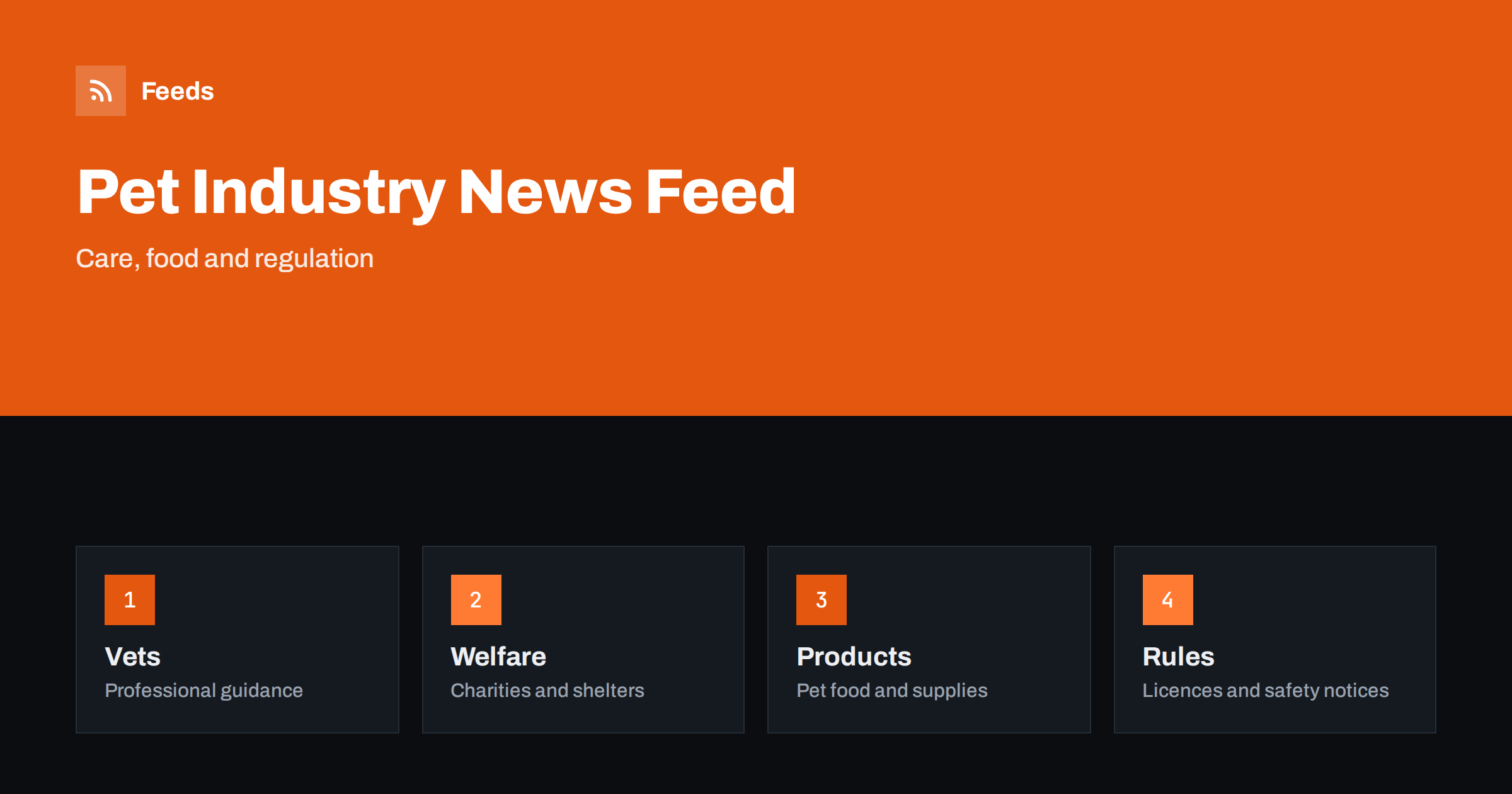
Short answer: Pet care and animal industry news comes from veterinary bodies, animal welfare organisations, pet food and product makers, regulators, shelters and breeders’ associations, and a trade press that covers retail and services. RSS lets you collect the sources you trust in one reader, filter them by species, topic or region and read them in the order they appear. Use professional and official sources for facts, and never use a news feed in place of a veterinarian’s advice.
Why this news is hard to follow
The pet and animal sector covers companion animals, horses, small livestock and wildlife in many forms: health and nutrition, welfare law, product recalls, pet travel rules, shelters and adoption, breeding rules, pet retail and services. News about these topics appears on veterinary association pages, charity sites, regulators, company newsrooms and blogs, and much of it is repeated and distorted on social media.
Readers have different needs. Owners want reliable guidance and warnings, pet shop owners want to know about product safety and trends, groomers, trainers and boarding businesses want rule changes, and journalists and students want facts. If you are new to the idea, what is an RSS feed explains the basics in plain words.
Start with veterinary and professional bodies
Veterinary associations, colleges and public health authorities publish guidance on health, vaccination, parasites, nutrition, disease outbreaks and professional standards. These are the best sources for what is known and recommended, and the right place to check anything that you read in a news story or a social post.
Choose the bodies for your country and the species you care about, and read the original page for exact wording and dates. Treat the feed as a news tool and not as a substitute for a consultation: owners should always ask their own veterinarian about a particular animal. The habit of going back to the original is described in fact-checking with RSS: follow primary sources, not screenshots, and it is especially important in a field with many myths.
Add animal welfare organisations and shelters
Welfare charities, shelters and rescue groups publish news about laws, campaigns, adoption events, emergency appeals and reports. They are valuable for a view of what happens on the ground, and many offer feeds. Some publish their own positions, so read them as informed advocacy and compare with official sources when a claim matters.
For local readers, shelters and clinics publish events and urgent needs, such as foster calls or vaccination days. Local news monitoring: follow your town’s sources with RSS shows how to collect them. Keep local items in their own folder so that they do not get buried by national news.
Follow product makers and recalls
Pet food, treats, toys, bedding and equipment makers publish launches, ingredient changes and safety notices. Recalls and warnings are the most important items, because they affect animal health. Follow the recall pages of authorities and the newsrooms of brands you use, and read the batch numbers and dates before you act.
Keep safety notices in a separate folder that you check every day. Track product recalls and safety notices with RSS explains how to set this up. Pet shop owners can add supplier pages, as described in monitoring suppliers and partners for early risk signals, so that a supplier problem reaches them before a customer calls.
Rules, licences and travel
Rules matter for owners and businesses: licences for breeding, boarding and grooming, microchipping, registration, dangerous animal rules, import and export of animals and travel with pets. They change, and the details differ between countries and regions. Follow the official pages of the relevant authorities, read the original text and note the date from which a rule applies.
Travel rules are a common source of mistakes, because they depend on destination, species and timing. Use the feed to learn that something changed, then confirm requirements on the authority’s page before a trip. For broader regulation, tracking government and regulator updates with RSS explains the setup, and following travel advisories and airline notices with RSS helps with trips.
Seasonal topics return every year and are worth planning for. Summer brings heat and travel warnings, autumn brings fireworks and hunting season concerns, winter brings cold weather and holiday hazards such as certain foods and plants, and spring brings parasite and allergy questions. Authorities and veterinary bodies publish seasonal guidance, and following their pages lets you share timely and accurate reminders. Pet businesses can prepare posts for each season in advance and check them against the latest official notices before they go out.
Trade press, retail and services
Pet retail and services are growing businesses, and trade publications cover product trends, market reports, mergers, franchises and consumer behaviour. Add a few respected titles and blogs if you run a shop, a grooming salon, a boarding or training business or a clinic. They explain what changes mean for sales and operations.
Balance matters. If commentary dominates your reader, you will read opinions about facts that you have not seen. Keep at least as many primary sources as commentary sources. Following industry associations and standards bodies with RSS shows how to add trade groups. If you run a pet shop, product feeds for pet supply stores is a good companion read.
Find feeds, even when a site has none
Many pet and animal organisations offer RSS, but small charities and local clinics often do not. Look for a feed icon, check the page source for an autodiscovery link or try the usual feed paths. Find the RSS feed of any website: 7 reliable methods lists the options in order.
When a site has no feed, a page-to-feed tool can read its list of articles or notices and build a feed from it, as described in how to create an RSS feed for a website without RSS. Check the preview to make sure it shows real items with titles, dates and links, and not menu entries, banners or donation buttons.
Be careful with viral stories. Videos and photos of animals spread quickly, and many are staged, mislabelled or from other places and years. Reverse-search an image, look for the original source and check whether a recognised organisation confirms the story before you share it. Appeals for lost or injured animals are a special case: they can be genuine, and they can be scams that collect donations. Use official shelter and charity pages, and never share payment requests that you cannot verify.
Filters and a calm routine
Keyword filters keep the list focused. Include species, breeds, conditions, product types and region names, and exclude topics that do not apply to you. Test the filters on ten recent items and review them each month. Set up keyword alerts using RSS feed filters explains the method, and reduce noise in RSS alerts without missing anything helps when the list grows.
Read safety and rule folders daily or twice a week and general news a couple of times a week. Share only what you have checked, say where it came from and correct it quickly if it changes. Pet owners are quick to share alarming posts, and a calm, accurate source is valuable. A routine like RSS triage: a fast daily routine for reading less keeps the habit short.
Think about a team setting. A clinic, a shop or a boarding business can keep one shared list of sources and a short weekly note on what changed: a recall, a new rule, a disease alert, a supplier problem. Assign each folder to a person, review the sources every month and keep a record of the date and link for each item that affects a customer. When a question arrives from an owner, the team can answer from a common, checked set of facts instead of from memory.
How RSS Feed Creator helps
RSS Feed Creator turns the news, notice or recall pages of veterinary bodies, authorities, charities and product makers into clean RSS feeds, even when the site has no feed of its own. It reads titles, images, summaries and dates, uses an existing feed when there is one, and shows a preview of the items before the feed is created. You can merge several sources into one feed (up to 10 with the PostRSS add-on), keep only the items that contain your keywords and have duplicates removed automatically, which suits a reading list for one species or region. Feeds refresh every 3 hours on the free plan and every 30 minutes on paid plans, and the PostRSS add-on sends an alert when a page changes and a feed stops finding items. The free plan allows up to 20 items per feed, and the details are on the pricing page.
Related reading
- How to Track Product Recalls and Safety Notices with RSS
- Content Automation for Veterinary Clinics and Pet Services
- Local News Monitoring: Follow Your Town’s Sources with RSS
The bottom line
RSS gives pet owners and pet businesses a calm place to follow a busy sector. Start with veterinary bodies and official notices, add welfare groups and product makers, keep recalls and rules in separate folders and filter by species and region. Always read the original before you act, and ask a veterinarian about any individual animal.
FAQ
Which sources should I follow first?
Begin with the veterinary association and authority in your country, the brands whose products you use and one welfare organisation. Add trade press later.
Can a feed replace advice from a veterinarian?
No. A feed is a news tool. Ask a veterinarian about any individual animal and read official guidance for rules and recalls.
What if a charity or clinic has no RSS feed?
A page-to-feed tool can read its news page and build a feed. Check the preview to confirm that it shows real items with dates.
How do I follow product recalls?
Add the recall pages of authorities and the newsrooms of brands you use, and keep them in a folder you check daily.
How do I avoid sharing myths?
Open the original source, check the date and compare with a professional body before you pass anything on.