ENEnglish
 LTLietuviškai
 DEDeutsch
 FRFrançais
 RUРусский
 ESEspañol
 PLPolski
 ITItaliano
 UKУкраїнська
 CSČeština
 PTPortuguês
 JA日本語
 LVLatviešu valoda
 ETEesti
 HUMagyar
 IDBahasa Indonesia
 TRTürkçe
 HIहिन्दी
 ELΕλληνικά
 ARالعربية
 THไทย
 VITiếng Việt
 RORomână
 MSBahasa Melayu
 BNবাংলা
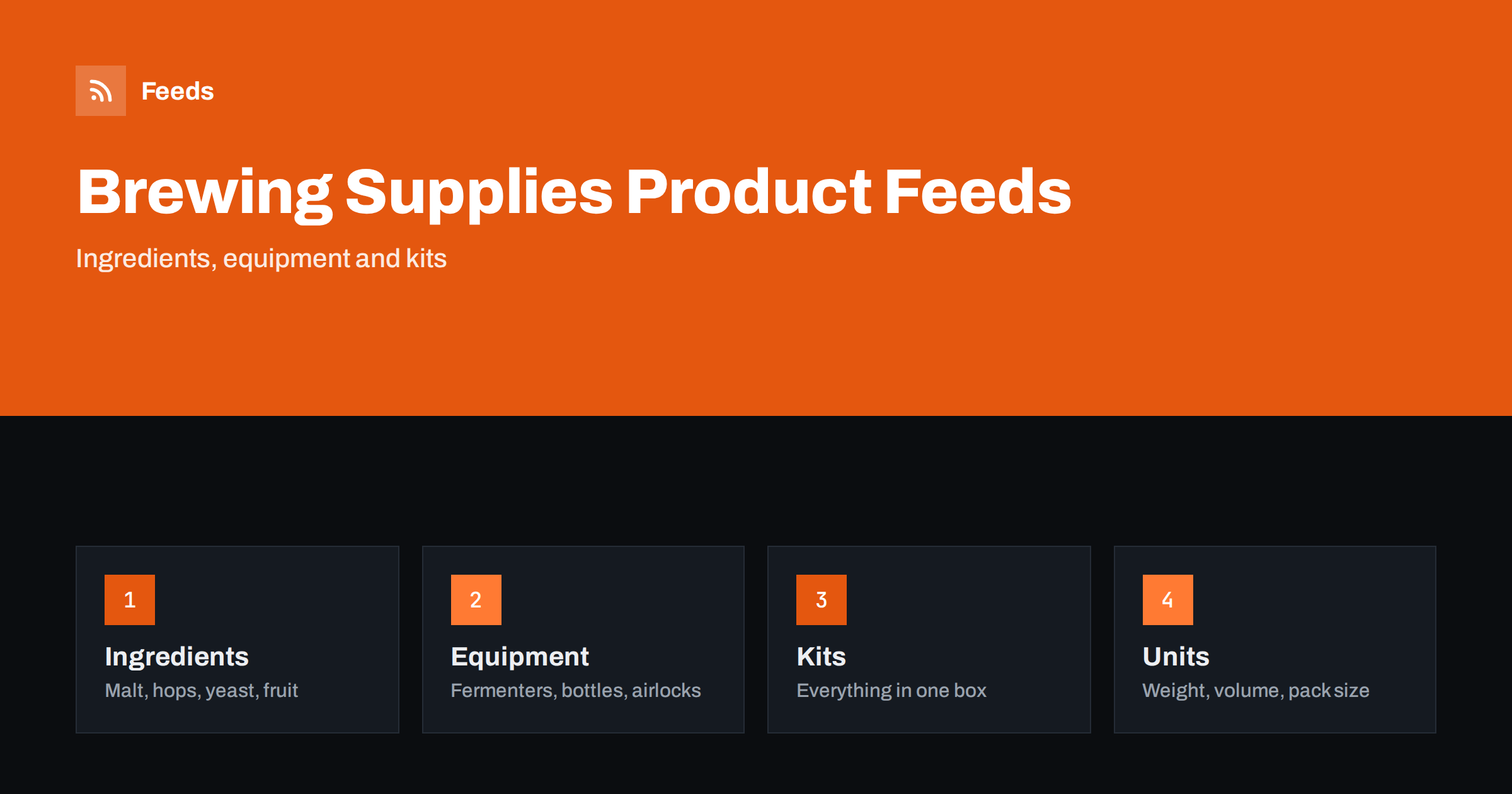
Short answer: Home brewing and winemaking shops sell three kinds of products: ingredients, equipment and kits. A good feed puts the product type, the size or weight and the brand in the title in a fixed order, gives every pack size its own variant with correct unit pricing, describes compatibility for equipment, and lists exactly what is in each kit. Check the advertising policies for alcohol-related products in each country before you submit, and read the preview and the diagnostics before you go live.
Why brewing supplies need careful feeds
Customers in this niche are often hobbyists who know what they want and compare shops carefully. They search for a type of yeast, a size of fermenter or a style of kit, and they care about the weight, the volume and whether an item fits what they already own. A feed that says only “Brewing kit” or “Yeast” gives them nothing to compare, and shopping platforms have little to match against their searches.
The range is also broad and changes with the seasons. Interest rises before autumn harvests and before holidays, and many items are sold in several sizes. If product feeds are new to you, what is a product feed explains the basic idea in plain words, and the guide for wine, beer and spirits stores covers the drinks side of the trade.
Titles that lead with the product type
A good title tells the buyer what the product is before anything else. A useful order is brand, product type, key attribute and size, for example the brand, then “wine yeast”, then the style or use, then the pack size. Keep the order the same for every product in a category, so that the catalogue reads consistently and rules can build titles automatically. Product feed title optimization shows formulas you can adapt.
Avoid vague words and promotion in titles. “Best” and “perfect for beginners” do not help the match, and shopping platforms may reject promotional text. Put the facts first: type, size and what is included. If a product comes in several colours or materials, put them in the title or the variant attributes, and not only on the page.
Sizes, weights and unit prices
Ingredients are sold by weight and equipment by volume, and the same malt or sugar may come in a small bag, a larger sack and a bulk box. Each size is a separate variant that shares a group ID, with its own price, stock and identifier. Product variants in feeds: how item_group_id works explains how to group them without confusing the platform.
Unit pricing helps buyers compare. A shopper who sees a price per kilogram or per litre can judge a large pack against a small one quickly, and in some countries unit prices are expected in shopping listings. Fill the measure and the base unit from your data, keep the units consistent and check the examples in unit pricing in product feeds: measures and base units.
Weights and volumes need the same care as prices. A pack of “5 kg” and a pack of “5 l” are different things, and a typing error in a unit can produce a price per unit that is off by a factor of one thousand. Run a quick check on the extreme values in your feed before every large upload.
Ingredients: freshness, forms and storage
Many brewing ingredients are sensitive: hops lose aroma, yeast has a best-before date and fruit concentrates have storage rules. Put the form (pellets, liquid, dry, whole), the harvest or batch information where you have it and the storage advice in the description, and keep the same fields for every product. Customers who know what they are buying return less, and the product page answers the questions your support team would otherwise receive.
Seasonal items need special handling. When a batch sells out, mark the product as out of stock or remove it until the next batch arrives, instead of leaving an available price in the feed. Out-of-stock products in your feed: keep, mark or remove describes the options, and availability mismatch in Merchant Center explains what happens when the feed and the page disagree.
Equipment, threads and compatibility
Equipment is full of small fit questions. A fermenter lid needs the right size of airlock, a bottle needs the right cap, a tap needs the right thread and a hose needs the right diameter. Put these values in the title or in product details, such as the cap size or the thread type, and mention the products they fit. A buyer who finds the right part in one search is more likely to buy the rest of the set.
The approach is similar to other fitment-heavy trades, and spare parts and compatible accessories in product feeds offers a good model. Keep a simple compatibility table in your own data, and use it to write the descriptions and the cross-links between products.
Kits, bundles and starter sets
Kits are the best-selling entry point and the easiest to describe badly. A starter kit may contain a fermenter, a lid, an airlock, a hydrometer, a cleaner and instructions, and the buyer wants to know exactly which items are included and what is still missing, such as bottles or a boiling pot. List the contents in the description and give the kit its own identifier, separate from the single items.
When you sell multipacks and bundles, follow the rules for each platform and make sure the price and the quantity match the page. Bundles and multipacks in product feeds: how to list them explains the fields, and the same care applies to refills, such as a kit of ingredients that works with a particular piece of equipment.
Policy, age and honest claims
Brewing and winemaking touch alcohol, and advertising platforms have rules about alcohol-related products that differ by country. Equipment and non-alcoholic ingredients are usually treated differently from finished drinks, but the details change, so read the current policies of each platform for the countries where you advertise and ask support when you are not sure. Do not add anything that suggests a finished alcoholic drink is sold when the product is an ingredient or a kit.
Keep health and legal claims out of the text unless you can prove them. Rules on home production of alcohol also differ by country, and your product pages should not promise what the law of a buyer’s country does not allow. If a product has an age restriction, make sure the page says so. A cautious description protects the account, and Merchant Center disapproved products: causes and fixes helps when something is rejected.
Identifiers, images and landing pages
Branded equipment and packaged ingredients usually have a barcode and a manufacturer number, and these should go into the feed in the right fields. Handmade or relabelled products may have none, and then the brand and a clear title carry the match, as described in GTIN, MPN and brand: product identifiers in feeds explained.
Use clear pictures on a plain background, and show the pack size or the contents of a kit in an extra image. The landing page must show the same price, size and availability as the feed, and a visible link to your shipping and return information. Product feed image requirements for Google and Meta and what feed links must lead to list the checks, and the product feed checklist gathers them before you submit.
How RSS Feed Creator helps
RSS Feed Creator builds Google Merchant Center and Meta catalog XML straight from your store. WooCommerce and Shopify are read automatically, and any other store can use a CSV link. You can skip out-of-stock products, rewrite titles with rules so that product type, size, brand and pack contents appear in the same order every time, and adjust prices. Before you submit anything, check the preview and the Merchant Center diagnostics to confirm that pack sizes, units, kit contents and stock arrive as you expect. The free plan includes product feeds with up to 50 products, and the Store plan covers one store with 3 product feeds and up to 2,000 products. The details are on the pricing page.
Related reading
- Product Feeds for Wine, Beer and Spirits Stores: A Guide
- Unit Pricing in Product Feeds: Measures and Base Units
- Bundles and Multipacks in Product Feeds: How to List Them
- Product Feed Checklist: 25 Checks Before You Submit
The bottom line
A brewing and winemaking feed works when each product says what it is, how much of it you get and what it fits. Lead titles with the product type, give every size its own variant and unit price, describe compatibility and kit contents, and read the alcohol-related advertising policies for each country. Review the preview and the diagnostics before you submit and after every larger change.
FAQ
Can I advertise brewing equipment and ingredients?
Often yes, but advertising rules on alcohol-related products differ by platform and country. Read the current policies for each market, and ask support when a product is unclear.
How should I list different pack sizes?
Create one variant for each size, give them a shared group ID and fill the price, stock and unit measure separately for each one.
Do I need barcodes for kits I assemble myself?
If a kit has no barcode, use your own identifier and a clear brand and title. Do not invent a barcode.
What should a kit description include?
List every item in the box, say what is not included, and add the sizes and the compatible equipment where it matters.
How do I handle ingredients that sell out between batches?
Mark them as out of stock or remove them until the next batch arrives, and check that the feed and the product page show the same availability.