ENEnglish
 LTLietuviškai
 DEDeutsch
 FRFrançais
 RUРусский
 ESEspañol
 PLPolski
 ITItaliano
 UKУкраїнська
 CSČeština
 PTPortuguês
 JA日本語
 LVLatviešu valoda
 ETEesti
 HUMagyar
 IDBahasa Indonesia
 TRTürkçe
 HIहिन्दी
 ELΕλληνικά
 ARالعربية
 THไทย
 VITiếng Việt
 RORomână
 MSBahasa Melayu
 BNবাংলা
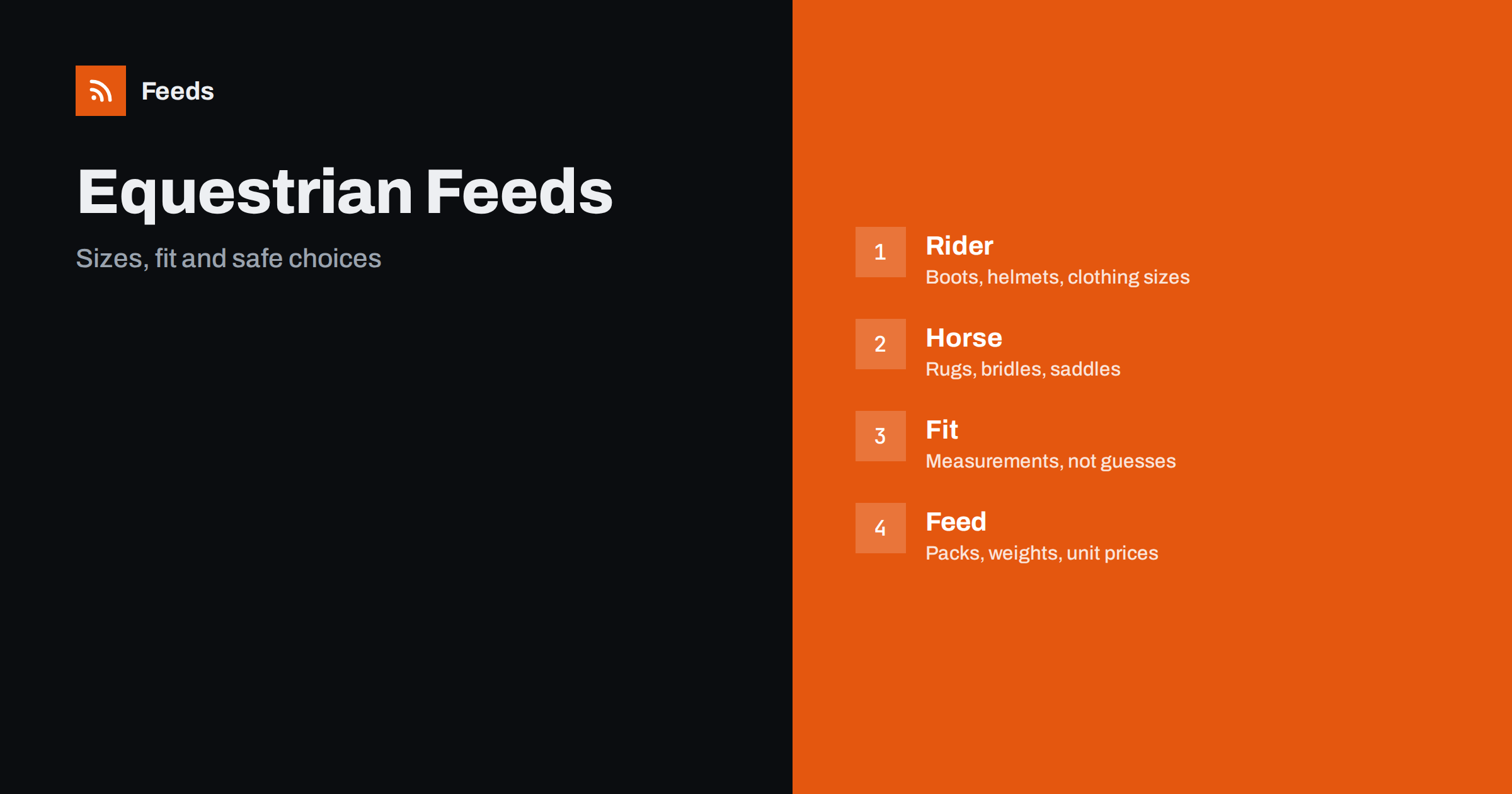
Short answer: Equestrian shops sell to two bodies at once: the rider and the horse. A good product feed shows which size system applies, whether the item is for a person, a pony, a cob or a full-size horse, and which measurements decide the fit. It keeps variants tidy, states safety standards and materials as the manufacturer gives them, handles feed and supplement packs with clear weights and unit prices and describes used tack honestly. The result is fewer wrong-size orders and more shoppers who find the right item the first time.
Why this category is different
Horse riding is a hobby with its own vocabulary and measurements. Shoppers search for “jodhpurs for children”, “5 ft 6 turnout rug”, “full-size bridle”, “wide-fit riding boots” or “hay net small hole”. The same word, “size”, can refer to a rider’s height and width, a horse’s length or a head measurement. If the feed does not make this clear, shoppers choose wrongly and returns pile up.
The range is also wide. Riding clothing, boots, helmets, saddles, bridles, rugs, grooming kit, stable equipment, feed, supplements and gifts all need different attributes. The structure of a feed is explained in what a product feed is, and the required fields in Google product feed attributes.
Rider products: clothing, boots and helmets
For riding clothing and footwear, use the same attributes as other apparel and make the size system explicit: age, height, chest or waist, or shoe size in a stated system. Many riding boots come in several calf widths and heights, and a standard size alone is not enough. Include the sizing options in the variant title or in a labelled attribute so that shoppers can filter by them. See apparel product feeds and product feeds for shoe stores for the basics.
Helmets are safety products. Show the size range in centimetres, any adjustment system and the standard the manufacturer states on the product. Do not make safety claims that the manufacturer does not make, and do not describe a helmet as suitable for a discipline unless the product information says so. Children’s items need extra care with sizes; read product feeds for children’s clothing for age and height conventions.
Horse products: rugs, bridles and saddles
For the horse, fit depends on the animal’s measurements, not the rider’s. Rugs are usually sold by length in centimetres or feet and inches, measured from chest to tail, and may come in different cuts or weights of fill. Bridles and headcollars are sold in sizes such as pony, cob and full, and some have separate options for noseband or reins. Saddles have seat size, tree width, panel type and sometimes a discipline.
Put the measurement system and the intended size range in the title and in a clear attribute. If a product must be fitted by a specialist, such as a saddle, say so on the page and explain how a shopper can arrange it. Never imply that a product fits “most horses”. Each size should be a separate item with its own identifier, linked by a shared group identifier; the mechanism is described in how item_group_id works.
Many riders shop with a measuring tape in hand and a list of sizes from their own horse. Include a short sizing guide on the product page and link to it from the listing so that the shopper can check the measurement before ordering. If the feed offers several sizes, make sure each size has its own price, stock and link, and that the link opens the right option. This one habit prevents most wrong-size returns.
Titles that match how riders search
A good title starts with the brand and product type and then adds the attribute that decides the choice: size, weight of fill, colour, material or use. For example, a rug title might contain brand, type, weight of fill, length and colour, while a boot title might contain brand, type, calf width and size system. Keep the exact model name because many shoppers search for it.
Avoid promotional words and avoid listing every possible keyword. Do not use a discipline name such as dressage or eventing unless the product is designed for it. If your store platform produces titles you cannot change, a feed rule that rebuilds titles from attributes keeps them consistent; see product feed title optimization.
Feed, supplements and consumables
Horse feed, supplements, treats and grooming consumables are bought repeatedly and compared by price per kilo or per day. Give each pack size its own item with the net weight, the animal group it is meant for as stated by the manufacturer and the key ingredient or type. State the pack weight clearly and keep unit price information correct where your market expects it; see unit pricing in product feeds.
Be careful with claims. Do not describe a supplement as treating or preventing a condition unless that is an approved claim, and keep ingredients and feeding guidance as printed on the product label. Competition rules may restrict certain substances, so include the manufacturer’s information and avoid statements that you cannot support. The same caution applies to related categories such as pet supplies.
Used tack and second-hand items
Used saddles, rugs and boots are common in this market, and condition matters a great deal. Mark the condition correctly in the feed and on the page, describe wear, repairs and age and show photos of the actual item. A used saddle is a unique product: it needs its own listing, the real measurements and an honest note about whether it has been checked or reflocked.
Do not mix used and new items under one listing, and remove an item as soon as it is sold. Unique items need stock handling that avoids selling the same piece twice. The rules and pitfalls are covered in used and refurbished products in feeds. Clear condition notes reduce disputes and strengthen trust, which is particularly important when the price is high.
Seasons, sales and stock
Demand follows the riding year: winter rugs and layers in autumn, fly protection and light clothing in spring and summer, show clothing before competition season and gifts before holidays. Plan the feed ahead for these peaks, with enough stock, correct availability and accurate delivery times. Sales events bring fast price changes, so check that prices in the feed match the page; the preparation steps are in preparing your product feed for Black Friday and peak season.
Use custom labels to group products by season, margin or best sellers, so that you can manage campaigns without changing the catalogue; see custom labels in product feeds. Remove or mark out-of-stock sizes quickly, since a missing size is the most common cause of disappointment in apparel and tack.
Images, delivery and returns
Use clear photos with a plain background for the main image and add detail shots of fastenings, linings and buckles as secondary images. For rugs and clothing, show the product flat or worn, but not with overlays. The requirements are summarised in product feed image requirements.
Large and bulky items, such as stable equipment, bales of bedding or heavy rugs, may need different delivery rates. Keep shipping settings accurate and consistent with the checkout; see shipping in product feeds. Explain the return conditions for fitted or used items and show them before checkout, because shoppers often need to try tack at home. Clear conditions prevent complaints.
How RSS Feed Creator helps
RSS Feed Creator builds Google Merchant Center and Meta catalog XML straight from your store. WooCommerce and Shopify are read automatically, and any other store can use a CSV link. You can skip out-of-stock products, rewrite titles with rules so that the size, fit and type appear in the same order every time, and adjust prices. Before you submit anything, check the preview and the Merchant Center diagnostics to confirm that variants, sizes and pack weights arrive as you expect. The free plan includes product feeds with up to 50 products, and the Store plan covers one store with 3 product feeds and up to 2,000 products. The details are on the pricing page.
Related reading
- Product Feeds for Pet Supply Stores: Sizes, Flavours, Packs
- Product Feeds for Sports and Outdoor Stores: What to Include
- Product Feeds for Workwear and Safety Equipment Stores
The bottom line
An equestrian feed works when it separates rider and horse measurements, makes size systems explicit, keeps every variant in order, states safety and feed information as the manufacturer gives it and describes used items honestly. Check the preview and diagnostics, keep stock and prices current through the busy seasons and riders will find the right item for themselves and their horse.
FAQ
How should I show sizes for rugs and tack?
State the measurement system, such as length in centimetres or the pony, cob and full sizes, in the title and a labelled attribute. Make each size a separate item linked to the others.
Can I use general apparel attributes for riding clothing?
Yes. Use the standard apparel attributes and add the sizing details that riders need, such as height, calf width or the size system used.
What should I say about helmets?
Give the size range and the standard exactly as the manufacturer states. Do not add safety claims of your own, and do not suggest a discipline the product information does not mention.
How do I list used saddles?
As unique items with the correct condition, real measurements and photos of the actual saddle. Remove the listing as soon as it is sold.
Can I make health claims for supplements?
Only approved claims and information from the label. Avoid statements that a product treats or prevents a condition unless you can support them.