ENEnglish
 LTLietuviškai
 DEDeutsch
 FRFrançais
 RUРусский
 ESEspañol
 PLPolski
 ITItaliano
 UKУкраїнська
 CSČeština
 PTPortuguês
 JA日本語
JA日本語 LVLatviešu valoda
 ETEesti
 HUMagyar
 IDBahasa Indonesia
 TRTürkçe
 HIहिन्दी
 ELΕλληνικά
 ARالعربية
 THไทย
THไทย VITiếng Việt
 RORomână
 MSBahasa Melayu
 BNবাংলা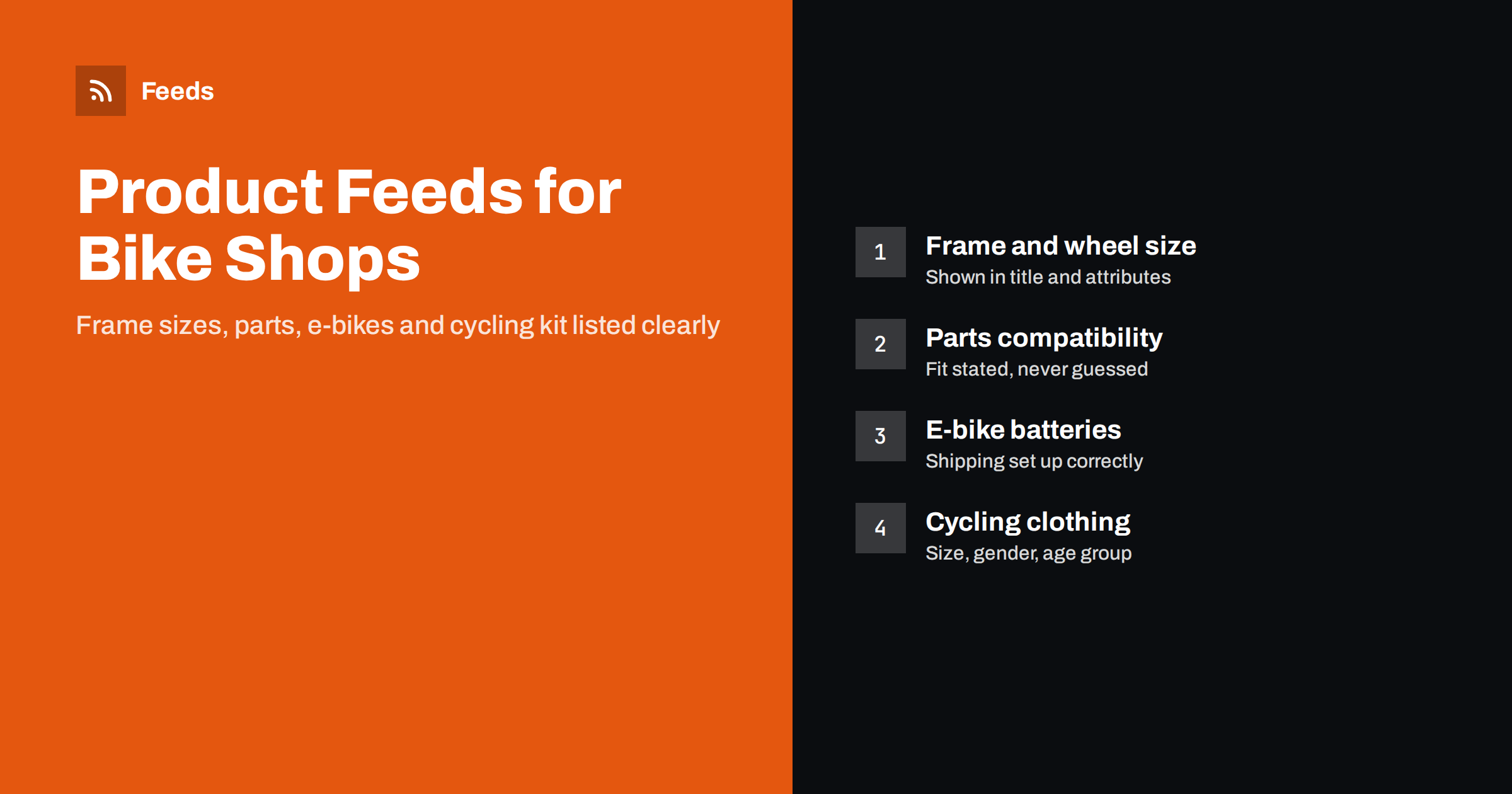
Short answer: A bicycle feed works when a shopper can tell exactly which bike, in which frame size and colour, they are buying. Put the brand, model, bike type, frame size and colour in the title, list each size and colour as its own item grouped by item_group_id, and use real GTINs where manufacturers provide them. For parts and accessories, state what they fit. For e-bikes, check shipping rules for batteries before you submit the feed.
Why bike shops need a careful feed
A bicycle shop sells three quite different kinds of product. Complete bikes are expensive, come in several sizes and colours, and are bought after careful comparison. Parts and components, such as tyres, chains, brake pads and pedals, are low-cost items that only work if they fit. Cycling clothing and helmets follow the rules of apparel, with sizes, genders and age groups. One feed has to serve all three without confusing a shopper or the shopping platform.
Shopping surfaces reward clear, complete data. A buyer searching for a 29-inch mountain bike in size medium wants to see exactly that in the result, not a generic “mountain bike” that turns out to be available only in small. A feed that carries the right attributes lets the platform match your product to the right search and lets the shopper trust what they see.
Titles that carry the buying decision
For bikes, the title should say what the bike is, who makes it and which version this is. A reliable formula is: brand, model, bike type, key specification, frame size, colour. For example: “Brand Model Mountain Bike, 29-inch Wheels, Size M, Matte Black”. Shoppers scan titles quickly, so the most important words go first.
Some practical points:
- Use the bike type words people search for: road bike, gravel bike, mountain bike, city bike, kids bike, electric bike.
- Include the frame size exactly as you sell it, whether that is S, M, L or a number in centimetres or inches.
- Add wheel size when it matters for the type, for example 26, 27.5 or 29 inches on mountain bikes, or 700c on road and gravel bikes.
- Do not stuff the title with promotional words such as “best price” or “free shipping”. Platforms disapprove of them.
For parts, lead with the product and then the fit: “Brand Disc Brake Pads, Compatible with Brand Model Series”. The general method is covered in the guide to product feed title optimization.
Sizes, colours and variants
Most bikes come in several frame sizes and often several colours. Each combination that you can sell should be its own item with its own id, price, availability and image, and all of them should share one item_group_id so that the platform can show them as options of one product. Without grouping, a single bike can appear as several unrelated listings. The mechanics are explained in product variants and how item_group_id works.
Use the size attribute for the frame size and the color attribute for the colour, and keep the spelling identical across the catalogue. If one size is out of stock, mark only that item out of stock and leave the others available. Check that the size values match what the product page shows, because a mismatch between the feed and the page is a common cause of disapproval.
Parts, components and compatibility
Parts are where bike shops often lose sales and generate returns. A rear derailleur, a bottom bracket or a set of brake pads can look identical to the wrong version. Compatibility is the key piece of information, and it belongs in both the title and the description.
- Name the standard or system: for example the axle width, the number of speeds, the brake type or the bottom bracket standard.
- List the models or series the part fits, but only when you are sure. Never guess compatibility to attract more clicks.
- Use the
product_detailattribute for technical specifications that do not fit in the title, such as thread, length or material. The attribute is described in product_highlight and product_detail. - Sell multi-piece items clearly: a pair of pedals, a set of two tyres, a single inner tube. Say how many units the price covers.
Where you sell kits or bundles, for example a bike with lights and a lock, the guidance in bundles and multipacks in product feeds helps you avoid price and identifier confusion.
Cycling clothing, helmets and shoes
Clothing and shoes fall under the apparel rules, which are stricter than for most other products. In general, apparel items need a colour and a size, and for many countries they also need a gender and an age group. Cycling jerseys, bib shorts, gloves, jackets and shoes all count. Helmets and protective gear are often sorted with sporting goods, but if your shop sells them in sizes and colours, treat them the same way and keep the size system consistent, for example S to XL or head circumference in centimetres.
Shoes need particular care because sizing systems differ between regions. State which system you use and, if you sell internationally, make sure the size matches the target country. The details for apparel attributes are in the guide to apparel product feed attributes.
Identifiers: GTINs, MPNs and custom builds
Most bikes, parts and accessories from established manufacturers have a barcode number, known as a GTIN, and a manufacturer part number. Include both exactly as the manufacturer provides them, together with the brand name. Correct identifiers help the platform recognise the product and compare it fairly.
Some products legitimately have no GTIN: custom-built bikes assembled in your workshop, shop-branded accessories and products you make yourself. For those, leave the GTIN empty, supply the brand and your own part number, and set identifier_exists to no. Never invent a GTIN or reuse one from another product, since that is treated as a data quality problem. The full explanation is in GTIN, MPN and brand in product feeds.
E-bikes, batteries and shipping
Electric bikes and many e-bike accessories contain lithium batteries. Carriers apply special rules to shipping such batteries, which can limit the carriers you can use, the destinations you can serve and the packaging you need. This affects your feed because the shipping information you submit has to match what you actually offer.
Before you add e-bikes and batteries to the feed, check which carriers and countries your shop supports for these items, and make sure the shipping settings reflect it. Large products such as complete bikes in boxes may need different rates from small parts. Setting this up in the platform’s shipping settings is usually cleaner than putting it into every product row, as explained in shipping in product feeds. Add the weight and the package dimensions if your shipping depends on them.
Used bikes, local stock and pre-orders
Many bike shops sell used and ex-demo bikes. The condition attribute should say so honestly, and the title should not hide it. The guide to used and refurbished products in feeds covers how to do this properly. Because used bikes are usually one-offs, keep the feed fresh so that a sold bike disappears quickly.
If you have a physical shop, local inventory lets shoppers see which bikes are available nearby, which is valuable for a product people want to test ride. The approach is covered in local inventory feeds. For bikes that arrive after an order is placed or are not yet in stock, use the pre-order and backorder availability values and an availability date, as described in pre-order and backorder products in feeds.
Building and maintaining the feed
A bike shop’s catalogue changes with the seasons, with new model years and with stock levels that move daily. The feed should come from the store system that already holds the products, not from a spreadsheet that someone updates by hand. When a size sells out or a price changes, the feed should follow.
RSS Feed Creator creates Google Merchant Center and Meta catalog XML feeds straight from a WooCommerce or Shopify store, or from a CSV file link for other platforms. It can skip out-of-stock products, apply title and price rules, and detects the currency automatically. The feed refreshes on its own, and you see a preview before anything is created. Plan limits are on the pricing page.
After the first upload, read the platform’s diagnostics and fix the warnings. Then check them regularly. Missing sizes, mismatched availability and image problems are the issues that appear most often in bike catalogues.
Related reading
- Product feeds for sports and outdoor stores
- Product feed checklist: 25 checks before you submit
- Product feed image requirements for Google and Meta
The bottom line
A bicycle feed succeeds when each item answers three questions at a glance: what is it, which size and colour, and does it fit what I own. Put brand, model, type, size and colour in the title, group variants properly, state compatibility for parts, handle apparel with the stricter rules, and set up battery shipping before you list e-bikes. Keep stock data fresh and the feed will keep earning its place.
DUK
Should each frame size of a bike be a separate item in the feed?
Yes. Each size and colour that you sell should have its own item with its own id, availability and price, grouped under one item_group_id. This lets shoppers choose a size and stops a sold-out size from hiding the others.
Do bike parts need a GTIN?
Parts from established manufacturers usually have one, and you should include it with the brand and part number. For shop-branded or custom products without a barcode, leave it empty and set identifier_exists to no.
How do I show that a part fits certain bikes?
State the fit in the title and the description, naming the standard, the system or the model series. Only list models you are sure about, because wrong compatibility claims lead to returns and complaints.
Can I include e-bikes in the same feed as normal bikes?
Yes, but check your shipping settings first. Lithium batteries are subject to carrier restrictions, so make sure the carriers, countries and rates you submit match what you really offer for those products.
Are helmets and cycling shoes treated as apparel?
Cycling clothing and shoes follow the apparel rules, which usually require colour, size, gender and age group. Helmets are often classed with sporting goods, but if you sell them in sizes and colours, list them with the same care.