 ENEnglish
 LTLietuviškai
 DEDeutsch
 FRFrançais
 RUРусский
 ESEspañol
 PLPolski
 ITItaliano
 UKУкраїнська
 CSČeština
 PTPortuguês
 JA日本語
JA日本語 LVLatviešu valoda
 ETEesti
 HUMagyar
 IDBahasa Indonesia
 TRTürkçe
 HIहिन्दी
 ELΕλληνικά
 ARالعربية
 THไทย
THไทย VITiếng Việt
 RORomână
 MSBahasa Melayu
 BNবাংলা
#Feed formats
Feed formats define how a website describes its new items to machines. Articles tagged here compare RSS 2.0, Atom, JSON Feed and related extensions. They explain the required elements, dates, identifiers and media fields of each format. Guides show which format fits which job and how to support more than one. We also cover namespaces such as Media RSS and podcast extensions. Knowing the formats makes it easier to publish feeds that every app reads correctly.
 7 de ago. de 2026 · 8 min de leitura
How to Add Featured Images to Your WordPress RSS Feed
WordPress feeds leave out featured images by default. Learn three ways to add them, which format readers and tools expect, and how to test…
 5 de ago. de 2026 · 8 min de leitura
Podcast RSS Feeds Explained: How Episodes Reach Every App
Every podcast app finds new episodes through an RSS feed. Learn how podcast feeds work, what directories require, and how to keep your show's…
 2 de ago. de 2026 · 8 min de leitura
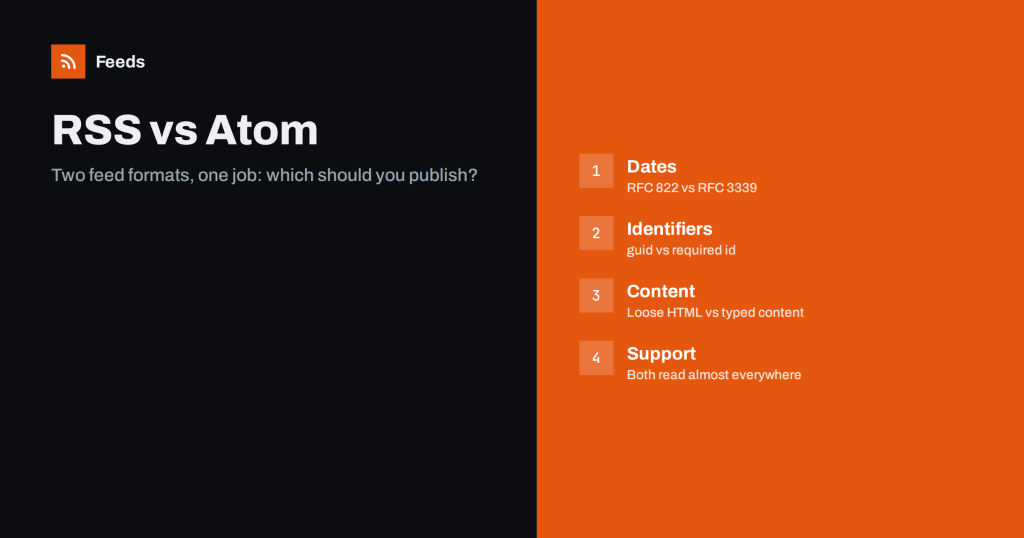
RSS vs Atom: Which Feed Format Should Your Site Publish?
RSS 2.0 and Atom both deliver your newest content to apps. Compare dates, IDs, content handling and support to choose the right format for…
 1 de ago. de 2026 · 8 min de leitura
What Is an RSS Feed? A Plain-English Guide for Site Owners
An RSS feed is a machine-readable list of a site's newest items. Learn how feeds work, who reads them, and why every site owner…