 ENEnglish
 LTLietuviškai
 DEDeutsch
 FRFrançais
 RUРусский
 ESEspañol
 PLPolski
 ITItaliano
 UKУкраїнська
 CSČeština
 PTPortuguês
 JA日本語
JA日本語 LVLatviešu valoda
 ETEesti
 HUMagyar
 IDBahasa Indonesia
 TRTürkçe
 HIहिन्दी
 ELΕλληνικά
 ARالعربية
 THไทย
THไทย VITiếng Việt
 RORomână
 MSBahasa Melayu
 BNবাংলা
#Product feeds
A product feed is a structured file that lists the products a store sells, with fields such as ID, title, price, availability, link and image. Advertising and shopping platforms read these files to build listings, ads and catalogs. Articles tagged here explain how feeds are structured and which attributes matter most. They cover common formats such as XML and CSV and how often a feed should be refreshed. You will also find checklists for avoiding rejected items and keeping prices and stock in sync. The goal is a feed that is accurate, complete and easy to maintain.
 20 de set. de 2026 · 7 min de leitura
Performance Max and Your Product Feed: What Really Matters
How Performance Max campaigns use your product feed, which feed attributes shape results, and how to structure listing groups with product types and labels.
 19 de set. de 2026 · 7 min de leitura
Product Feed Health Metrics: What to Monitor Every Week
The product feed metrics worth tracking weekly: approval rate, fetch success, item counts, mismatches, identifier coverage and product-level performance.
 17 de set. de 2026 · 7 min de leitura
Shopify vs WooCommerce Product Feeds: Key Differences
How product feeds differ between Shopify and WooCommerce: data structure, variants, identifiers, taxes, markets, feed options and pitfalls on each platform.
 16 de set. de 2026 · 8 min de leitura
Google Product XML Format Explained: RSS, Atom and g: Tags
How Google's product XML feed format works: the RSS 2.0 and Atom structure, the g: namespace, required elements, escaping, repeated fields and validation.
 15 de set. de 2026 · 8 min de leitura
Migrating Your Store Without Breaking Product Feeds
How to move to a new e-commerce platform without losing Shopping and catalog ads: keep product IDs, map URLs, rebuild feeds, test and switch…
 14 de set. de 2026 · 7 min de leitura
Product Feed URL: Hosting, Access and Keeping It Reliable
How to host a product feed at a stable URL that Google and Meta can always fetch: file location, access protection, firewalls, caching, size…
 13 de set. de 2026 · 8 min de leitura
Product Landing Pages: What Feed Links Must Lead To
What a product link in your feed must lead to: a working page for the exact product and variant, with matching price, stock and…
 12 de set. de 2026 · 7 min de leitura
Which Products to Exclude from Your Feed and How to Do It
Which products to leave out of a product feed, from restricted and sold-out items to low-margin and hidden products, and how to exclude them…
 10 de set. de 2026 · 7 min de leitura
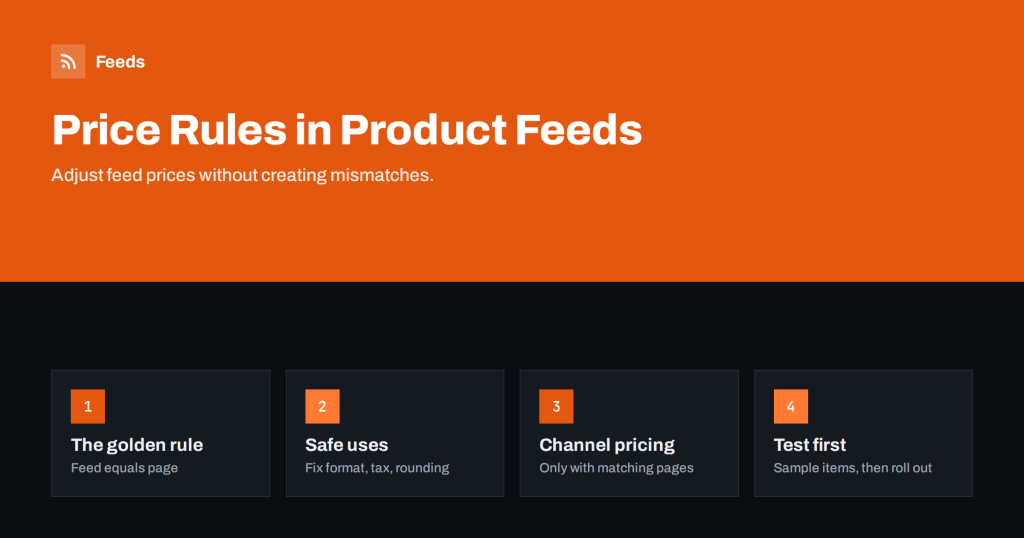
Price Rules in Product Feeds: When and How to Adjust Prices
When adjusting prices in a product feed makes sense, which rules are safe (rounding, currency, tax, channel pricing) and how to avoid mismatches with…
 9 de set. de 2026 · 7 min de leitura
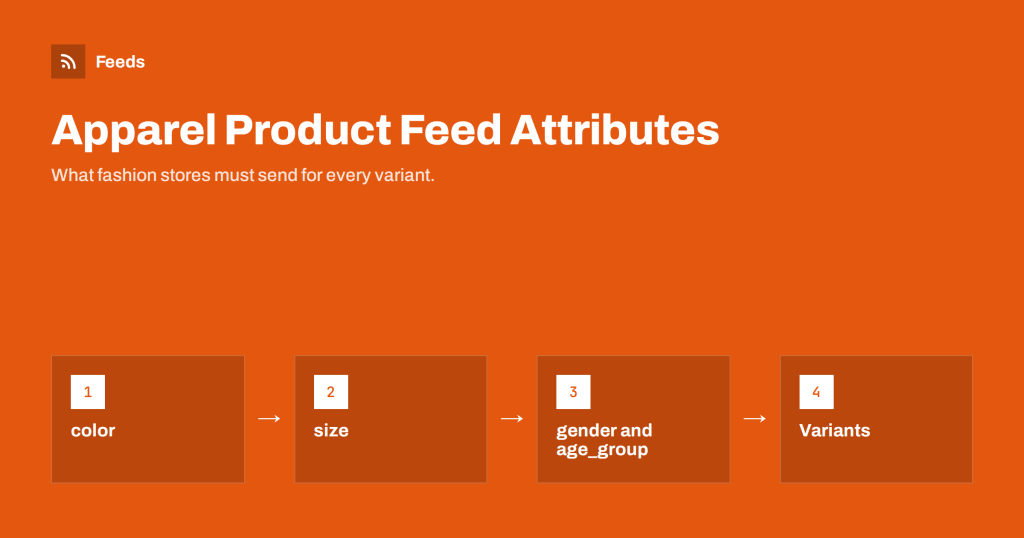
Apparel Product Feeds: Color, Size, Gender and Age Group
The attributes clothing and shoe stores need in product feeds: color, size, gender, age group, size system, variants and images, and how to avoid…
 8 de set. de 2026 · 7 min de leitura
Product Feed Management for Agencies: Many Clients, One Process
How agencies can manage product feeds for many client stores: onboarding audits, standard conventions, access, monitoring and who fixes what at the source.
 7 de set. de 2026 · 7 min de leitura
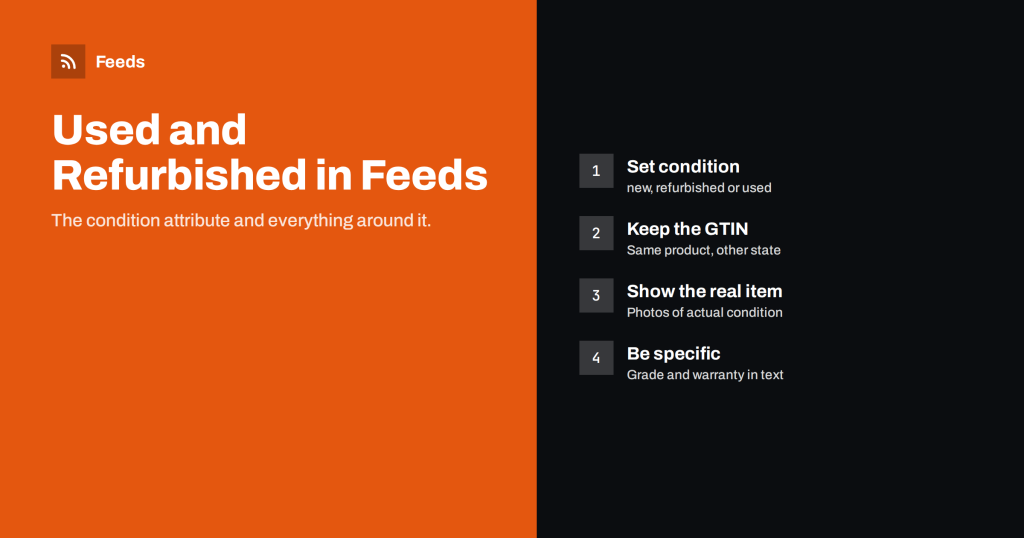
Used and Refurbished Products in Feeds: Condition Done Right
How to list used and refurbished products in Google and Meta product feeds: the condition attribute, titles, identifiers, images and honest descriptions.