 ENEnglish
 LTLietuviškai
 DEDeutsch
 FRFrançais
 RUРусский
 ESEspañol
 PLPolski
 ITItaliano
 UKУкраїнська
 CSČeština
 PTPortuguês
 JA日本語
JA日本語 LVLatviešu valoda
 ETEesti
 HUMagyar
 IDBahasa Indonesia
 TRTürkçe
 HIहिन्दी
 ELΕλληνικά
 ARالعربية
 THไทย
THไทย VITiếng Việt
 RORomână
 MSBahasa Melayu
 BNবাংলা
#CSV feeds
CSV feeds are product or content lists stored as plain text tables, with one row per item and one column per field. They are popular because almost every store, ERP and spreadsheet can export them without extra software. Articles tagged here explain how to structure CSV files so that shopping and advertising platforms accept them. They cover column names, encoding, delimiters, quoting and number formats. You will also learn how to host a CSV file so platforms can fetch it on a schedule. CSV is often the simplest bridge from a custom system to a product feed.
 Oct 4, 2026 · 7 min read
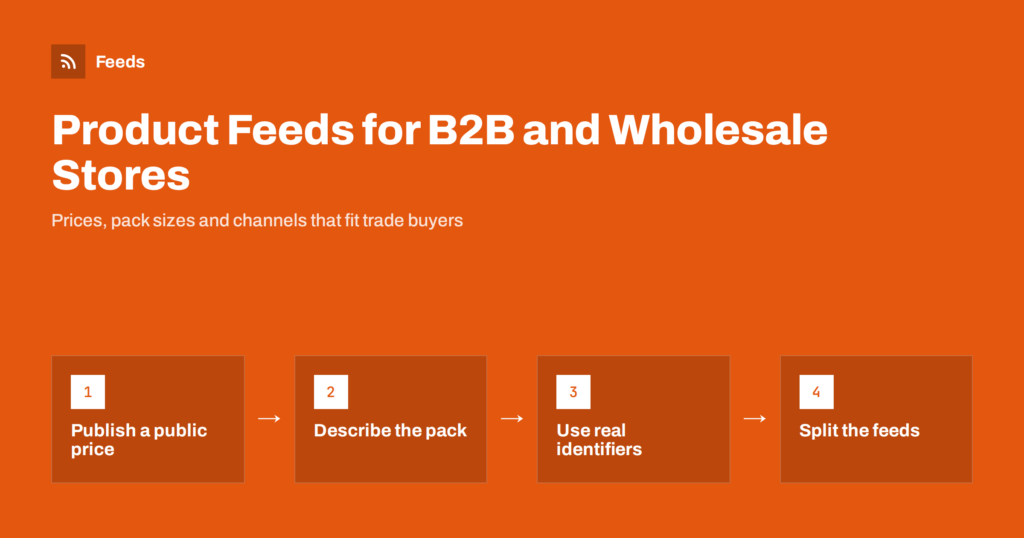
Product Feeds for B2B and Wholesale Stores: What Works
How B2B and wholesale stores can use product feeds: public versus login prices, VAT, pack sizes, minimum orders, identifiers and which channels fit.
 Sep 1, 2026 · 8 min read
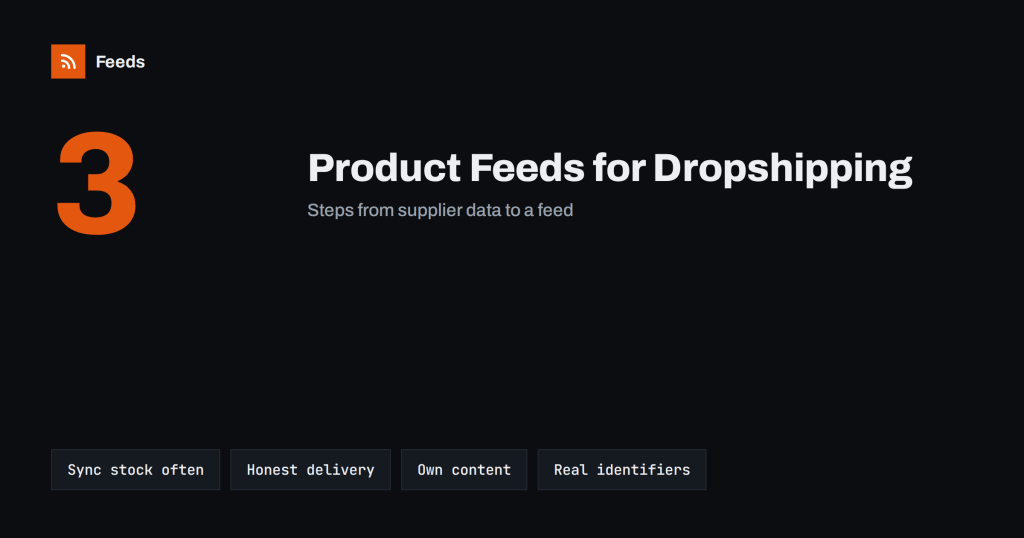
Product Feeds for Dropshipping Stores: A Practical Guide
How dropshipping stores can build reliable product feeds from supplier data: stock sync, delivery times, rewritten titles, identifiers and store trust.
 Aug 13, 2026 · 8 min read
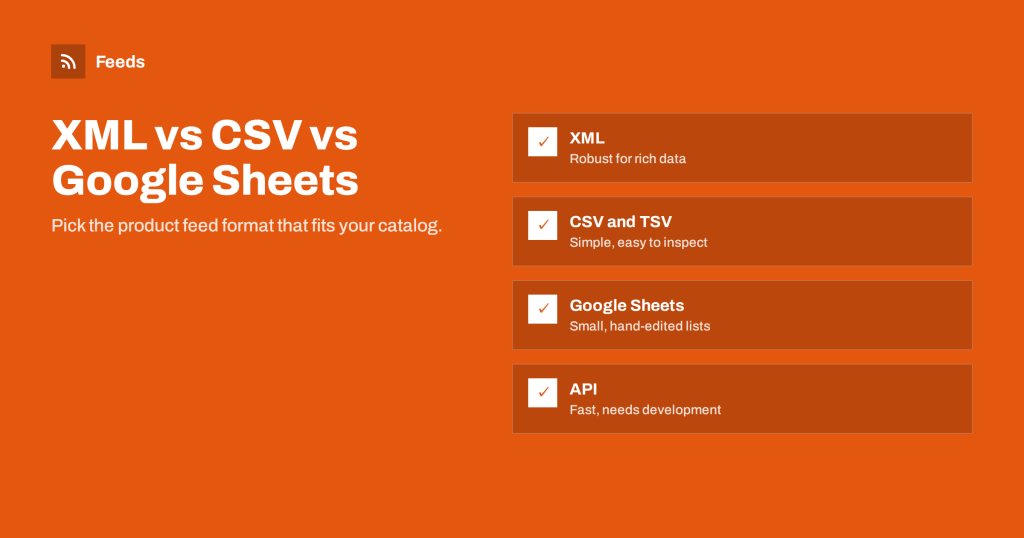
XML vs CSV vs Google Sheets: Which Product Feed Format?
Compare XML, CSV/TSV, Google Sheets and API product feeds: how each handles special characters, variants, updates and scale, and which fits your store.
 Aug 8, 2026 · 8 min read
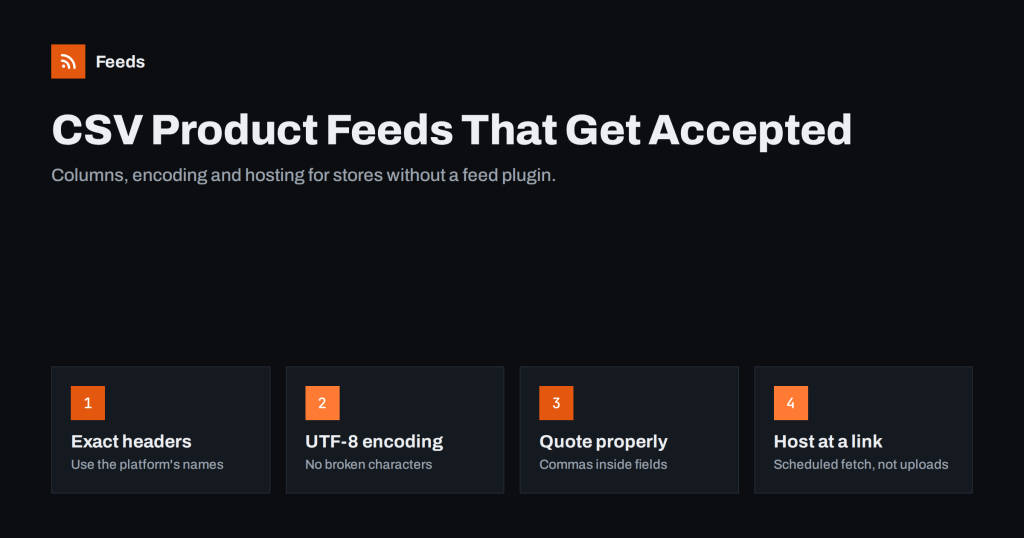
CSV Product Feeds: How to Build One That Platforms Accept
How to build a CSV product feed that Google and Meta accept: column names, encoding, delimiters, quoting, prices and hosting the file at a…