ENEnglish
 LTLietuviškai
 DEDeutsch
 FRFrançais
 RUРусский
 ESEspañol
 PLPolski
 ITItaliano
 UKУкраїнська
 CSČeština
 PTPortuguês
 JA日本語
 LVLatviešu valoda
 ETEesti
 HUMagyar
 IDBahasa Indonesia
 TRTürkçe
 HIहिन्दी
 ELΕλληνικά
 ARالعربية
 THไทย
 VITiếng Việt
 RORomână
 MSBahasa Melayu
 BNবাংলা
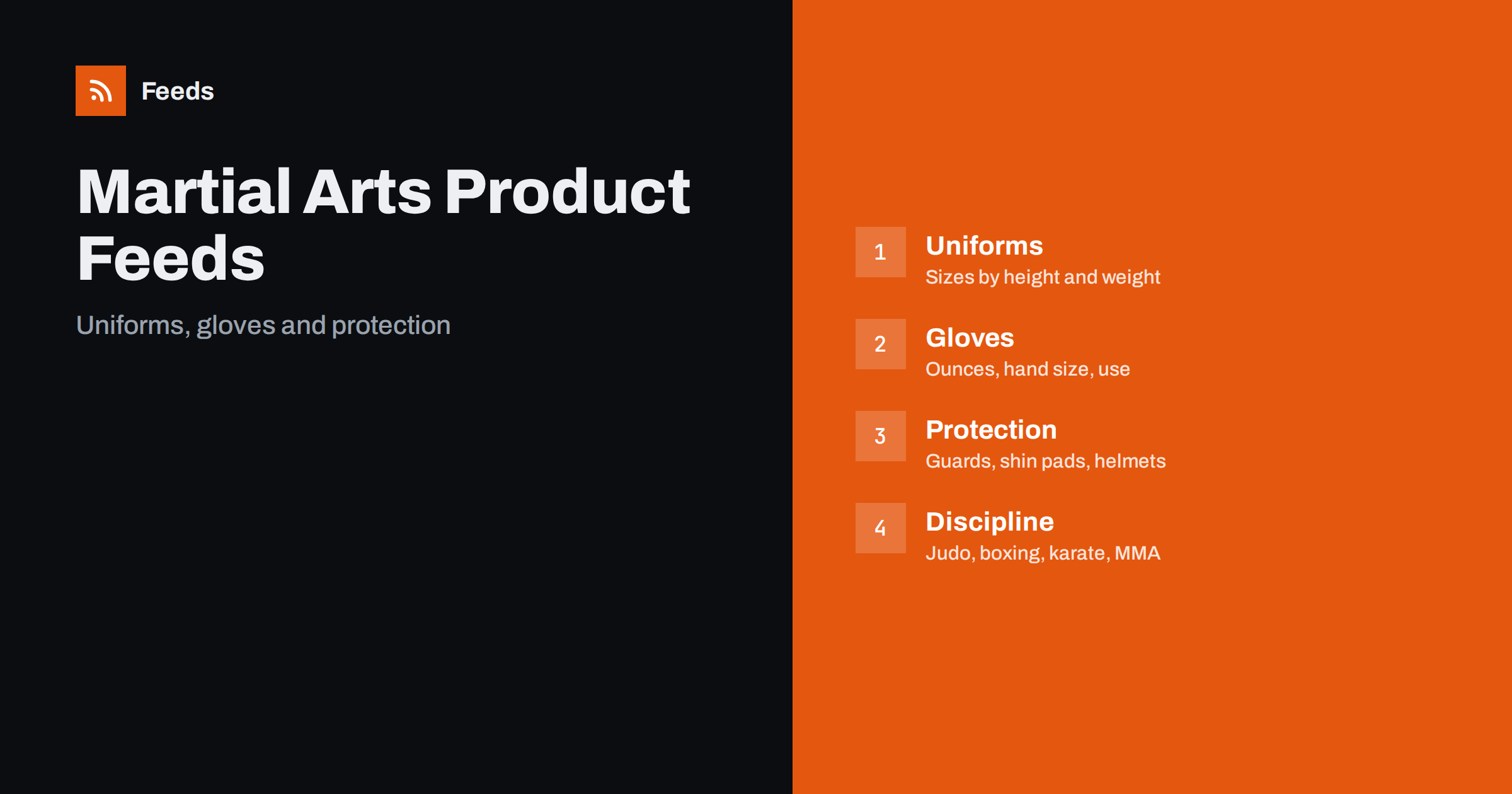
Short answer: Martial arts and combat sports shops sell gear that depends on size, discipline and the age of the athlete. A good feed puts the brand, product type, discipline and size in the title in a fixed order, gives every size and colour its own variant, fills the apparel fields for age group, gender and size type, and describes protective items honestly. Check the advertising policies for sports weapons and restricted items before you submit, and read the preview and the diagnostics before you go live.
Why combat sports gear needs careful feeds
Buyers in this category usually search for something very specific: a uniform for a particular discipline, a pair of gloves in a given weight, a protector for a child or a belt in the right colour. They also need the right size, because a uniform that is too short or a glove that is too small is not just uncomfortable, it can affect training and safety. A feed that says only “Boxing gloves” or “Uniform” gives shopping platforms and customers too little to work with.
Many shops serve clubs as well as individuals, and the same product often comes in children’s, women’s and men’s versions. Clear data helps both audiences find the right item. If product feeds are new to you, what is a product feed explains the basic idea in plain words, and product feeds for sports and outdoor stores covers the wider category.
Titles that name the discipline and the size
A good title tells the buyer what the product is, for which discipline and in which size. A useful order is brand, product type, discipline, key attribute and size, for example the brand, then “judo uniform”, then the weight of the fabric, then the size. Keep the order the same for every product in a group, so that the catalogue reads consistently and rules can build titles automatically. Product feed title optimization shows formulas you can adapt.
Put the discipline in the title and in the product type. Judo, karate, taekwondo, boxing, kickboxing, muay thai, wrestling, jiu-jitsu and mixed martial arts each have their own gear, and customers often search by the name of the sport. Avoid claims such as “best” or “professional” unless you can support them, and do not use all capitals or promotional symbols, which platforms may reject.
Think about growth, too. Parents often buy a size up for a child, and a clear size chart with height ranges helps them choose without guessing. Put the chart on the product page, link to it from every uniform and protector, and keep the numbers in the feed identical to those on the page. When two brands use different charts, show each chart with its brand, and do not merge them into one table.
Sizes, ages and size systems
Sizing is the biggest source of returns. Uniforms are often sized by height in centimetres, gloves by weight in ounces and sometimes by hand size, and protectors by age or by a letter size. Show the size exactly as the customer sees it in the shop, and fill the size type and the size system fields where they apply. Apparel product feeds: colour, size, gender and age group explains how to fill them correctly.
Children’s gear needs extra care. Age group, size and height should be consistent, and a size chart should be easy to find on the page. Children’s clothing: sizes by age and height shows the details. For footwear such as wrestling or boxing shoes, product feeds for shoe stores covers widths and size systems.
Variants: colours, sizes and fabric weights
Every combination of size and colour is a separate variant with its own price, stock and identifier, and all variants of the same model share one group ID. A belt that exists in ten colours and six lengths produces sixty variants, and a feed that lists only the page URL cannot tell the platform which one is in stock. Product variants in feeds: how item_group_id works explains the structure.
Fabric weight, cut and material can also split a model into variants, for example a light summer uniform and a heavy competition one. Put these differences in the title or in the product details, and use the same words each time. When a variant is out of stock, mark it, and do not remove the whole product, as described in out-of-stock products in your feed: keep, mark or remove.
Care instructions are useful in this category as well. Gloves and protectors hold sweat, and customers ask how to dry and clean them, so a short note on washing, drying and the expected life of the padding saves support questions. Add the note to the description, and keep it factual and brief, using the manufacturer’s advice.
Gloves, protectors and safety claims
Gloves, guards, shin pads, helmets and mouthguards protect the body, and customers want to know what they get. Describe the material, the padding, the size, the fastening and the use, for example sparring, bag work or competition. Say that an item is approved by a federation or a competition only when it really is and you can show the proof.
Do not promise that a protector prevents injury. Describe what the product is and does, and leave medical or safety guarantees out of the text. A clear and modest description is safer for the account and for the customer, and Merchant Center misrepresentation: causes and how to recover explains what happens when claims or pages do not match.
Restricted items and platform policies
Some items in this trade are sensitive for advertising platforms, such as training weapons, sticks, blades, and certain replicas. Policies differ by platform and country, and they change, so read the current rules for each place where you advertise, and ask support when a product is unclear. If an item is not allowed, exclude it from the feed and keep it on your website, as described in which products to exclude from your feed and how to do it.
Keep the decision in one place. A short list of excluded product types, maintained by one person, prevents surprises when a new item is added to the shop. Check the diagnostics after each larger change, and use Merchant Center disapproved products: causes and fixes when something is rejected.
Seasonal peaks are easy to predict: new school terms, the start of club seasons, belt gradings and competitions. Prepare the feed a few weeks before each peak, check stock levels of the most common sizes and review the diagnostics when the traffic grows. A feed that is clean before the rush avoids disapprovals at the moment when the most buyers are looking.
Starter sets and club orders
Beginners often buy a set: a uniform, a belt and a bag, or gloves, wraps and a mouthguard. List the contents clearly, give the set its own identifier and make sure the price and the page match. Bundles and multipacks in product feeds: how to list them explains the fields. Club orders are usually handled outside the feed, but a note on the page about group prices and printing encourages the right contact.
Identifiers, images and landing pages
Branded gear has a barcode and a manufacturer number, and they belong in the feed. Custom or club-branded items may have none, and a clear brand and title carry the match, as described in GTIN, MPN and brand: product identifiers in feeds explained. Use clean pictures on a plain background, add extra images that show size charts or details such as stitching and padding, and show the product in use only as an additional image.
The landing page must show the same price, size and availability as the feed, and a visible link to your shipping and return information. Product feed image requirements for Google and Meta lists the checks, and the product feed checklist gathers them before you submit.
How RSS Feed Creator helps
RSS Feed Creator builds Google Merchant Center and Meta catalog XML straight from your store. WooCommerce and Shopify are read automatically, and any other store can use a CSV link. You can skip out-of-stock products, rewrite titles with rules so that brand, product type, discipline and size appear in the same order every time, and adjust prices. Before you submit anything, check the preview and the Merchant Center diagnostics to confirm that sizes, ages, colours and stock arrive as you expect. The free plan includes product feeds with up to 50 products, and the Store plan covers one store with 3 product feeds and up to 2,000 products. The details are on the pricing page.
Related reading
- Product Feeds for Sports and Outdoor Stores: What to Include
- Apparel Product Feeds: Color, Size, Gender and Age Group
- Product Feeds for Fitness Equipment and Home Gym Stores
- Product Feed Checklist: 25 Checks Before You Submit
The bottom line
A martial arts feed works when every product says what it is, for which discipline and in which size. Lead titles with the brand, type and discipline, give each size and colour its own variant, fill the apparel fields, describe protective gear modestly and check the policies for restricted items in each market. Review the preview and the diagnostics before you submit and after each larger change.
SSS
How should I show uniform sizes?
Use the size as the customer sees it in your shop, such as height in centimetres, and fill the size type and age group fields consistently for all variants.
Can I advertise training weapons?
Rules differ by platform and country. Read the current policies, exclude items that are not allowed from the feed and keep them on your own website.
Do I need a barcode for club-branded gear?
If the item has none, use your own identifier with a clear brand and title. Do not invent a barcode.
How do I describe protective gear?
Describe the materials, the size and the use. Mention a federation approval only when it is real, and avoid promises about injury prevention.
What happens when a size sells out?
Mark that variant as out of stock and keep the other sizes available, and make sure the page shows the same availability as the feed.