ENEnglish
 LTLietuviškai
 DEDeutsch
 FRFrançais
 RUРусский
 ESEspañol
 PLPolski
 ITItaliano
 UKУкраїнська
 CSČeština
 PTPortuguês
 JA日本語
 LVLatviešu valoda
 ETEesti
 HUMagyar
 IDBahasa Indonesia
 TRTürkçe
 HIहिन्दी
 ELΕλληνικά
 ARالعربية
 THไทย
 VITiếng Việt
 RORomână
 MSBahasa Melayu
 BNবাংলা
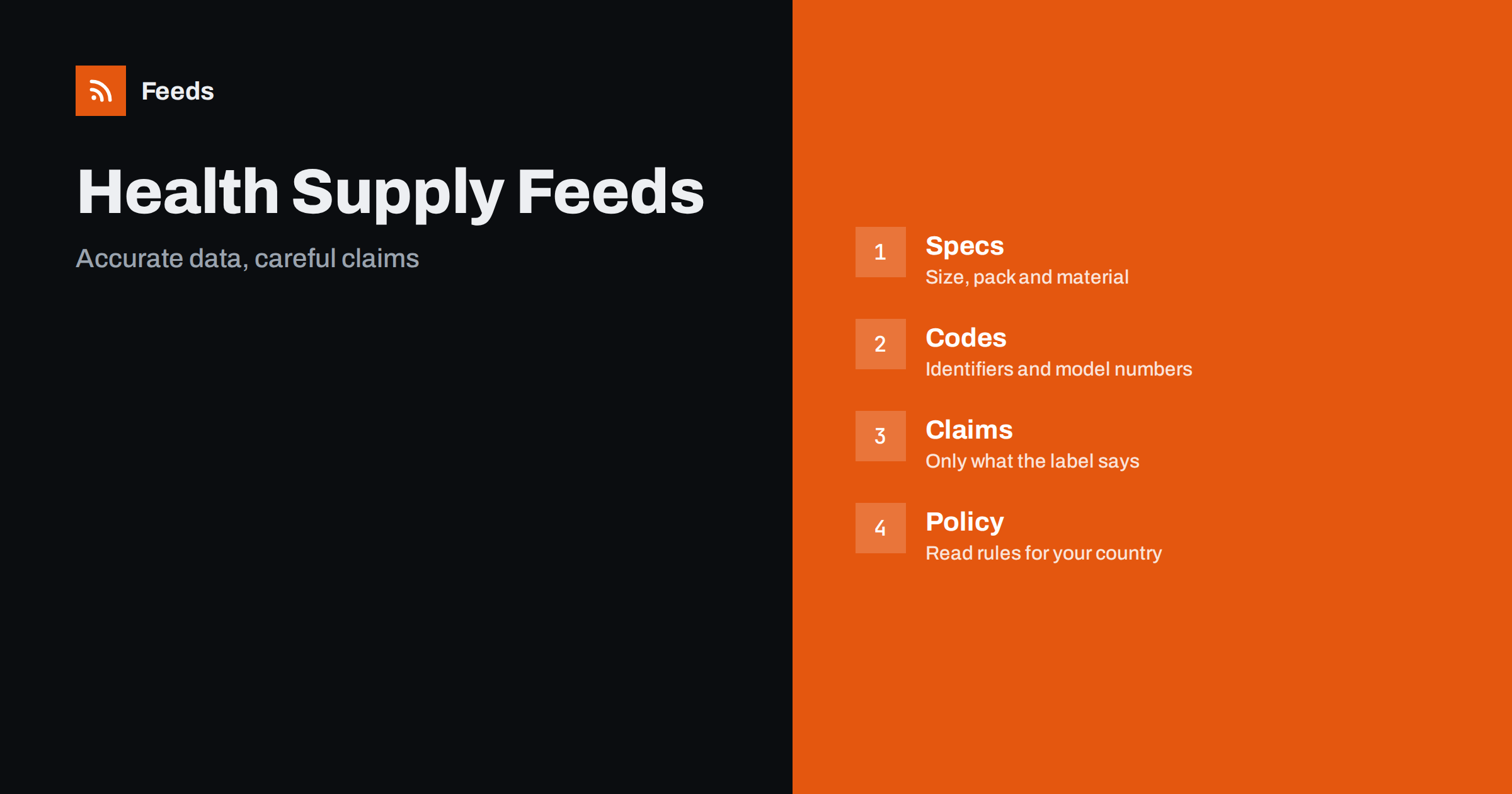
Short answer: Medical supplies and health devices, such as bandages, blood pressure monitors, mobility aids, thermometers and support products, are bought by people who want accuracy and reassurance. A good product feed gives each product a precise title, correct size and pack information, proper identifiers and only the claims the manufacturer allows. Advertising rules for health products are stricter than for most categories and differ by country and platform, so the first job is to read the current policies and exclude anything you may not promote. The feed cannot make a product safer, but it can avoid misleading buyers and avoid disapprovals.
Why this category needs extra care
When someone buys a health product, a mistake matters more than when they buy a lamp. A wrong size of support, a wrong pack of dressings or a device that does not fit a person’s needs can cause inconvenience or harm, and buyers often search with specific terms: “upper arm blood pressure monitor large cuff”, “ankle support size M”, “walking frame foldable”. Many are buying for a relative and want exact answers.
The category is also sensitive to claims and regulation. Many products are regulated as medical devices, some require a prescription or a professional’s advice, and advertising platforms restrict what can be promoted and how. The general structure of a feed is explained in what a product feed is, and the required fields in Google product feed attributes.
Read the policies before building the feed
Advertising platforms have specific rules for healthcare products. Some medical products may be advertised only in certain countries, some only by approved sellers and some not at all. Rules cover prescription medicines, certain devices, tests, products that make treatment claims and items sold to minors. Policies differ by country and are updated regularly.
Before you include a product, read the current policy for your market and check whether your product falls under it. If you cannot be sure, ask the platform’s support or your regulator, and exclude the product until you know. Excluding a few uncertain items is far cheaper than a suspended account; see which products to exclude from your feed and Merchant Center misrepresentation for what happens when the data or the store information does not match the rules.
Titles that name the product plainly
A useful title says what the product is, its size or type and the key detail that distinguishes it from similar ones. For a dressing: brand, type, size and pack quantity. For a monitor: brand, model, measurement type and cuff size range. For a mobility aid: brand, type, load capacity and whether it folds. Use the same pattern for every product in a group.
Do not write titles that promise treatment or results, such as “cures”, “pain relief guaranteed” or “heals fast”, and do not use urgent or fear-based language. Keep the exact model code, because people often search by it or by a number a professional gave them. A feed rule can rebuild titles from attributes if your store cannot; see product feed title optimization.
Sizes, packs and variants
Health products often come in sizes and pack quantities: support sizes from S to XL, cuff ranges, needle gauges, glove sizes, boxes of 50 or 200. Each version should be its own item with its own identifier, linked as a group with a shared group identifier; see how item_group_id works. State the size scale clearly, because sizes differ between brands, and give measurement guidance on the product page.
Be precise about pack contents. “Box of dressings” is not enough; say how many, what size and whether they are sterile. Multi-packs and bundles need their own identifiers and a price that matches the checkout, as explained in bundles and multipacks in product feeds. Do not show a pack at the price of a single item.
Think about who reads the listing. Many buyers are older, are caring for someone or are anxious, and they read slowly and check details twice. Plain words, clear sizes and a visible contact number or chat for questions build more trust than clever wording. If a product needs professional fitting or advice, such as a compression garment or a mobility aid, say so on the page and offer a way to ask.
Identifiers, model numbers and compliance information
Use real identifiers: GTINs from the manufacturer, the brand and the manufacturer part number. Health products are often re-labelled and sold in different versions in different countries, so confirm that the code you use matches the exact product you ship. The rules are explained in GTIN, MPN and brand: product identifiers in feeds explained.
Put the information that regulation or good practice requires on the product page: intended use as stated by the manufacturer, instructions, warnings, materials and any marking that the product carries. Do not claim a certification the product does not have, and do not shorten or remove manufacturer warnings. Where a product is for use under professional guidance, say so. Make sure the link in the feed opens a page that shows the same product, price and stock, as described in product landing pages: what feed links must lead to.
Claims, images and descriptions
Describe what the product is and how to use it according to the manufacturer. Avoid claims about diagnosing, treating, curing or preventing illness unless the product is approved for that purpose and the platform allows it. Avoid before-and-after pictures, images of body parts in distress and testimonials about health results. The main image should show the product on a clean background, with the pack contents when relevant, and with no text overlays; see product feed image requirements for Google and Meta.
Descriptions should be factual: size, materials, intended use, what is in the box and how to care for the product. A guide to writing them is in how to write product descriptions for shopping feeds. Supplements and similar items follow separate rules; see product feeds for vitamin and supplement stores.
Stock, delivery and returns
Availability must be accurate. If a mobility aid or a monitor sells out, show it quickly, because shoppers who click on an advert for a product that is not available lose trust and the platform may flag a mismatch; the causes are covered in availability mismatch in Merchant Center. For products that are made to order or ordered in on request, state the lead time honestly.
Returns of health products are often limited for hygiene reasons: opened sterile items, intimate products and some devices cannot be resold. State the return rules clearly before purchase and make sure your advertised conditions match the page. Delivery of bulky items such as wheelchairs and walking frames needs clear costs and times; see shipping in product feeds.
Keep your product data in good order over time. Manufacturers change packaging, update models and discontinue versions, and a feed that still lists the old model with the old code creates mismatches. Review the catalogue every quarter, remove discontinued products and check that safety information on the page matches the latest manufacturer documents. A weekly look at the diagnostics, as in product feed health metrics, catches problems before they become suspensions.
Seasonal peaks exist too: cold and flu season brings thermometers and masks, summer brings sun and travel products, and winter brings support and mobility items. Prepare stock data and pack sizes before each peak so that the feed reflects what you can really ship.
How RSS Feed Creator helps
RSS Feed Creator builds Google Merchant Center and Meta catalog XML straight from your store. WooCommerce and Shopify are read automatically, and any other store can use a CSV link. You can skip out-of-stock products and products you decide not to promote, rewrite titles with rules so that the product type, size and pack appear in the same order every time, and adjust prices. The currency is detected automatically. Before you submit anything, check the preview and the Merchant Center diagnostics to confirm that sizes, packs and excluded items arrive as you expect. The free plan includes product feeds with up to 50 products, and the Store plan covers one store with 3 product feeds and up to 2,000 products. The details are on the pricing page.
Related reading
- Product Feed Checklist: 25 Checks Before You Submit
- Merchant Center Disapproved Products: Causes and Fixes
- Product Feed Health Metrics: What to Monitor Every Week
The bottom line
A medical supplies feed works when you read the policies first, exclude what you may not promote, and give each product a plain title, correct size and pack data, real identifiers and only the claims the manufacturer allows. Keep stock honest, state return rules clearly and check the diagnostics regularly. Careful data protects buyers and protects your account.
KKK
Can I advertise all medical products in Merchant Center?
No. Rules differ by product, country and platform and change over time. Read the current healthcare policies for your market and exclude anything you may not promote.
What should a medical supply title contain?
Brand, product type, size or type, pack quantity and the model code, in the same order for every product, without treatment promises or urgent wording.
How do I handle sizes and pack sizes?
Create one item per size and per pack with its own identifier, price, stock and link, and connect variants with a shared group identifier. State the size scale clearly.
Can I use before-and-after images or testimonials?
Avoid them. Health result claims and body images are restricted. Show the product on a clean background and describe it factually.
Which identifiers should I use?
The manufacturer’s GTIN, the brand and the part number, checked against the exact product and version you ship, since health products are often sold in different versions by country.