ENEnglish
 LTLietuviškai
 DEDeutsch
 FRFrançais
 RUРусский
 ESEspañol
 PLPolski
 ITItaliano
 UKУкраїнська
 CSČeština
 PTPortuguês
 JA日本語
 LVLatviešu valoda
 ETEesti
 HUMagyar
 IDBahasa Indonesia
 TRTürkçe
 HIहिन्दी
 ELΕλληνικά
 ARالعربية
 THไทย
 VITiếng Việt
 RORomână
 MSBahasa Melayu
 BNবাংলা
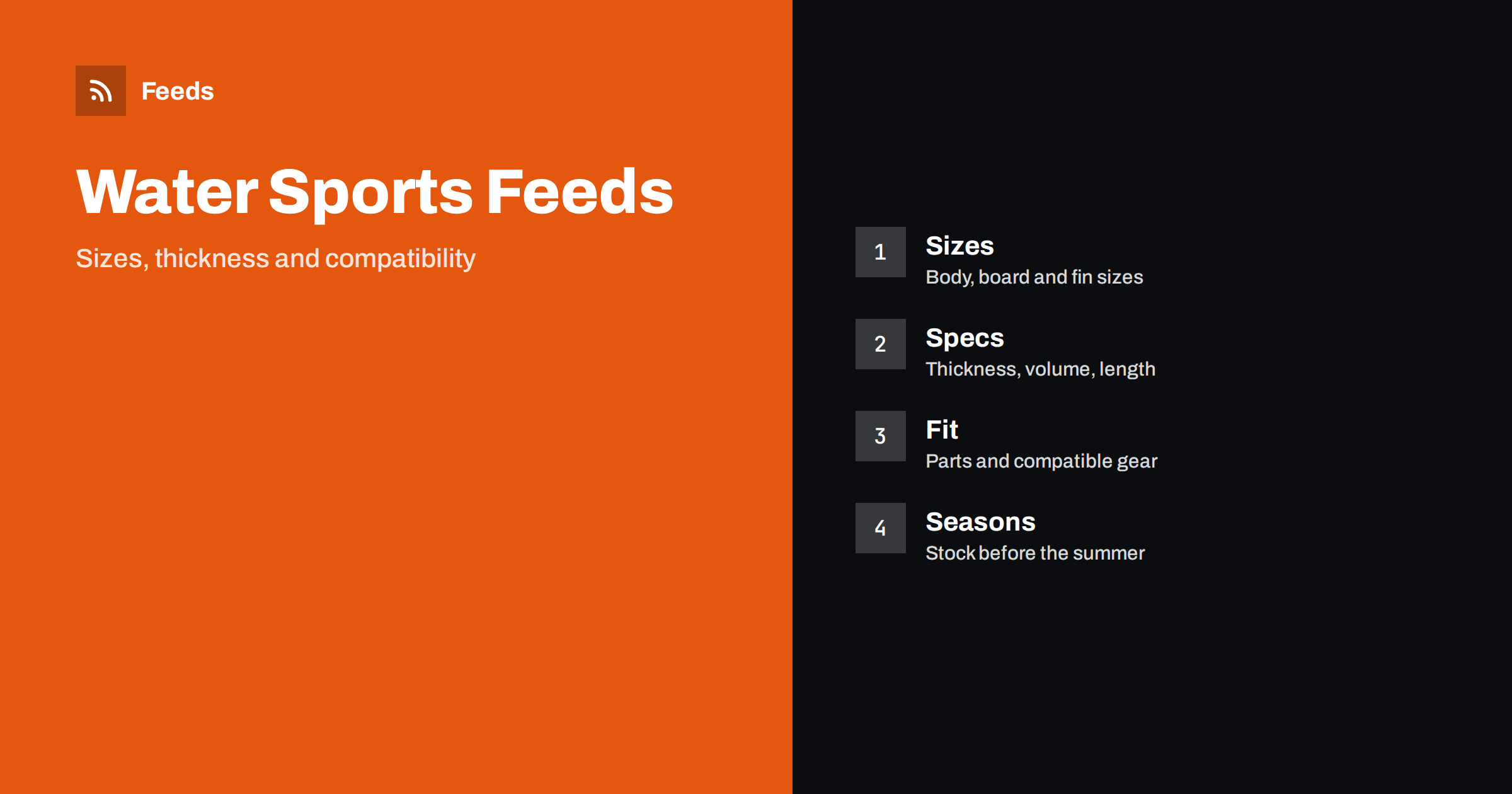
Short answer: Surf, diving and water sports shops sell gear where size, thickness, volume and compatibility decide whether the product works. A good product feed gives each item a title that leads with brand, product type and the key specification, uses complete size and gender attributes, groups variants correctly, keeps safety wording factual and sends shoppers to a landing page that shows exactly the same size, colour and price. Fix these basics before adding rules, bundles or extra labels.
Why this category needs careful feeds
Water sports equipment is technical and often sold by specification. A wetsuit comes in many sizes, thicknesses and cuts, a surfboard has length, volume and fin setup, and a snorkel set depends on mask fit and fin size. Shoppers know what they need and compare shops by those numbers, so a feed that hides them loses clicks or earns returns.
Demand is also seasonal. Searches rise before summer and before holidays, and certain products, such as thick winter wetsuits, sell in other periods. The foundations are covered in what a product feed is, and this category simply needs every detail to be precise before the season starts.
Titles that lead with brand, type and key spec
Shoppers search by product type and specification, for example “3/2 mm wetsuit men” or “7 ft soft top surfboard”. Start the title with brand and product type, then add the number that matters most: thickness, length, volume or capacity. Then add size or gender where relevant. “Brand Men’s Full Wetsuit 3/2 mm, Black” is clear. “The Ultimate Ocean Companion” is not.
Use the same order across the catalog so that products compare easily, and avoid listing every size in the title. Sizes belong in the size attribute. More formulas and examples are in product feed title optimization.
Sizes, gender and age group
For wetsuits, rash vests, boots and gloves, size and fit are the main reason for returns. Use the size labels exactly as they appear on the product page, and keep the size system consistent, such as letters, numbers or height ranges. Add gender and age group where they apply, because shoppers search for “kids” and “women’s” versions. Many brands use their own size charts, so link to the chart on the page and keep the values in the feed identical.
The rules for clothing apply here, as described in apparel product feeds: color, size, gender and age group. For footwear such as dive boots, product feeds for shoe stores explains sizes and widths. Send only the sizes you actually sell, and keep stock accurate at variant level.
Technical specifications that shoppers compare
List the facts that distinguish products in a consistent form. For wetsuits: thickness in millimetres, cut, seam type and closure. For boards: length, width, thickness and volume. For fins and masks: size range and skirt material. For paddle boards and kayaks: length, weight and maximum load. Take these values from the maker’s specification and use the same units on the page and in the feed.
Do not round in a way that makes a product look better. Richer fields help here, and product_highlight and product_detail show how to present such facts. When a figure depends on conditions, such as water temperature ranges for a wetsuit, quote the manufacturer’s wording and avoid claims of your own.
Fit advice deserves a place on the product page too. A short guide that links height, weight and chest measurements to suit sizes, or rider weight and skill to board volume, helps shoppers choose well and reduces returns. Keep the guide factual and based on the maker’s chart. The feed should point to the page where the guide appears, and the sizes in the guide should match the sizes in the feed exactly, including the way they are written.
Compatibility, parts and accessories
Water sports gear has many compatible parts: fin boxes and fins, leashes, board bags, regulators and hoses, strap systems, pumps and replacement valves. Name the system or model a part fits in the title or the details, and keep one product per distinct part. Say clearly when a part fits only specific brands, because a mismatch leads to returns.
The same questions come up in other technical catalogs, and product feeds for spare parts and compatible accessories explains how to organize them. For bundles such as a starter set with a board, leash and fins, give the bundle its own product, as described in bundles and multipacks in product feeds.
Safety wording and certifications
Some water sports products relate to safety, such as life jackets, buoyancy aids, dive regulators and helmets. Do not make safety claims in titles or descriptions beyond what the maker and the applicable standard state. Show certification and size or weight ratings only when they appear on the product and the page, and make sure the information is accurate and current. If a product needs training or professional servicing, say so plainly on the page.
Check the advertising rules of each market, because some categories have extra restrictions, and keep descriptions factual, as described in writing product descriptions for shopping feeds. A cautious, accurate approach is better for customers and avoids disapproval.
Brand sizing differs a lot in this market, so avoid mixing brands in one variant group, and never copy size values between brands to save time. If two brands label the same body size differently, the shopper should see each brand’s own label and chart. Check a few products every season against the maker’s current chart, because charts change when models are redesigned.
Identifiers, brand and variants
Branded products usually have a GTIN for each size and colour, and you should send it. For items made for your own label, send your brand and a stable product code, and never invent a number. A wrong identifier is worse than a missing one, because platforms compare it with their own catalog.
Use one parent product with variants for colours and sizes, with a shared group ID and an image for each colour. The setup is explained in how item_group_id works and GTIN, MPN and brand. Used and demo gear, which is common in this market, must be marked with the right condition, as described in used and refurbished products in feeds.
Images, landing pages and seasons
Use clean photos of the real product on a plain background, plus pictures that show the product in use or the size chart. Avoid text overlays and promotional badges. Each colour needs its own image, and the landing page must open the same variant with the same price and availability, as covered in what feed links must lead to. Requirements are summarized in product feed image requirements.
Prepare the catalog weeks before the season: check prices, stock, delivery times and sale prices, and mark preorders correctly. Preparing your product feed for Black Friday and peak season has a checklist that fits any busy period. Out-of-stock items should be marked or kept out of ads, as discussed in out-of-stock products in your feed. Weekly, review disapproved items and compare the feed with the shop for a few popular sizes.
Delivery and returns need thought for bulky and wet-use items. Boards and paddle boards are large and may ship by freight, while suits and masks are often returned for fit. Make sure your shipping settings reflect what you offer, as explained in shipping in product feeds, and keep the return policy easy to find. Clear terms before the purchase give customers confidence, and they help your shop avoid disputes when a size does not fit.
How RSS Feed Creator helps
RSS Feed Creator builds Google Merchant Center and Meta catalog XML straight from your store. WooCommerce and Shopify are read automatically, and any other store can use a CSV link. You can skip out-of-stock products, rewrite titles with rules so that brand, type and key specification appear in the same order every time, and adjust prices. Before you submit anything, check the preview and the Merchant Center diagnostics to confirm that sizes, thicknesses and stock arrive as you expect. The free plan includes product feeds with up to 50 products, and the Store plan covers one store with 3 product feeds and up to 2,000 products. The details are on the pricing page.
Related reading
- Product Feeds for Boating and Marine Supplies Stores
- Product Feeds for Sports and Outdoor Stores: What to Include
- Pool, Spa and Hot Tub Supplies: Building a Product Feed
The bottom line
Clean feeds for surf, diving and water sports shops come from precise titles, complete size and specification attributes, careful compatibility notes, factual safety wording and a landing page that matches the ad. Check the preview before you submit, fix what the diagnostics report and prepare stock before the season. Accurate details reduce returns more than any clever title.
FAQ
Should every wetsuit size be a separate product?
No. Use one parent product with a variant for each size and colour, linked by a shared group ID, and give each variant its own identifier, price and availability.
How do I list a surfboard with different fin setups?
If the setup changes the product and the price, use separate products or a clear variant attribute, and say what is included in the title or details.
Can I write that a product is safe or certified?
Only when the maker and the product page state it, using their wording. Avoid your own safety claims in titles and descriptions.
How do I handle used or demo gear?
Mark the condition correctly, keep it separate from new products and make sure the page describes any wear. Never list used gear as new.
When should I update the feed for the season?
Several weeks before the peak. Check stock, prices, delivery dates and landing pages for your best sellers, and fix disapproved items early.